Transportation
Another Republican-Controlled State to Increase its Gas Tax
It will be no April fools joke when motorists pay an extra six-cents per gallon at gas pumps in the Mount Rushmore State on April 1 thanks to actions of the legislature on March 13 and the likely signing of the bill by Gov. Dennis Daugaard.
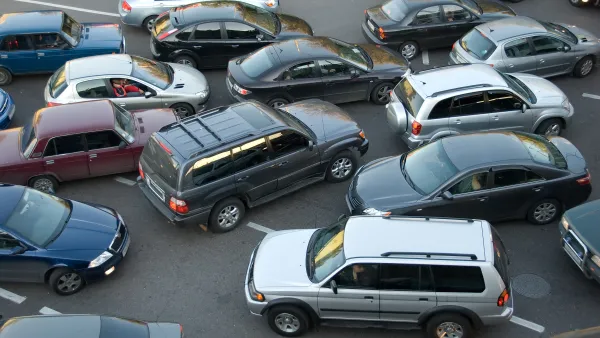
The Challenge of Redesigning an Accident-Prone Street
Philadelphia's Washington Avenue experienced 915 car crashes between 2010 and 2013. The city wants to minimize risk in its redesign, but lacks the space to install every suggested improvement.
'Bike Bill' to Pave the Way for 21st Century Bike Infrastructure in Connecticut
Joseph Cutrufo reports on a bill under consideration in the Connecticut State Legislature that would clear the way for the construction of bike infrastructure that matches the state's complete streets ambitions.
The Tax Foundation's Take on Mileage-Based User Fees
An economist from the Tax Foundation spoke to advocates of a mileage-based user fees. First surprise, he calls it a tax, not a fee. He appears to favor the MBUF over the gas tax, but notes its problems.
Study: Transit Subsidies Work Best Alone
Research suggests that transit subsidies produce minimal social value when combined with congestion pricing and dedicated bus lanes.
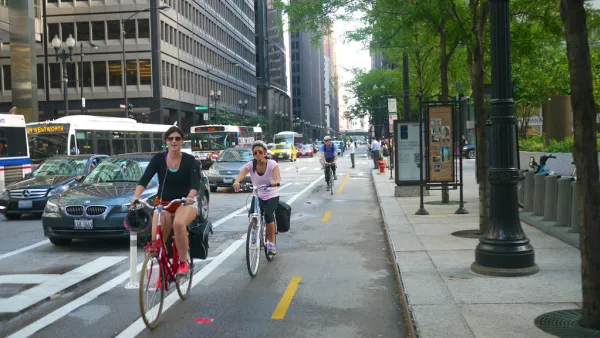
12 Studies that Make a Case for Converting Parking to Bike Lanes
CityLab has complied a thorough guide of economic impact studies of bike lanes that provides a clear, visual case for removing parking spaces.
Utah on Verge of Hiking Gas Tax by 21 Percent
Just before adjourning for the year, the Republican-controlled Utah House and Senate settled on a compromise—increase the gas tax by a nickel; the first hike in 18 years. Gov. Gary Herbert, also a Republican, has indicated he will sign the bill.
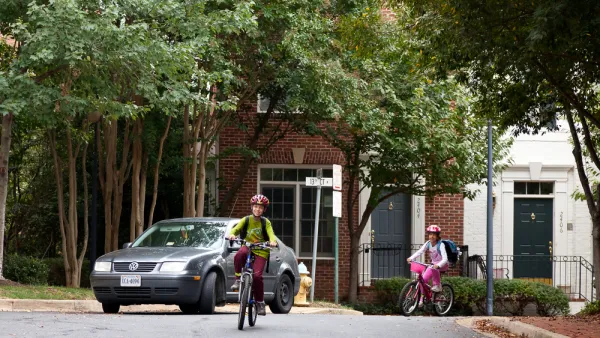
What Will it Take to Make People More Comfortable With Biking?
A new national survey gathers evidence about what it would take to convert larger numbers of people to the bike lifestyle.
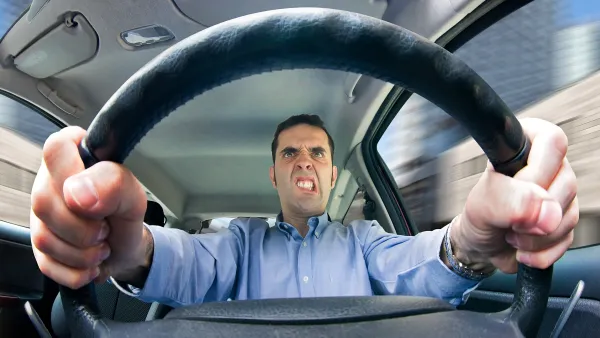
On the Psychology of Road Rage
Few of us are fully immune from the effects of road rage. Psychologists are asking why driving can provoke changes in behavior—and how to avert them.
If Rail Crossings Can't Be Grade Separated, Can They At Least Be Safer?
That's the question asked by legislation introduced after a Metro-North commuter train slammed into an SUV at a crossing in Valhalla, N.Y., killing six people. More than 200 people die annually in over 2,000 grade crossing crashes.
Study: Congestion Pricing Improves Traffic Safety
According to new research, London's congestion pricing program has improved traffic safety both in the cordoned city center and in the free adjacent areas. Although traffic is moving faster, fatalities have been reduced.
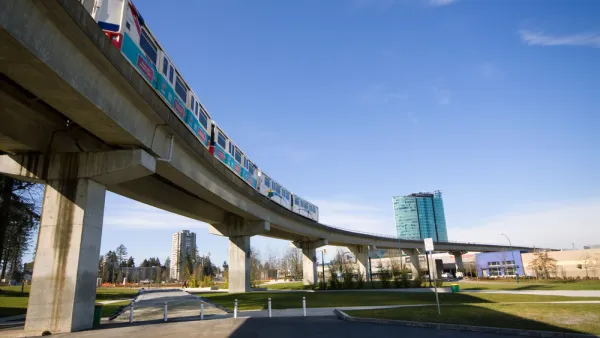
Public Transit Turning Point for Vancouver
Metro Vancouver is about to vote on a historic Transportation and Transit Plan, and an associated sales tax increase to pay for it. Will the citizens of this model transit Metro vote against a transit-friendly future? Canadian urbanists weigh in.
Change of Venue for Denver's Transit CEO: Los Angeles
Phillip Washington will leave his role as CEO of the Denver Regional Transportation District to take the same position at the Los Angeles County Metropolitan Transportation Authority.
Where Have All the Oil Trains in California Gone?
While many California were protesting oil trains carrying the hazardous Bakken crude, a funny thing happened—they stopped coming. While protests may have delayed the construction of new oil terminals, economics is at the root of the slowdown.
From the Golden Gate Bridge: How Many Bikers Is Too Many Bikers?
A city councilmember in Sausalito in the North San Francisco Bay Area is ready to limit the number of tourists riding rental bikes into her city from across the Golden Gate Bridge.
Friday Funny: Your Subway Train Says a Lot About You
Clickhole, the Buzzfeed-style spinoff of The Onion, has produced a listicle of what the New York Subway line you're riding says about your personality. Prepare to learn nothing and laugh a little.
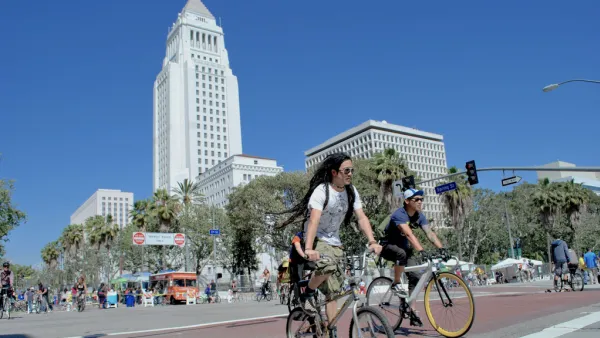
On the Re-Orientation of Los Angeles
Aaron Paley, the man who brought Ciclovia to the United States, wants Los Angeles to be a model for the transition from auto-dependent to car-optional.
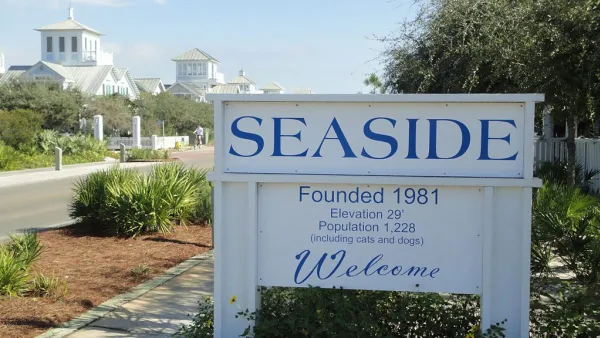
The Four Phases of New Urbanism
Robert Steuteville discusses the slow, phased emergence of the New Urbanism. We are only partway through a change that will take generations. We are now immersed in the revitalization of cities. More phases will come.
200 Years of Faster Travel Times
A post on Vox collects a series of maps from the "Atlas of the Historical Geography of the United States" showing how travel times changed over the past 200 years of U.S. history.
GPS Technology Chosen for Oregon's Road Usage Charge
Oregon's much heralded mileage fee program, known as OReGO, has selected the technology to record the miles driven by participants. A French and Canadian company will collaborate to provide a telematics road usage charging framework to begin July 1.

FREE Course: Walkable City 1: Why Walkability?
After describing his path towards focusing on walkability as the essence of good planning, Jeff Speck marches through his five principal reasons for making more walkable places.
Reinventing Malls: Planning Alchemy—Turning Gray Fields Into Gold
The course focuses on the opportunities and imperatives that shape reinvention of mall sites.

City of Rosemead
Rutgers University, Edward J. Bloustein School of Planning and Public Policy
One Hundred Miles
University of Michigan School for Environment and Sustainability (SEAS)
Hunter College, City University of New York (CUNY)
The Architects Foundation
City of Cambridge
The Pocatello Development Authority
The Urban Renewal Agency of the City of Pocatello









