Comparison of before and after counts of vehicular volume-to-capacity ratio shows replacing car lanes with bike lanes may not adversely impact vehicle traffic when bike lanes are constructed on less congested streets.


Gretchen Johnson and Aaron Johnson seek to answer how new bike lanes impact drivers, especially when they take the place of an existing vehicle lane: “It seems that unless a ton of people start commuting by bicycle, giving away a lane would cause increased car traffic. But is this really the case?”
By comparing vehicular volume-to-capacity (V/C) ratio before and after bike lanes have been added, Johnson and Johnson reveal that: “Taking away a lane does significantly increase the estimated V/C ratio during rush hour...But it’s not at a high enough V/C ratio where traffic will get really congested and start slowing down.”
Their recommendations regarding where to place new bike lanes: “Bike lanes don’t cause a lot more congestion if you put them on the right streets…if you start with roads that are well under capacity, you’ll only increase the congestion a little bit. And it may not even be noticeable.”
Read the full story: Bike Lanes Don’t Cause Traffic Jams If You’re Smart About Where You Build Them

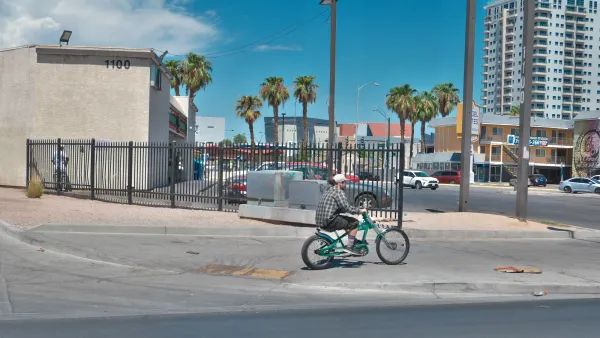
Las Vegas is building its first protected bike lane
The new lane connects Henderson and the Las Vegas Raiders headquarters via Starr Avenue.

Nashville installs concrete barriers to protect bike lanes
The new 'Toronto barriers' provide a physical buffer between cars and bike lanes.
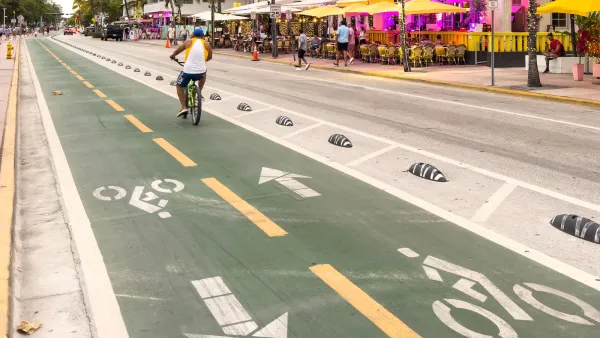
FHWA removes bike lanes and speed cameras from list of traffic safety measures
The agency did not announce its intention to eliminate five proven safety measures from its list of suggested interventions.

Amtrak, CN end decades-long dispute with eight-year agreement
The new operating agreement establishes an updated framework for the companies to work together, including processes to resolve disputes.

Judges permit Denver to divert 77,000 acre feet from the Colorado River for reservoir expansion
Overuse and climate change have caused the Colorado River’s water levels to plummet.
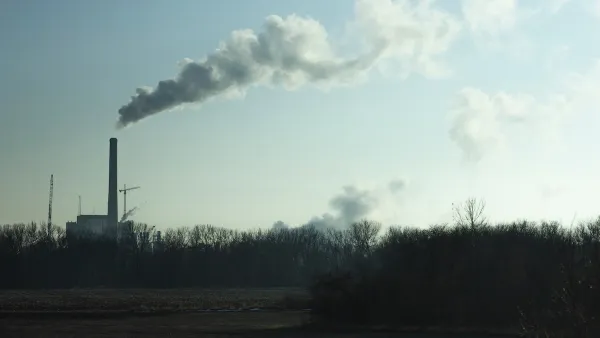
Nation's most wind-powered state turns to coal as data centers increase energy demand
For the first time in decades, Iowa has increased its generation of coal power.

Boston has spent millions making the Green Line more accessible — and there’s no end in sight
While the city has invested millions into expanding and adding platforms to the Green Line to make it more accessible, new train cars set to arrive next year will be too tall for disabled passengers to board without raising the current platforms.

Idaho may see an 18% drop in federal surface transit funding — the largest estimated cut in the US
Transit systems in rural communities are much more reliant on federal funding to provide their services.

How ‘post-disaster gentrification’ alters neighborhoods after natural calamities
After hurricanes, fires or other calamities, the original residents of a community are often replaced by younger, wealthier residents.

FREE Course: Walkable City 1: Why Walkability?
After describing his path towards focusing on walkability as the essence of good planning, Jeff Speck marches through his five principal reasons for making more walkable places.
Reinventing Malls: Planning Alchemy—Turning Gray Fields Into Gold
The course focuses on the opportunities and imperatives that shape reinvention of mall sites.

City of Wisconsin Rapids
Harvard University Graduate School of Design
KFH Group Inc.
The Architects Foundation
University of Cincinnati Online
The Pocatello Development Authority
The Urban Renewal Agency of the City of Pocatello