Although other states prohibit the use of state funding for public transportation projects, Tennessee state legislators are moving toward an outright ban of bus rapid transit projects anywhere in the state.


“Tennessee lawmakers overwhelmingly voted in favor a bill that bans the construction of bus rapid transit (BRT) anywhere in the state,” reports Keith Barry for Wired.
There is some difference between the bill the Senate wants and the bill the House wants, and several additional approval steps will be necessary: “The Senate version of the BRT ban [SB 2243] also forbids buses from 'loading or discharging passengers at any point within the boundary lines of a state highway or state highway right-of-way not adjacent to the right-hand, lateral curb line.' Though the House struck that provision and sent revised legislation back to the Senate, it would still require special approval from the Tennessee Department of Transportation and local government bodies.”
One problematic aspect of SB 2243 is the corporate interest backing the ban on public transit: “After the vote, Amp opponents revealed that the conservative group Americans for Prosperity, founded with the support of brothers Charles and David Koch, had lobbied in favor of the bus ban.”
Barry’s article is strongly polemic, calling the bill “mind boggling.” An earlier article by Tanya Snyder calls the bill “extreme short-sighted stupidity.” Chas Sisk also reported on the original Senate vote for The Tennessean in March.
Read the full story: Tennessee Passes Mind-Boggling Ban on Bus Rapid Transit

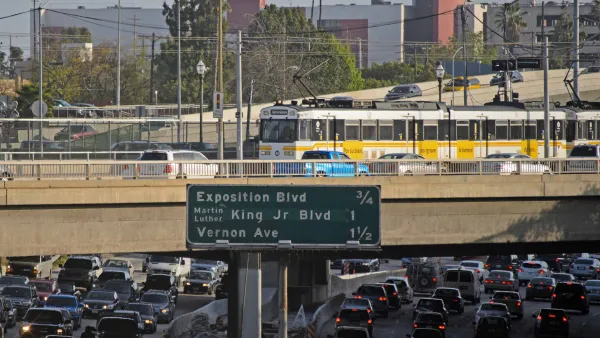
The Koch Brothers vs Transit
Two of the more famous examples of the economic interests of the fossil fuel industry, Charles and David Koch, are battling transit projects, by any means necessary, all over the country.
Nashville MTA Ends Bus Rapid Transit Plans
One of the more hotly contested transit projects in the country—The Amp bus rapid transit project in Nashville, Tennessee—is dead. Nashville MTA officials promise a new strategic plan for the future of transit in the city.
Projects to Watch in Nashville's Transformation
The Architect's Newspaper featured a suite of "new urbanism" projects underway in Nashville—everything from BRT, to convention centers, to bikeshare.

Planetizen Federal Action Tracker
A weekly monitor of how Trump’s orders and actions are impacting planners and planning in America.

‘Going backwards:’ Baltimore mayor, students rally against state's transit funding plan
Maryland's proposed six-year plan provides no funding for Baltimore’s BMORE bus program and reduces its road maintenance funding.

Detroit to transform waterfront with $2.2 billion investment
Developers will convert about 18 acres of unused parking lot space into civic spaces.

U.S.-Iran war may have ‘devastating’ impact on cost to warm homes
Vermont and Maine residents may see a 76% increase in the cost of warming their homes this winter.

Senate bill would ‘overhaul’ environmental permitting laws
Under the proposed act, government agencies would also not be able to suspend or rescind permits after granting them.

Exemption applications for NYC’s pied-à-terre tax see 55% success rate
The city sent nearly 40% of its initial pied-à-terre tax warnings erroneously.

FREE Course: Walkable City 1: Why Walkability?
After describing his path towards focusing on walkability as the essence of good planning, Jeff Speck marches through his five principal reasons for making more walkable places.
Reinventing Malls: Planning Alchemy—Turning Gray Fields Into Gold
The course focuses on the opportunities and imperatives that shape reinvention of mall sites.

One Hundred Miles
County of Mendocino
planning NEXT
The Architects Foundation
University of Cincinnati Online
Montrose County
Northern Illinois Transit Authority (NITA)
The Pocatello Development Authority