Technology
Effort to Bring Internet to Rural America Becomes $4 Billion Headache
A $4 billion federal program was supposed to provide access to job opportunities, education resources, health care and government services via high-speed Internet to rural Americans. Questions are now being raised about how that money has been spent.
Arup Proposes Radical Building of the Near Future
The global engineering firm envisions a "smart" building that will plug into "smart" urban infrastructure and cater to an increasingly dense and technology-savvy urban population.
The Man Who Would Plan Washington
The blog Greater Greater Washington has been instrumental in furthering the discussion of land use in D.C. Rachel Weiner profiles its controversial founder, David Alpert, whose lack of formal planning experience is no impediment to his ambitions.
SimCity-Style Interactive Map Seeks to Make Zoning Understandable
In an essay for Next City, Juan-Pablo Velez, member of the Chicago-based civic tech collective Open City, explains the rationale behind their latest project, which aims to make the city's zoning "digestible by humans."
Keeping Up with the Field: Computerized Tools for Tracking Research and New Ideas
Urban planning professionals and researchers increasingly face information overload. Todd BenDor and Rob Goodspeed suggest three techniques for strategically monitoring the web for new research and ideas.
A Mobile Encyclopedia of Place
An announcement last week indicates that Wikipedia will become the newest player in the increasingly competitive effort to connect virtual information with physical places.
Feds Favor Widespread WiFi; Wireless Industry Fights Plan
The Federal Communications Commission (FCC) would like to create free public 'super' WiFi networks across the nation, reports Cecilia Kang. The $178 billion wireless industry is fighting the initiative.
Advanced Graphics Illustrate the World's Extreme Infrastructure
Mike Senese spotlights a new television program on the Science Channel that uses innovative graphics to examine how the world's cities have been built to overcome the challenges of their natural environments and serve their citizens.
'TVs on a Stick' Spark Battles Across the US
Since the Federal Highway Administration relaxed a rule against digital billboards in 2007, communities across the country have struggled with how to balance concerns about distracted drivers and disfigured landscapes with the desires of advertisers.
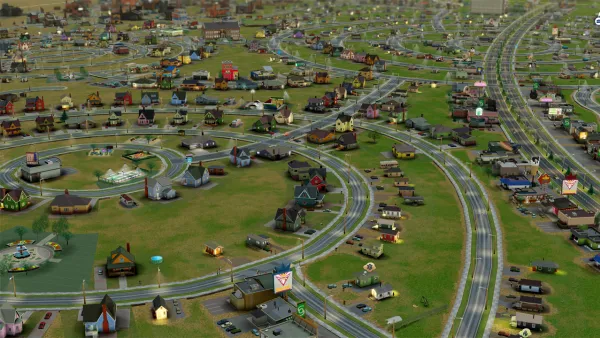
Grid vs Cul-de-Sac: Using SimCity to Test Development Patterns
Norman Chan uses a beta version of the new SimCity game to test the merits of three familiar types of suburban subdivision design - a rectangular grid, circular sprawl, and cul-de-sacs.
A Stark Visualization of Detroit's Tax Mess
A Detroit-based maker of "crowdfunding and social mapping systems," has developed an interactive map of the tax status of every property in Detroit. In bright yellows, oranges, and reds, the city's property tax "black hole" is brutally clear.
Are Exterior Airbags the Future of Bike/Ped Safety?
Zak Stone looks at the innovative technologies that Scandinavian companies are developing to improve the safety of the most vulnerable road users.
To Serve a Growing Market, Car-Share Goes Custom
Stephanie Steinberg and Bill Vlasic survey the growing universe of car-sharing services. From big corporations to non-profits, the high demand for car sharing in urban areas allows a variety of alternatives to "coexist comfortably."
Using Geodesign to Model the Complex Intersection of Land Use and Climate Change
The subject of a recent summit hosted by software maker Esri, Larry Greenemeier explains the application of Geodesign to help predict and manage the increasingly complex intersection of design, land use, ecology, and climate change.
There's a Planning App for That
For my annual update of the apps that support planning I've compiled a list of the latest applications for sharing information, visualizations, sensing, predicting, supporting decision making, crowdsourcing, and engaging.
Seattle Architects Break the Law in Design for Super Green Office Building
When the new headquarters for the Bullitt Foundation opens this April in Seattle, it will be among the first to meet the Living Building Challenge - "the most stringent green standard around." But getting there isn't easy, and may be illegal.
Are Utopian Visions of Driverless Cars Realistic?
"Autonomous" and "driverless" cars are surely the next frontier for automakers, as recent announcements by Audi, Toyota, and Google indicate. But are visions for the potential impact of these innovations on cities overly optimistic?
The Frankenstein Vehicle That Could Transform Transportation
Part bike, part car, part solar power, part human power - the Elf is a pedal-powered mini-car that just finished a "massively successful" Kickstarter drive and could be coming to a street near you very soon.
Building Storm Defenses While Turning a Profit
The Rockefeller Foundation unveils its innovative plan to incentivize private investors to provide the infrastructure solutions for eight U.S. cities most vulnerable to extreme storms and rising seas.
Crowdsourcing the Status of the Bus You're Waiting For
Transit schedules, especially for buses, are notoriously inaccurate. A new app seeks to give a better picture of the status of the bus or train you keep trying to spot in the distance.

FREE Course: Walkable City 1: Why Walkability?
After describing his path towards focusing on walkability as the essence of good planning, Jeff Speck marches through his five principal reasons for making more walkable places.
Reinventing Malls: Planning Alchemy—Turning Gray Fields Into Gold
The course focuses on the opportunities and imperatives that shape reinvention of mall sites.

City of Rosemead
Rutgers University, Edward J. Bloustein School of Planning and Public Policy
One Hundred Miles
University of Michigan School for Environment and Sustainability (SEAS)
Hunter College, City University of New York (CUNY)
The Architects Foundation
City of Cambridge
Montrose County
The Pocatello Development Authority









