"Autonomous" and "driverless" cars are surely the next frontier for automakers, as recent announcements by Audi, Toyota, and Google indicate. But are visions for the potential impact of these innovations on cities overly optimistic?


Jake Blumgart considers an article by Derek Edwards at Progressive Transit that outlines the "utopian potential" of driverless cars to transform cities. By redefining our relationship with automobiles, Edwards imagines that driverless cars could eliminate the need for owning a personal car; freeing up space dedicated to parking and eliminating the expenses of car ownership.
While Blumgart agrees that "[r]educing dependence on single-occupancy vehicles would be an unalloyed good for cities," he sees more incremental improvements in the lives of those already predisposed to suburban and urban living. "[I]t’s hard to imagine a majority of Americans willingly parting with not only control over their cars, but the actual physical ownership of the vehicle itself," he says. Rather than a wholesale revolution in our relationship to the automobile, Blumgart argues that "driverless cars could give suburbanites an easier commute, and substantially decrease the riskiness of their weekend barroom excursions, mitigating the micro-level negatives of car travel....Furthermore, it’s unlikely that an individual with a preference for urban living, and not paying for constant auto upkeep, decamping for the suburbs simply because she could take a nap on her hour-long commute to work."
"Those already predisposed to live in a central city and use car share would presumably love an enhanced on-call version of the same service," he concludes, "while those who want to live in the country will embrace safer and less arduous commutes."
Read the full story: Whither the Driverless Car?

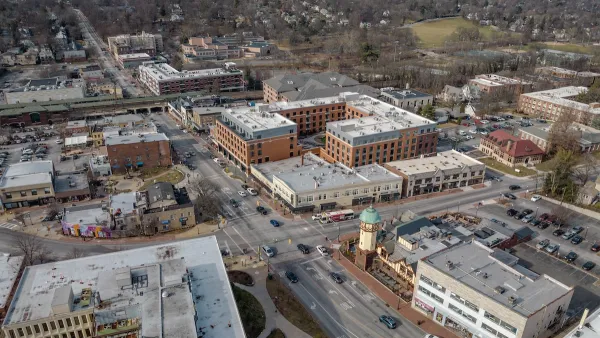
Off-Street Parking in the Midburbs
In several New Jersey cities, eliminating parking requirements has boosted local businesses.
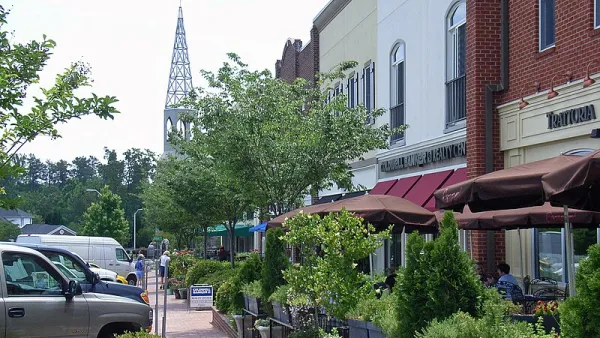
A ‘New Urbanism’ Travelogue
I visited three New Urbanist developments in North Carolina. Here's what I liked, what I didn't like, and what I learned.
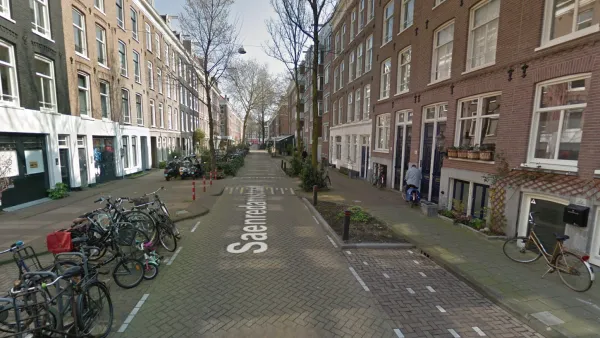
Watch: How to Remove Thousands of Parking Spaces
What the city of Amsterdam will gain by removing cars from on-street parking space.

Planetizen Federal Action Tracker
A weekly monitor of how Trump’s orders and actions are impacting planners and planning in America.

Amtrak, CN end decades-long dispute with eight-year agreement
The new operating agreement establishes an updated framework for the companies to work together, including processes to resolve disputes.

Northwest rail fans eager for Sept. 30 debut of Amtrak’s Airo fleet
Get ready for that new train smell and more seats. But they won’t go faster or run more frequently on the Cascades route in Washington and Oregon.

Brightline Florida files for bankruptcy
The transit company is over $5 billion in debt.

St. Louis Metro to test if single-car trains can reduce operating costs, maintain rider satisfaction
The pilot program will run from October to spring 2027, and begin with one single-car train operating on Metrolink’s Red and Blue lines.

Pennsylvania is building data centers in abandoned mines
Housing data centers in mines provides an alternative to destroying local forests and may spare residents from data centers’ noise and air pollution.

FREE Course: Walkable City 1: Why Walkability?
After describing his path towards focusing on walkability as the essence of good planning, Jeff Speck marches through his five principal reasons for making more walkable places.
Reinventing Malls: Planning Alchemy—Turning Gray Fields Into Gold
The course focuses on the opportunities and imperatives that shape reinvention of mall sites.

City of Thousand Oaks
City of Wisconsin Rapids
Harvard University Graduate School of Design
The Architects Foundation
University of Cincinnati Online
The Pocatello Development Authority
The Urban Renewal Agency of the City of Pocatello