Rust Belt Cities
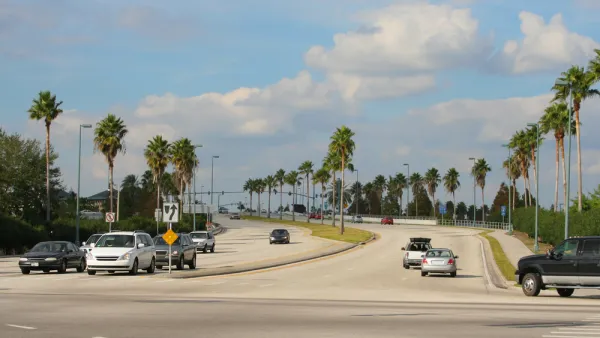
Small Cities Struggling to Pay for Infrastructure Projects
Towns with shrinking or stagnant tax bases can't keep up with the costs of aging infrastructure without state and federal support.
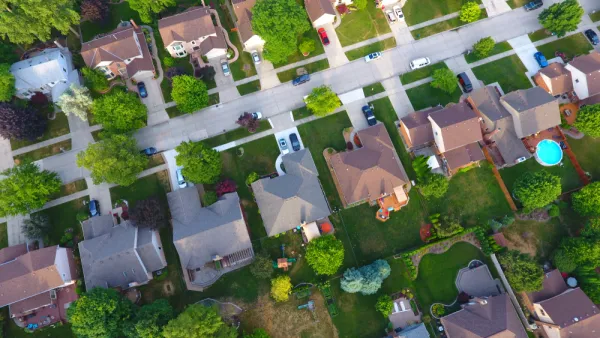
Dan Gilbert Announces $500 Million Investment in Detroit Neighborhoods
Dan Gilbert, the billionaire credited with the revitalization of development interest in and around Downtown Detroit, made a bombshell announcement in his first in-depth interview since suffering a stroke in 2019.
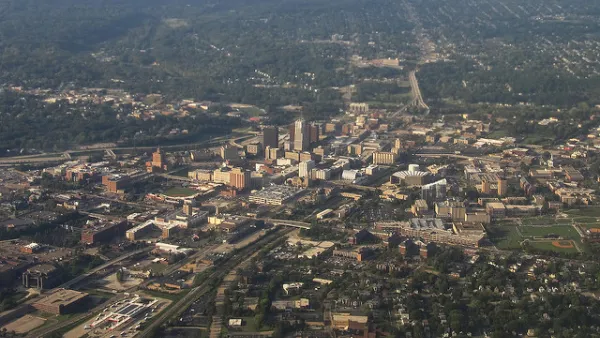
New Legacy Cities Initiative Announced
The Lincoln Institute of Land Policy is launching the Legacy Cities Initiative to provide a network of support for cities of the country's industrial past.
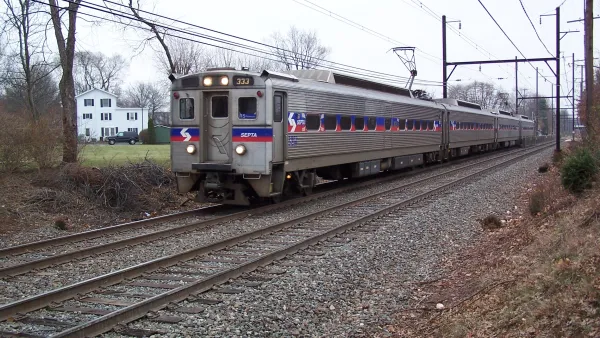
A Proposal to Extend Rail Service to a Town in Pennsylvania Is Ambitious. Proponents Are Undeterred
A plan to get a SEPTA Regional Rail link to Phoenixville in record time has its skeptics, but advocates are convinced they can make it happen.
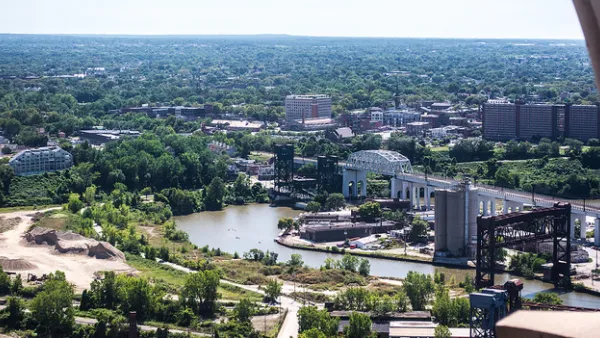
Review: The Divided City
In the Rust Belt, neighborhood decline is much more significant than gentrification.
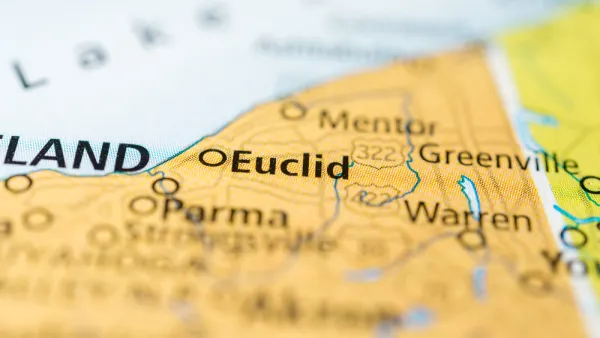
How One Lake Erie Town Got Free Waterfront Property for Public Use
Clear communication and a fair trade let Euclid, Ohio begin to rethink its lakefront—and its future.
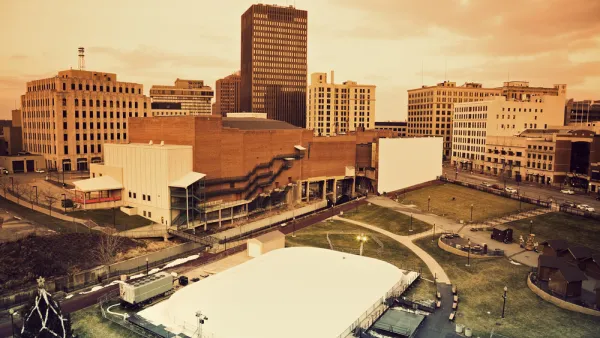
The Vision for a Revitalized Downtown in Akron, Ohio
It's been a busy year for planners in Akron, Ohio. The most recent accomplishment is the completion of phase 1 of the Downtown Vision and Redevelopment Plan.
More Towns Mimicking New Orleans and Allowing Public Drinking
It used to be that only New Orleans and Las Vegas allowed people to carry a drink outdoors and imbibe in public. Now cities all over the country, mostly in traditionally conservative states, are loosening their laws.
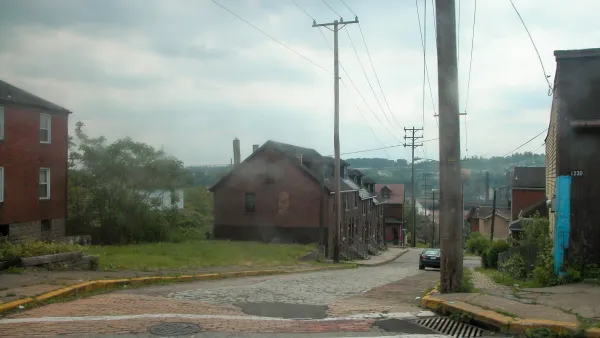
Managing Abandoned Homes in North Braddock
The usual litany of Rust Belt woes hit North Braddock, Pennsylvania particularly hard. The Pittsburgh suburb has shed two-thirds of its population and is burdened with 350 abandoned properties.
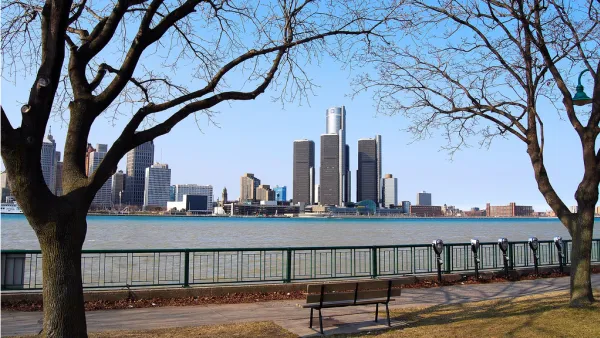
Lessons from Masterminds of Detroit's Rebirth
The enthusiasm of Detroit's new civic leadership, who engineered its bankruptcy and set up its recovery, is infectious. How the city will ultimately fare, and how other troubled cities learn from Detroit's mistakes, remains to be seen.
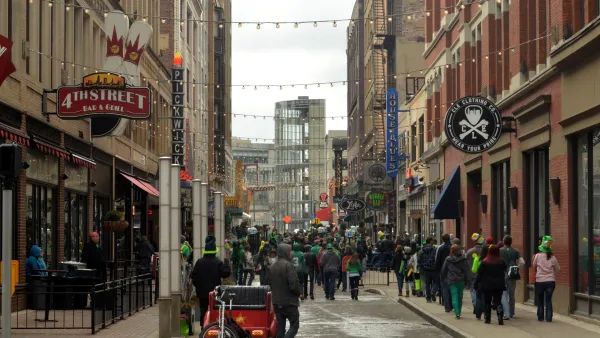
The Case for a Walkable Cleveland
In this long-form article, G.M. Donley reminds us why walkable and diverse communities have become such a planning staple. In Cleveland, New Urbanism contends with a history of sprawl and decreasing population.
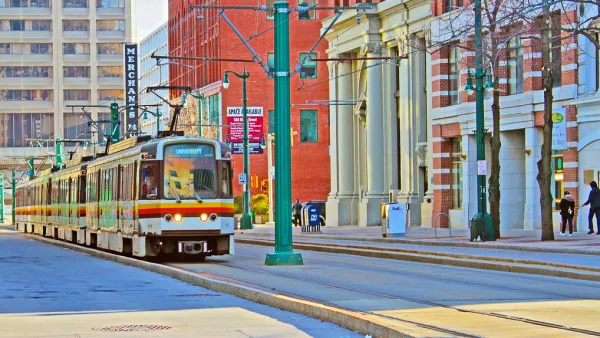
Buffalo: Retrofitting a Rust Belt Capital
Author Catherine Tumbler writes on how this Rust Belt city on Lake Erie is attempting to capitalize on its past, reverse its mistakes, and build a greener economy.
A Survey of Recent Research in 'Urban Regeneration'
Journalist's Resource provides a one-stop shop for research on the subject of policies to regenerate urban areas once in decline.
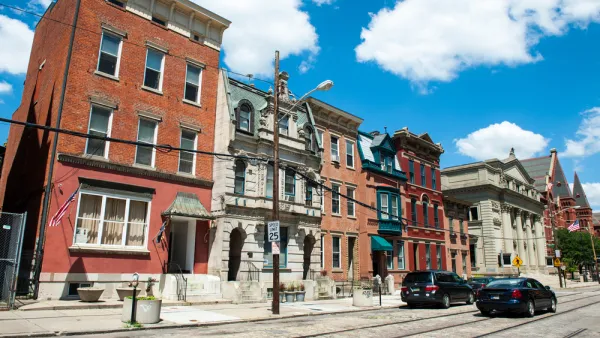
The Charms of Affordable Cities (Not Named San Francisco or New York)
A recent post identifies a sweet spot in the urban market: affordable cities like Cincinnati and others in the Rust Belt that provide an attractive alternative to more expensive, if more famous, cities on the coasts.
What's Driving the Economic Turnaround in Youngstown and Canton, Ohio?
Youngstown had been one of those Rust Belt, "shrinking" cities long noted in Planetizen, but thanks in part to fracking and its location on the Utica shale formation, manufacturing has returned and unemployment has dropped by half since 2010.
Joel Kotkin Reveals the Secrets of Cleveland's Surprising Success
Joel Kotkin picks up on the findings of a study released in March from Cleveland State University about the city's net increase in young, well-educated population and recommends a regional approach to ensuring that the growth sticks.
Preservation Concerns Raised Over Milwaukee’s Blight Reduction Plans
Although Milwaukee had been insulated from population loss compared to many other legacy cities, the Great Recession has required the city to launch an $11.6 million blight reduction program.
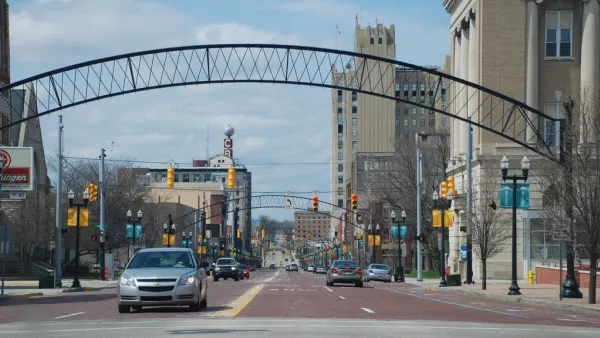
More Debate About 'Saving' Rust Belt Cities
The populations of at least a dozen major cities declined by more than ten percent between 2000 and 2010, including Buffalo, Cincinnati, Cleveland, and Detroit. How best to regenerate those “legacy cities” is a matter of no small amount of debate.
England's Rust Belt Cities Struggle to Find Their Post-Industrial Footing
While London struggles with "supergentrification" and rising home prices, England's rust belt cities suffer from long-term decline and the withdraw of public spending. How can these places find their post-industrial footing?
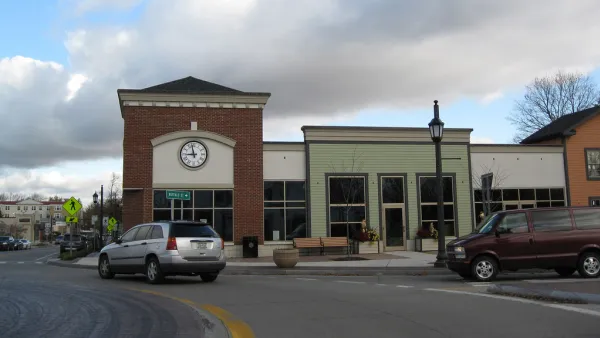
Road Diet Paves the Way for Town's Return to a 'Wonderful Life'
Community resistance stopped plans for widening Hamburg, New York's Main Street. By embracing calmer streets, the town is flourishing and once again enjoying comparisons to the idyllic Bedford Falls of 'It's a Wonderful Life.'

FREE Course: Walkable City 1: Why Walkability?
After describing his path towards focusing on walkability as the essence of good planning, Jeff Speck marches through his five principal reasons for making more walkable places.
Reinventing Malls: Planning Alchemy—Turning Gray Fields Into Gold
The course focuses on the opportunities and imperatives that shape reinvention of mall sites.

City of Wisconsin Rapids
Harvard University Graduate School of Design
KFH Group Inc.
The Architects Foundation
University of Cincinnati Online
The Pocatello Development Authority
The Urban Renewal Agency of the City of Pocatello