The Lincoln Institute of Land Policy is launching the Legacy Cities Initiative to provide a network of support for cities of the country's industrial past.


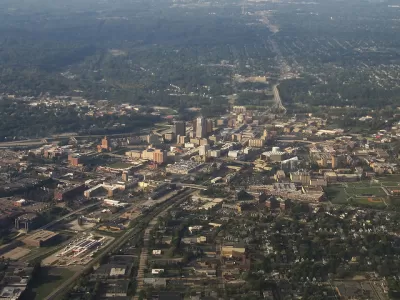
A new legacy cities initiative launched this week with goals for supporting policy makers, civic leaders, and other stakeholders in cities with industrial pasts and fading middle class prosperity, sometimes called Rust Belt cities. Legacy cities are home to nearly 17 million people and a collective economy of $430 billion.
The Lincoln Institute of Land Policy is launching the initiative, with a new website and a request for expressions of interest in participation in the national network of legacy city community leaders.
According to an article by Emma Zehner, Allison Ehrich Bernstein, and Will Jason that announces the new initiative, the initiative will help community leaders in legacy cities "build on their city’s strengths and create a more equitable, sustainable, and prosperous future."
The Legacy Cities Initiative will offer webinars, peer exchanges, new research, and a community of practice of select leaders, who will meet regularly beginning in January 2021, according to the announcement.
FULL STORY: Lincoln Institute of Land Policy Launches Legacy Cities Initiative


Dan Gilbert Announces $500 Million Investment in Detroit Neighborhoods
Dan Gilbert, the billionaire credited with the revitalization of development interest in and around Downtown Detroit, made a bombshell announcement in his first in-depth interview since suffering a stroke in 2019.
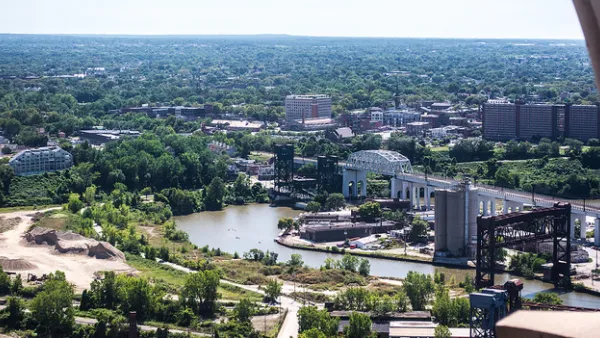
Review: The Divided City
In the Rust Belt, neighborhood decline is much more significant than gentrification.

The Vacancy Epidemic
A new report uses terms like epidemic and hyper-vacancy to drive home the point about the effects of vacancies on communities like Cleveland, Gary, Toledo, and Detroit.

Planetizen Federal Action Tracker
A weekly monitor of how Trump’s orders and actions are impacting planners and planning in America.

The state-sanctioned urbicide of Austin
People don’t kill cities. Freeways do.

US to reduce Colorado River water deliveries to Mexico
A new Colorado Treaty amendment reduces Mexico’s Colorado River water allocation by 250,000 acre feet.

5 New England states march closer to 800 megawatt wind energy project
Securing federal approval for the project may be complicated under the Trump administration, which has historically been hostile towards domestic wind power.

Baltimore to break ground on $50 million Transit Priority Project
The project will bring faster bus trips, safer streets and better bike connections to Baltimore.

Airbnb launches $250 million 'last-dollar financing' housing accelerator, makes first investment in Austin
The company will put $6.4 million towards affordable housing development in Texas’ capital.

FREE Course: Walkable City 1: Why Walkability?
After describing his path towards focusing on walkability as the essence of good planning, Jeff Speck marches through his five principal reasons for making more walkable places.
Reinventing Malls: Planning Alchemy—Turning Gray Fields Into Gold
The course focuses on the opportunities and imperatives that shape reinvention of mall sites.

Eagle County Government
Harvard University Graduate School of Design
Nashville Planning Department
The Architects Foundation
University of Cincinnati Online
The Pocatello Development Authority
The Urban Renewal Agency of the City of Pocatello
Journal of the American Planning Association