Highways
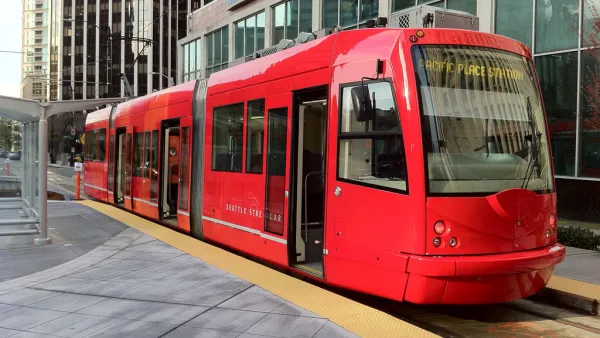
Seattle Confronts Its Transportation Bottleneck
By some measures, Seattle's geography makes other cramped cities like Boston and San Francisco seem positively agoraphobic. New Transportation Director Scott Kubly has vowed to keep Seattleites moving through its many bottlenecks.
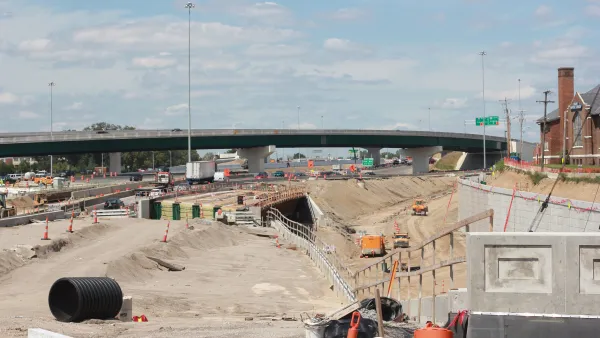
Denver's I-70 Expansion Undercuts Alternatives
To fund a wider I-70 on its route through Denver, the regional planning commission set aside $50 million in federal funds before considering other projects.
Bertha on the Move Again in Seattle
Finally, a breakthrough we've all been waiting for: Bertha is on the move again in Seattle and will soon be ready for repairs. The tunnel Bertha was built to drill will have to wait, however.
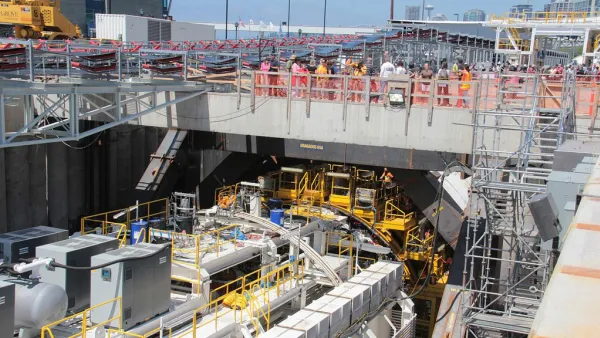
How Seattle's 'Rose-tinted Fantasy' Threw Billions in Public Money Away
"Seattle is in the midst of a full-spectrum transportation fustercluck," writes David Roberts for Grist.
Florida Pilots Bike Lanes on Highway Bridges
In an effort to create safer walking and biking environments, Miami-Dade counties have built bike lanes along two highways connecting the Miami with its eastern island beaches, reducing travel distances by 75 percent for cyclists.
On the Political Effects of Transportation Infrastructure
A comparison of road conditions in Rwanda and Mali—the former an autocracy with sterling roads, the latter a democracy where poor road conditions reveal a deep divide in the country.
Forget Sunk Cost—What's the Best Way to Spend Bertha's Remaining Funds?
Seattle’s massive highway tunneling project delays while solutions are sought for the mechanical error that brought the project’s massive drilling machine, Bertha, to a halt. Some are starting to examine life after Bertha.
New York Rebrands Rest Stops as “Texting Zones”
New highway signs urge drivers to wait until the next rest stop before answering that text or email message. A recent study presents two more reasons why motorists who text are a major danger.
Is Turnabout Fair Play?
If American politicans and bureaucrats had favored public transit or pedestrians as aggressively as they favored cars in the 20th century, public policy would be very different indeed.
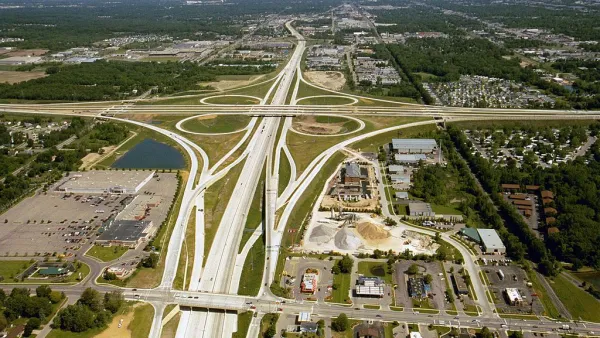
An Argument for Eliminating Federal Transportation Funding
Charles Marohn turns a critical eye toward the inertia of federal transportation policy and the shortsightedness of its most treasured investment. Since America seems to be stuck with a federal transportation bill, he suggests ways to make it work.
Would Building an Outer Beltway Around D.C. Save the Planet?
Some highway advocates in the suburbs surrounding Washington, DC think that building an outer Beltway through Northern Virginia will be beneficial to the planet. Others disagree.
Chinese Cities Following Unsustainable Trail Blazed by Western Planners
As part of a Foreign Policy magazine special report on cities, Peter Calthorpe examines the form of China's urban growth, which is beginning to resemble the car-oriented development of the United States in the 1950s and 60s.
From the Golden Age of Skyscrapers, an Eyesore No More
Anthony Paletta takes a look at a new book by Elihu Rubin, chronicling the intriguing political history behind the construction of Boston's Prudential Center in the mid-1950s.
Can a City Have Too Much Transportation Network?
Yonah Freemark critiques a planned expansion to Dallas' already-extensive highway network, arguing that it undermines billions of dollars in light rail investment and sets its downtown on a path of stunted growth.
After Funding, Highway Projects Go Untracked
After the Big Dig, the most expensive highway projects are subject to more rules, but use of funds is largely up to the states, who may come back for more money pending planning and design issues that arise.
The High Cost of Free Roads
In Wisconsin, taxpayers pay roughly $779 per household for roads and $50 for transit. But most drivers still believe that transit is subsidized and roads pay for themselves, writes Tanya Snyder.
"Rare Show of Bipartisanship" Behind Highway Overhaul Legislation
The two-year transportation Senate bill would mean improved infrastructure, jobs, and state-level flexibility. And as far as both parties are concerned, it's a winner.
The New Trend in Highways: Capping Them
Blair Kamin uses Columbus, Ohio's retail development on the Cap at Union Station as a success story. What can Chicago learn from this design strategy that at once addresses economic development and the enrichment of the cityscape?
The End of the Great American Highway
The American highway is in shambles, and there is not enough money to fix it, reports Zach Rosenberg of Car and Driver Magazine.
City of the Future: Two Legs Good, Four Wheels Bad
Once dubbed the "lungs of the city," highways are becoming perhaps less essential. From Seattle to Seoul, pedestrianization is gaining traction on both the domestic and international fronts.

FREE Course: Walkable City 1: Why Walkability?
After describing his path towards focusing on walkability as the essence of good planning, Jeff Speck marches through his five principal reasons for making more walkable places.
Reinventing Malls: Planning Alchemy—Turning Gray Fields Into Gold
The course focuses on the opportunities and imperatives that shape reinvention of mall sites.

City of Rosemead
Rutgers University, Edward J. Bloustein School of Planning and Public Policy
One Hundred Miles
University of Michigan School for Environment and Sustainability (SEAS)
Hunter College, City University of New York (CUNY)
The Architects Foundation
City of Cambridge
The Pocatello Development Authority
The Urban Renewal Agency of the City of Pocatello









