In Wisconsin, taxpayers pay roughly $779 per household for roads and $50 for transit. But most drivers still believe that transit is subsidized and roads pay for themselves, writes Tanya Snyder.


Snyder talks with the State Smart Transportation Initiative at the University of Wisconsin-Madison, who argue that non-users and taxpayers in general are on the hook for a significant portion of the costs of building and maintaining roads.
Snyder quotes a report from 1,000 Friends of Wisconsin:
"Between 2004 and 2008, roads in the state cost an average of $4.24 billion annually. Of this, $1.74 billion came from revenue sources unrelated to road use-primarily property and sales taxes-while another $600 million was borrowed
The fact is, roads constitute one of the biggest tax burdens we face."
Thanks to Tanya Snyder
Read the full story: Transit’s Not Sucking the Taxpayer Dry — Roads Are
Building Roads to Cure Congestion Is an Exercise in Futility
University of Toronto professors say that building more roads just encourages more driving. Building transit doesn't help reduce congestion either, though it still maximizes the value of the transportation system.
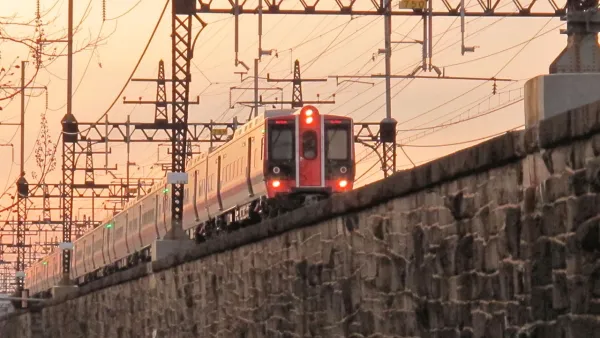
Opinion: Transportation Funding Priorities Are Outdated
Investing in technology and promoting innovation in the transportation sector can further the Biden administration's goals of reducing carbon emissions and improving public transit.
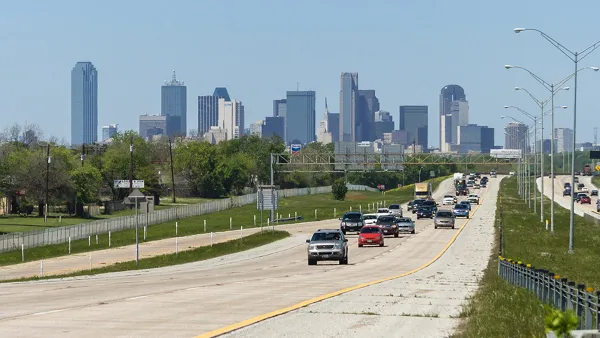
Induced Demand: Why Highways Still Reign in Dallas
Regional planners and Dallas officials aren't confident that the area's highway-centric worldview (and budget) will change anytime soon. The city's competitiveness in the national job market may be on the line.

Planetizen Federal Action Tracker
A weekly monitor of how Trump’s orders and actions are impacting planners and planning in America.

California plans to bury El Niño’s downpour
If the state plays its cards right, it may be able to store a billion acre-feet of El Niño’s water in aquifers.

Desperate measures: Advocates weigh draining Lake Powell to fill Colorado River
Draining the reservoir could reduce evaporation losses by a couple hundred thousand acre-feet.

Mamdani’s pied-à-terre tax survives legal challenge
A panel of judges found that the plaintiffs failed to demonstrate injury as a result of New York City's implementation of the tax.

Eastern Nebraska is running out of electricity
Data centers and electrification are straining eastern Nebraska’s grid, throttling economic development.

Seattle passes record-breaking transit services expansion
Proposition 1 will double the city’s transit tax to add 95,000 more bus trips and preserve 180,000 bus trips annually.

FREE Course: Walkable City 1: Why Walkability?
After describing his path towards focusing on walkability as the essence of good planning, Jeff Speck marches through his five principal reasons for making more walkable places.
Reinventing Malls: Planning Alchemy—Turning Gray Fields Into Gold
The course focuses on the opportunities and imperatives that shape reinvention of mall sites.

City of Rosemead
Rutgers University, Edward J. Bloustein School of Planning and Public Policy
One Hundred Miles
University of Michigan School for Environment and Sustainability (SEAS)
Hunter College, City University of New York (CUNY)
The Architects Foundation
City of Cambridge
Montrose County
The Pocatello Development Authority