New highway signs urge drivers to wait until the next rest stop before answering that text or email message. A recent study presents two more reasons why motorists who text are a major danger.


“Earlier this week, New York Governor Andrew Cuomo announced that 91 'texting zones' have been established along major state highways,” writes Eric Jaffe. “Nearly 300 signs will guide drivers to these areas with messages like ‘It Can Wait: Text Stop 5 Miles.’”
“There's little to dislike with the initiative. Distracted driving is an enormous public safety hazard that will only become more enormous as the texting generation gets behind the wheel. The campaign was also relatively low cost,” he continues, “since the texting zones are simply re-branded rest stops.”
Whether or not the re-brand will sway multi-tasking motorist to put down their mobile devices remains to be seen. The results of a recent study conducted by psychologists at the University of Utah, however, came to some concerning conclusions regarding multi-tasking drivers. First, those who were poor multi-taskers actually had high confidence in their multi-tasking abilities. Second, those who admitted to texting while driving proved to be among the poorest performers in test of multi-tasking capability.
Read the full story: The People Who Need 'Texting Zones' on Highways Most Are Also Least Likely to Use Them
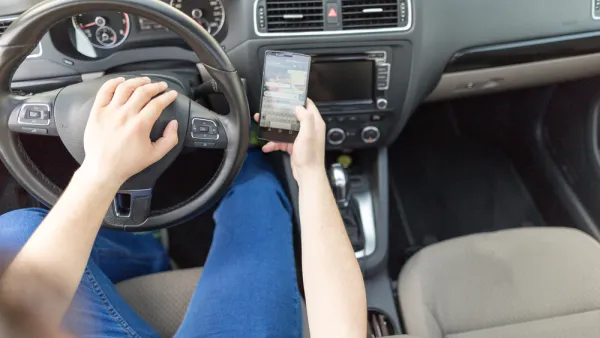
Distracted Driving—Still a Problem and a Threat to Public Safety
Even with laws limiting or prohibiting the use of devices while driving, motorists continue to make calls and text while driving.
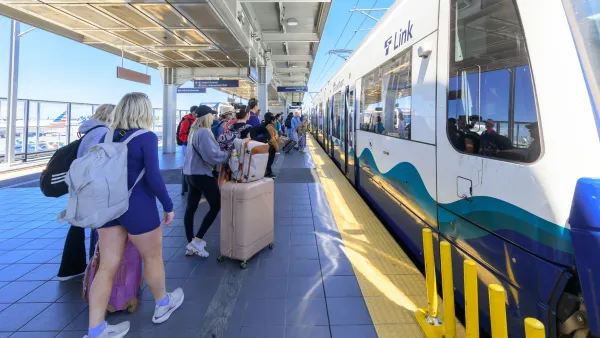
How Chicago, New York and Seattle are funding transit projects amid tough times
Notes from the American Public Transportation Association's TransForm conference in Chicago.
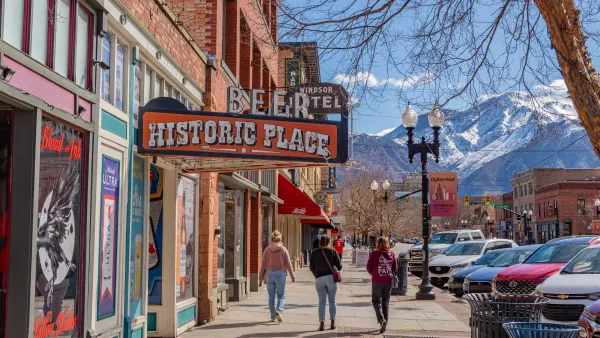
91% of Utah renters can’t enter the homebuying market
Homeownership in Utah has dropped to historic lows, despite improvements in the number of affordable rentals on the market.

Planetizen Federal Action Tracker
A weekly monitor of how Trump’s orders and actions are impacting planners and planning in America.

Eastern Nebraska is running out of electricity
Data centers and electrification are straining eastern Nebraska’s grid, throttling economic development.

Study reveals best places in the U.S. for cycling, walking
New research from Streetlight Data examines bicycle and pedestrian miles per capita in the 100 largest U.S. cities by population.

Next-generation nuclear reactors are coming to Texas
The reactors will not require towering containment structures thanks to new safety features.

California distributes $1.3 billion to prevent transit service cuts, bolster projects
Twenty-eight projects across California received a portion of the funding.

Pennsylvania Democrats have 15 affordability, clean energy bills for flipped state Senate
Bills in consideration include a bill supporting geothermal energy and a bill supporting solar on warehouses.

FREE Course: Walkable City 1: Why Walkability?
After describing his path towards focusing on walkability as the essence of good planning, Jeff Speck marches through his five principal reasons for making more walkable places.
Reinventing Malls: Planning Alchemy—Turning Gray Fields Into Gold
The course focuses on the opportunities and imperatives that shape reinvention of mall sites.

City of Charlotte
City of Rosemead
Rutgers University, Edward J. Bloustein School of Planning and Public Policy
University of Michigan School for Environment and Sustainability (SEAS)
Hunter College, City University of New York (CUNY)
The Architects Foundation
City of Cambridge
The Pocatello Development Authority
The Urban Renewal Agency of the City of Pocatello