A comparison of road conditions in Rwanda and Mali—the former an autocracy with sterling roads, the latter a democracy where poor road conditions reveal a deep divide in the country.


"That good roads have a positive economic effect [pdf] seems like a no-brainer," writes Christian Caryl. The crux, however, of Caryl's think-piece, however, is that we often fail to compare the political effects of good roads.
Case in point: the perfect conditions of the roads in Rwanda, a country governed by autocracy.
"In Rwanda, decent roads stand for the official commitment to provide everyone with equal access to the fruits of development -- concrete evidence, if you will, of the determination to overcome the ethnic divides that led the country into mass slaughter just two decades ago."
Caryl compares that to the condition of a 250-mile dirt road that separates two of the main cities in Mali, a country torn apart by rebellion two years ago but now governed by a democracy.
Read the full story: The Political Magic of Roads
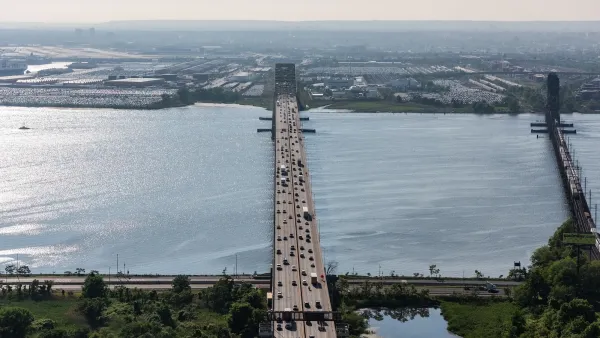
New Jersey Governor Kills ‘Boondoggle’ Highway Expansion
Gov. Sherrill ‘right-sized’ the Newark Bay Bridge reconstruction project, nixing a second proposed bridge and road expansion.
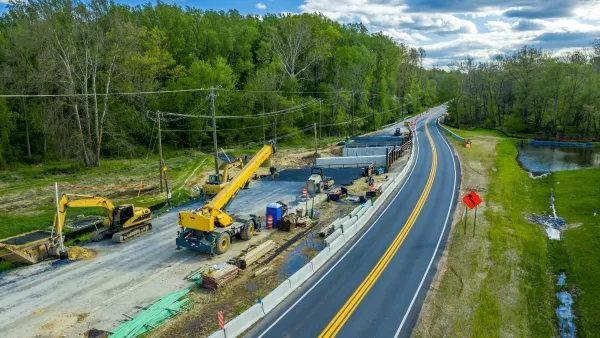
Study: Cost of Expanding Roads Outweighs Benefits
New research shows that the economic benefits of roadbuilding projects don’t come close to exceeding most projects’ costs.
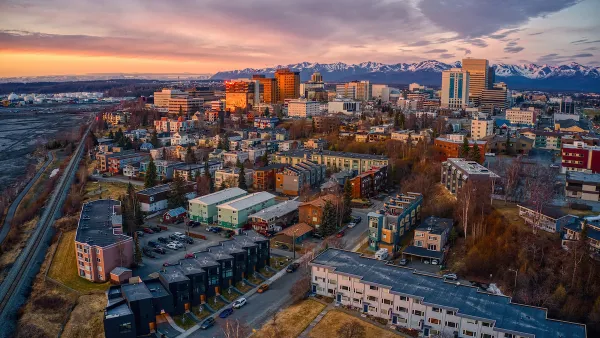
Anchorage High-Speed Highway Project Met With Skepticism
The Alaska Department of Transportation and its consultants are working on a Planning and Environmental Linkages study of the Glenn-Seward Highway that bisects the middle of Anchorage, Alaska.

Desperate measures: Advocates weigh draining Lake Powell to fill Colorado River
Draining the reservoir could reduce evaporation losses by a couple hundred thousand acre-feet.

Eastern Nebraska is running out of electricity
Data centers and electrification are straining eastern Nebraska’s grid, throttling economic development.

Move over, LA: St. Louis gears up for Olympics, invests millions in downtown redevelopment
The Missouri city will host the 2028 Olympic soccer group stage and knockout matches.

Mass. votes against statewide minimum lot size for single-family homes
Over 2 million residents voted on Question 7; it was decided by just over 30,000 votes.

Maryland’s $15 billion bridge project gains key approval
The Maryland Transit Authority said the project will create over 60,000 jobs and add $23 billion to the local economy.

‘No clear next steps’ for Chicago's permanent festival grounds
Eleventh Ward Ald. Nicole Lee has suggested Soldier Field as a possible location for the permanent event space.

FREE Course: Walkable City 1: Why Walkability?
After describing his path towards focusing on walkability as the essence of good planning, Jeff Speck marches through his five principal reasons for making more walkable places.
Reinventing Malls: Planning Alchemy—Turning Gray Fields Into Gold
The course focuses on the opportunities and imperatives that shape reinvention of mall sites.

City of Rosemead
Rutgers University, Edward J. Bloustein School of Planning and Public Policy
One Hundred Miles
University of Michigan School for Environment and Sustainability (SEAS)
Hunter College, City University of New York (CUNY)
The Architects Foundation
City of Cambridge
The Pocatello Development Authority
The Urban Renewal Agency of the City of Pocatello