Social / Demographics
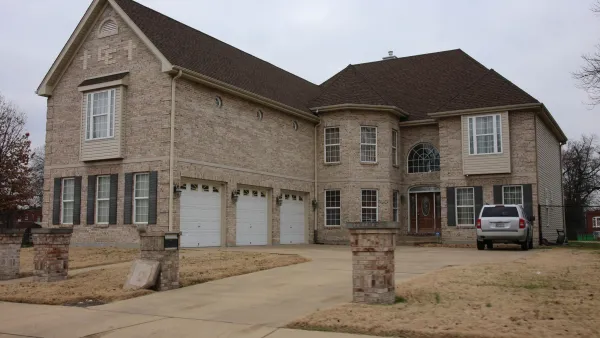
Why the McMansion Isn't Really Back
Joe Cortright criticizes reports linking high median new home sizes to a renewed demand for McMansions. The market for single-family homes, he argues, locks out buyers of modest means. Only the well-off are buying.
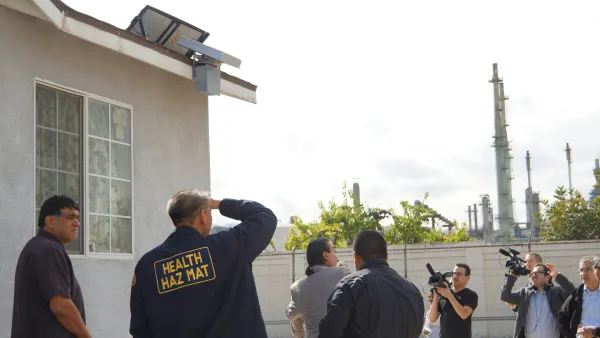
The EPA's Lackluster Environmental Justice Record
The Center for Public Integrity has released a report criticizing the EPA's environmental justice competence. In only 12 cases has the agency taken official action on behalf of communities affected disproportionately by polluters.
Traffic Deaths Soar—Is Cheap Gas a Culprit?
An August 17 press release from the National Safety Council indicates the United States is on track to exceed 40,000 road deaths this year, the highest since 2007. A January NPR report links the spike to decreased gas prices.
Stress Test: On the Connection Between Gentrification and Helicopter Parenting
A subject sure to hit close home to many readers: the relationship between the modern concerns of parenting and expense urban living. In other words: how gentrification leads to helicopter parenting.
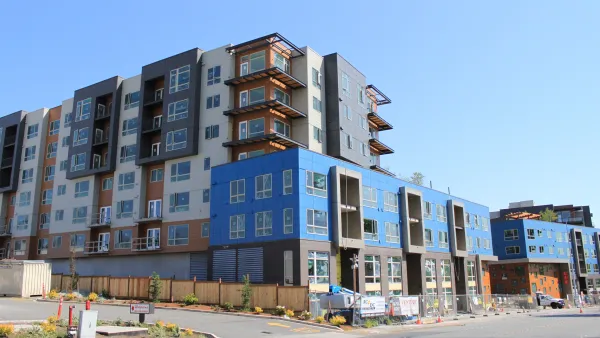
Escaping the Cycle of Inflated Housing Costs
In an insightful article, William Fulton unpacks the supply-demand cycle driving costs skyward in certain areas. To address the problem, new construction needs an unprecedented level of diversity.
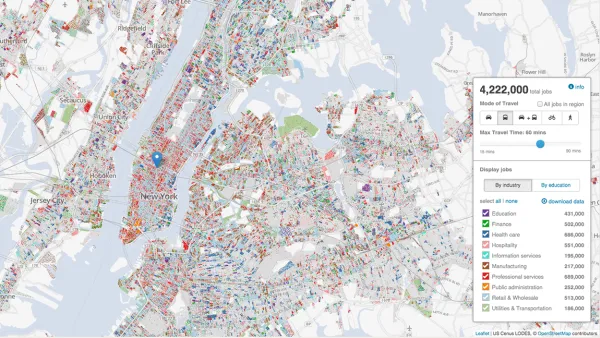
A Central Hub for Open Data
Designed by researchers at the University of Chicago, the Plenario platform gathers all available open data for a specific area. Then it presents the data in an easy-to-use format.

Yes, Urban Millennials Do Drive Less
Proof from the Census Bureau's latest American Community Survey on commuting by auto shows that millennials, if they live in cities, do indeed drive less. Census researcher Brian McKenzie describes the finding in the bureau's blog, Random Samplings.
Household Formation on the Rise—For a Surprising Reason
Writing for the Terner Center for Housing Innovation at U.C. Berkeley, Jed Kolko breaks down the data on recent trends in household formation.
Bay Area Leads the Nation in Reducing Solo Commuters
According to the Census Bureau's American Community Survey on commuting to work, one subregion in the Bay Area can claim accolades for having achieved the largest drop in solo-commuting from 2006, scoring the third lowest drive-alone rate in 2013.
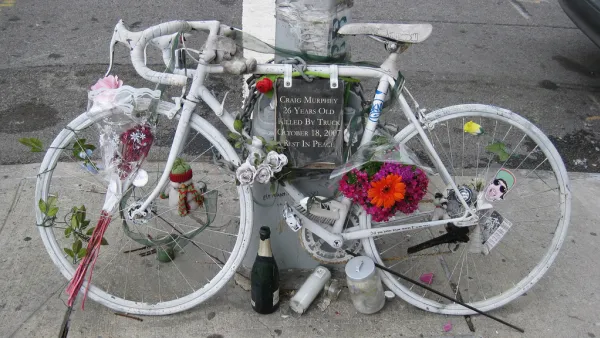
New Study Examines Bicyclist Fatality Data from 1975-2012
There's good and bad news to report from the 37-year study. Good news: Decreased child fatal bike crashes, but it results from fewer children biking. Bad news: Increased adult fatal crashes, but it results from an increase in adult male cyclists.
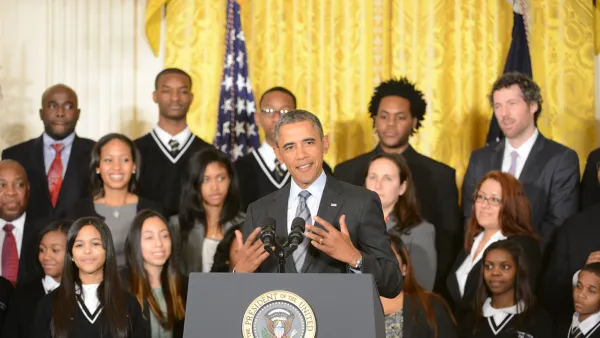
Promise Zones Partner Up in Los Angeles and Philadelphia
A new phase of President Obama's Promise Zone anti-poverty initiative will take place simultaneously in Los Angeles and Philadelphia. AmeriCorps staff will be on hand to provide career coaching to high school students.
Upper Manhattan's Disappearing Bodegas
Rising rents and competition with chains are taking their toll on Manhattan bodegas, a mainstay for hispanic neighborhoods for their fresh and ethnic foods. As their numbers decline, chain stores increase, and Walk Scores drop.
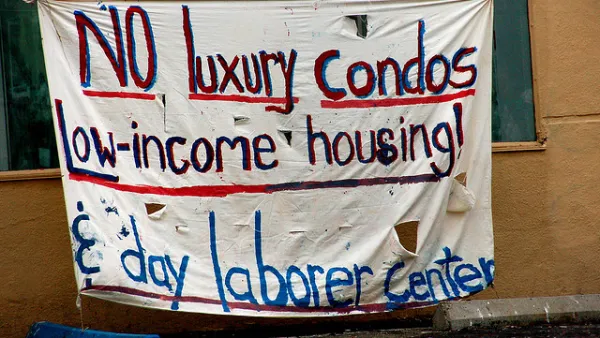
What's the Matter With the Planning Process?
Current planning models places housing affordability and preservation fundamentally at odds with one another. We must be willing to re-evaluate our processes if we are to truly move forward.
Harnessing Social Resilience in the Rust Belt
Paterson, New Jersey's diverse immigrant population holds the potential to revive the city's declining economy. Writer Jeff Byles documents key resources the city has and how similar postindustrial cities have harnessed community-driven planning.
Rethinking Culture and Community in New York City
Caron Atlas has spent decades working to understand and improve the relationship between cities and the arts. As co-director of Naturally Occurring Cultural Districts New York, she advocates for the recognition of artistic activity throughout NYC.

Measuring Well-Being in Santa Monica
The beachfront town known for its surfers and celebrities is collecting data that dig deeper than traditional measures of economic prosperity, and the results may be surprising.
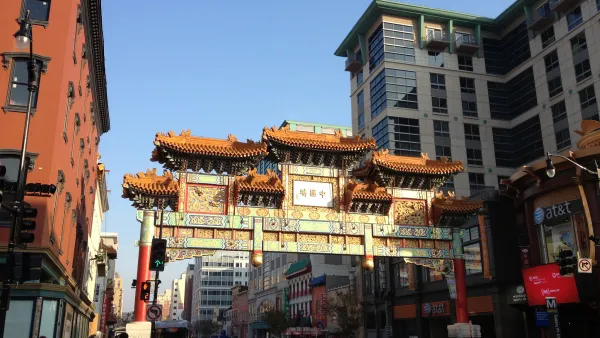
Residents Forced Out of Washington, D.C.'s Chinatown
Can a neighborhood still call itself Chinatown when everyone living there is wealthy and white? Beset by rapid gentrification, longtime residents of D.C.'s Chinatown fight to keep their homes.
How Falling Inequality Rates Mislead
While the vast majority of cities saw an increase—or no decrease—in neighborhood inequality since 1990, nearly 30 regions became more equal. But paper equality can be problematic when the rich simply up and left town.
Blog Series Explores the 'Heart of the Arctic'
Hazel Borys chronicles an Arctic expedition adventure, rife with environmental insights. If you ever wondered what it felt like in the olden days to receive dispatches from explorers off in distant mysterious lands, maybe it felt something like this.
City Life in the Republic of NGOs
Haiti's weak government and heavy foreign aid presence has led some to refer to it as the "Republic of NGOs." Satellite explored how this dynamic plays out in the small city of Fort-Liberté, which has been shaken by recent protests over electricity.

FREE Course: Walkable City 1: Why Walkability?
After describing his path towards focusing on walkability as the essence of good planning, Jeff Speck marches through his five principal reasons for making more walkable places.
Reinventing Malls: Planning Alchemy—Turning Gray Fields Into Gold
The course focuses on the opportunities and imperatives that shape reinvention of mall sites.

City of Charlotte
City of Rosemead
Rutgers University, Edward J. Bloustein School of Planning and Public Policy
University of Michigan School for Environment and Sustainability (SEAS)
Hunter College, City University of New York (CUNY)
The Architects Foundation
University District Partnership









