Be a citizen, not just a consumer.


Scott Doyon talks about people's reaction to the redevelopment of a beloved tavern in his city: "Reacting in oh-so-predictable knee-jerk fashion to the usual melange of click-baity headlines, insufficient detail, and news posts missing the nuance of the story, people went nuts."
"Evil developers! No respect for history! Density, density, density! No matter, I thought. The story will get clarified and people will come to recognize that, rather than a curse, what we’re witnessing is a blessing that will not only help endow the tavern’s next century, it will replace an acre of asphalt car storage with both people and neighborhood-serving commercial enterprise. In short, it will deliver all the things people keep saying they want."
"But I was wrong. Even as the story’s details got ironed out, people were still angry in ways I just couldn’t fathom."
Doyon goes on to talk about NIMBYs' frozen-in-amber delusion and how to navigate through to placemaking.
Read the full story: We’re all complicit in change. So now what?
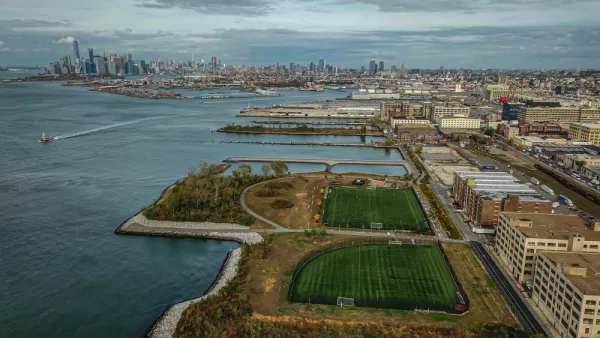
Controversial Rezoning for Industry City Mega-Project Finally Withdrawn in New York City
A controversial summer has finally claimed the grand ambitions for a waterfront site in Sunset Park, Brooklyn.
A Planning Showdown in New York City
The proposal to rezone the Industry City redevelopment area in the Sunset Park neighborhood of Brooklyn has won a key approval, but a controversial showdown in the City Council still awaits.
Councilmember Nixes Rezoning Request for Massive Brooklyn Redevelopment Project
Gentrification and displacement concerns won the day over a plan to rezone a former industrial area in Sunset Park, Brooklyn for new retail, offices, hotels and restaurants.

Planetizen Federal Action Tracker
A weekly monitor of how Trump’s orders and actions are impacting planners and planning in America.

California plans to bury El Niño’s downpour
If the state plays its cards right, it may be able to store a billion acre-feet of El Niño’s water in aquifers.

Desperate measures: Advocates weigh draining Lake Powell to fill Colorado River
Draining the reservoir could reduce evaporation losses by a couple hundred thousand acre-feet.

US buildings threatened, destroyed by fires set to triple by 2060
Researchers found a high fire risk for socioeconomically vulnerable neighborhoods in the American West.

LA residents may be allowed to paint their own crosswalks
Councilwoman Katy Yaroslavsky put out a motion instructing the Los Angeles Department of Public Transportation to study the feasibility of allowing volunteers to paint crosswalks.

Dallas moves to overhaul its zoning code
The city's zoning reform will allow more multi-family and mixed-use developments.

FREE Course: Walkable City 1: Why Walkability?
After describing his path towards focusing on walkability as the essence of good planning, Jeff Speck marches through his five principal reasons for making more walkable places.
Reinventing Malls: Planning Alchemy—Turning Gray Fields Into Gold
The course focuses on the opportunities and imperatives that shape reinvention of mall sites.

City of Rosemead
Rutgers University, Edward J. Bloustein School of Planning and Public Policy
One Hundred Miles
Hunter College, City University of New York (CUNY)
The Architects Foundation
University of Cincinnati Online
City of Cambridge
Montrose County
The Pocatello Development Authority