There is increased call for inclusion and diversity in architecture. This London exhibition profiles five female architects and urban designers at the forefront of their profession.


Lucy Bullivant describes a transition from hard infrastructural models to systems that take the natural and social sciences into account. She asserts that women could lead that shift. From the article: "Green infrastructure, silviculture (trees) and the science of soils, biophilic design, climatic future-proofing and convivial spaces for everyone – 'the soft stuff is the hard stuff' is a common refrain that local borough staff, community groups and some enlightened developers are increasingly adopting as a practical philosophy."
Bullivant is the curator of a London exhibit showcasing the work of five female architects. For some of them, "construction industry obsessed with short-term profit" is a challenge to be overcome: "The role of architect is under pressure, everyday at risk of being pushed aside by value engineering, but these urbanistas know that architecture is one of the very few generalist professions . If you cannot assert your personal values you give up the architect’s duty of care, and you might as well leave the career that you love."
The article echoes repeated calls for architecture and urban design to be more inclusive. Each architect provides her personal perspective on urban design. Bullivant writes, "Each city and town has its own DNA, but urban centres need more support from integrated plans in which people from across the whole community can play an active part. They should feel a greater sense of involvement in the use of local resources, land, waste and renewable energy."
Read the full story: How are women changing our cities?
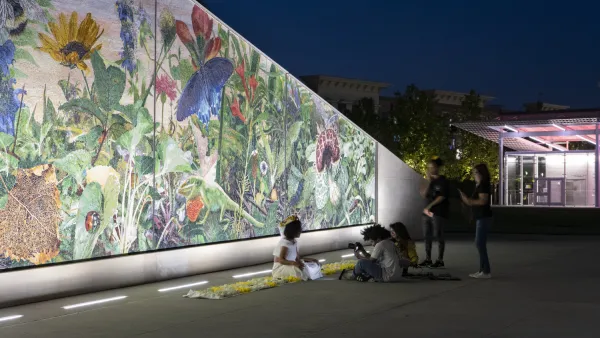
Placemaking: Building on the ‘Soul’ of a Place
Placemaking is often mistaken for a form of manufacturing. Every place already has a story to tell—placemaking just brings that story forward.
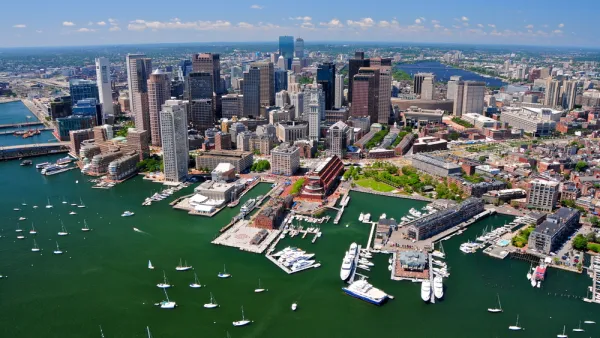
Boston to Consider Workforce and Investor Diversity in Real Estate Decisions
Beginning this week, the city of Boston will ask developers how they plan to include women and minorities as workers and investors when putting city-owned real estate out for bid.
Urban Agriculture Projects in Chicago Show the Way
Successful Chicago urban agriculture projects on rooftop, in edible lawn, and at a school reviewed by resilience consultant Dave Hampton.

Planetizen Federal Action Tracker
A weekly monitor of how Trump’s orders and actions are impacting planners and planning in America.

Eastern Nebraska is running out of electricity
Data centers and electrification are straining eastern Nebraska’s grid, throttling economic development.

Study reveals best places in the U.S. for cycling, walking
New research from Streetlight Data examines bicycle and pedestrian miles per capita in the 100 largest U.S. cities by population.

Federal government nominates new FTA administrator
Mark Aesch is currently the founder and CEO of a transportation management consulting firm.

Developers reveal $10 billion stadium plan as ‘Hail Mary’ to keep Bears in Chicago
The plan would also boast a public park, high- and mid-rise buildings and a youth sports complex.

As Texas embraces carbon storage, a Black community questions the risks
Texas now issues permits for companies to store carbon dioxide underground. East Texas residents fear safety risks, and skeptics doubt the climate benefits.

FREE Course: Walkable City 1: Why Walkability?
After describing his path towards focusing on walkability as the essence of good planning, Jeff Speck marches through his five principal reasons for making more walkable places.
Reinventing Malls: Planning Alchemy—Turning Gray Fields Into Gold
The course focuses on the opportunities and imperatives that shape reinvention of mall sites.

City of Charlotte
City of Rosemead
Rutgers University, Edward J. Bloustein School of Planning and Public Policy
University of Michigan School for Environment and Sustainability (SEAS)
Hunter College, City University of New York (CUNY)
The Architects Foundation
City of Cambridge
The Pocatello Development Authority
The Urban Renewal Agency of the City of Pocatello