Seattle's Find It, Fix It app plays a telling role in the city's approach to its homeless population. The question is whether the app is fixing anything for the people living on the street.


Dae Shik Kim Hawkins reports:
Surrounded by the vibrant, emerald trees that give the city its nickname, Seattle’s Ravenna Woods seem like the perfect place for homeless people to build shelter without disrupting metropolitan life. If not for a large, homemade banner at the entrance of the encampment that read, “Do Homeless Lives Matter?” you might not even have noticed they were there.
Someone did notice, as Hawkins notes, and in December 2017, the city sent a notice of removal to the community living in Ravenna Woods. "The city would spend over $10 million on this and similar homeless sweeps in 2017 alone," according to Hawkins.
Enabling the process of discovering, warning, and eventually displacing homeless encampment is a mobile app with a much more benign stated purpose.
Encampments like the one in Ravenna Woods are reported to the city regularly. The City of Seattle even offers an app to make the process easier. The Find It, Fix It app was originally designed to allow community members to report potholes, dumping, signal issues, and other neighborhood problems. But the app has warped into a powerful instrument for high-tech community patrolling, enabling individuals to report abandoned vehicles and homeless encampments.
The article includes a lot of statistics to capture the scope of the homelessness problem in Seattle, while also telling the stories of homeless people living in Raveena Woods and how the city's approach to their communities has impacted their lives.
Read the full story: An App for Ejecting the Homeless

Trump Wants to Force Homeless People Into ‘Tent Cities.’ Can He?
The president pushed for sweeping crackdowns and the possible internment of people experiencing homelessness. To see what's coming, we should look to what states have already done.
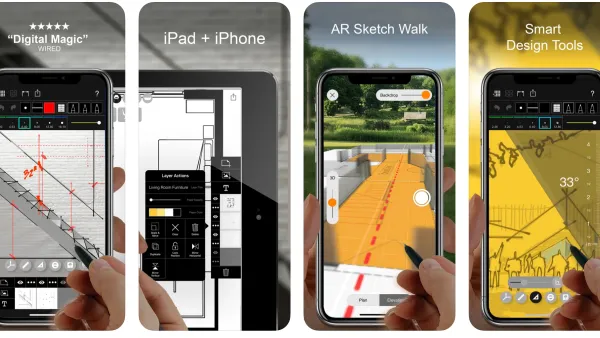
Best Apps for Urban Planning in 2022
Mobile apps continue to redefine the practices of planning—urban planning, regional planning, transportation planning, community planning, and rural planning included.
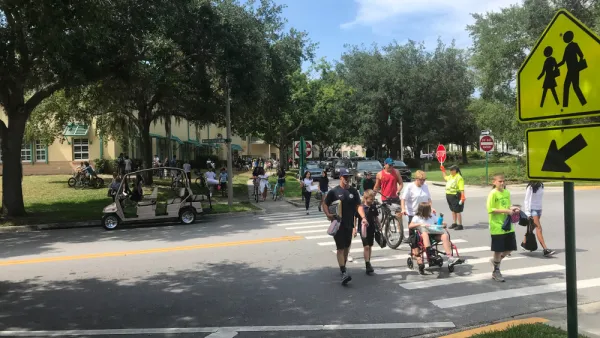
Earn Rewards for Traveling for by Foot, Bike, Bus, or Train
The city of Orlando is partnering with the Miles app.

Planetizen Federal Action Tracker
A weekly monitor of how Trump’s orders and actions are impacting planners and planning in America.

Amtrak, CN end decades-long dispute with eight-year agreement
The new operating agreement establishes an updated framework for the companies to work together, including processes to resolve disputes.

Judges permit Denver to divert 77,000 acre feet from the Colorado River for reservoir expansion
Overuse and climate change have caused the Colorado River’s water levels to plummet.

NYC DOT wants faster, more permanent street upgrades
The city is examining ways to build more concrete infrastructure without getting entangled in 'decades-long' projects.

'Something we’ve never seen before:' rising utility rates could strain city finances nationwide
Data centers, climate change and other factors have caused utility rates in the United States to increase by 38% since 2020.

Trump to overrule local leaders, lease millions of acres of America’s Pacific Island territories’ seafloors to mining companies
International law says that the Indigenous people of America’s territories have a right to prior and informed consent regarding projects that impact their countries.

FREE Course: Walkable City 1: Why Walkability?
After describing his path towards focusing on walkability as the essence of good planning, Jeff Speck marches through his five principal reasons for making more walkable places.
Reinventing Malls: Planning Alchemy—Turning Gray Fields Into Gold
The course focuses on the opportunities and imperatives that shape reinvention of mall sites.

Harvard University Graduate School of Design
KFH Group Inc.
Greater Baltimore Committee
The Architects Foundation
University of Cincinnati Online
The Pocatello Development Authority
The Urban Renewal Agency of the City of Pocatello