It's a temporary experiment, but Santa Monica will not cap the number of scooters operated by private companies in the city.


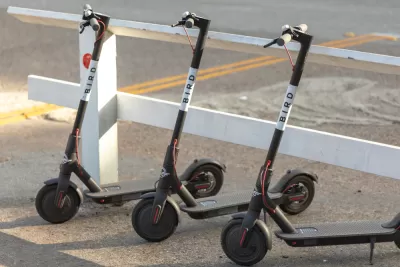
The city of Santa Monica has rendered a decision about the future of dockless scooters in the beachfront community—and gone a slightly different way than some of the more draconian approaches of cities like San Francisco and Austin.
Melissa Etehad and Tracey Lien report on the proceedings of a City Council meeting earlier this week resulting in a 16-month pilot program "that will allow electric-scooter and electric-bike rental companies to continue operating in the city." The city is presenting the pilot program as "a fact-finding mission to help the city craft longer-term regulations."
"Under Santa Monica’s pilot program, electric-scooter and electric-bike companies will have to apply for a permit and pay an annual fee of $20,000 and a per-device fee of $130," Etehad and Lien explain of the terms of the pilot program.
Companies that receive permits will also have to agree to create interactive safety education for riders, such as sending push notifications to customers’ phones to tell them if they have been riding unsafely. They’ll also have to share real-time data with the city; ensure that their scooters are evenly distributed throughout the city; establish a 24-hour hotline to field complaints; and make sure that improperly parked scooters are promptly moved.
On the important question of whether the city should cap the number of scooters companies are allowed to operate in the city, the article explains that decision was made not to limit the number to avoid the possibility that companies would saturate more dense parts of the city, leaving under-serve neighborhoods without the potential mobility benefit of the scooters.
FULL STORY: Santa Monica tells scooter companies: You can stay — but there are new rules

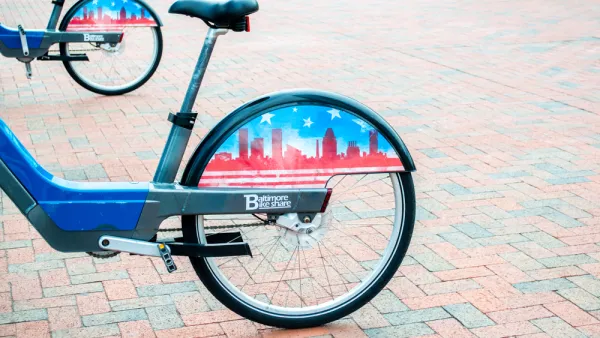
Baltimore Municipal Bike Share Ends; Private Bike Share Pilot Begins
Dockless electric scooters and bikes are welcome on the streets of Baltimore, as long as they follow a few rules. In related news, the municipal bike share system Baltimore Bike Share has ceased operations.
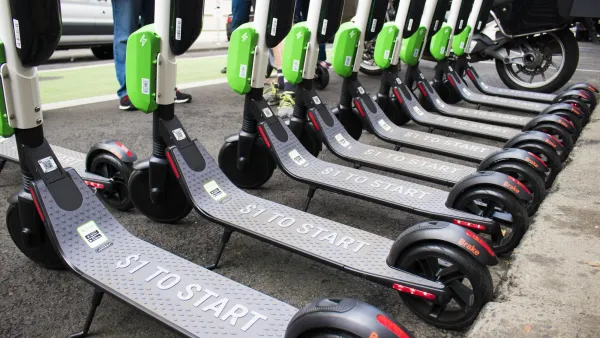
Chicago Dockless Scooters Used Across the City, New Study Shows
Data from the city's e-scooter pilot program show that they might be filling in the first-mile/last-mile gap for riders at all income levels.
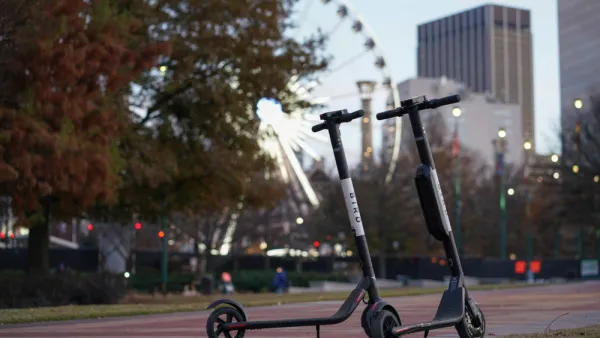
Scooter Curfew in Effect in Atlanta
A fourth scooter-related fatality has the city of Atlanta taking drastic measures.

Planetizen Federal Action Tracker
A weekly monitor of how Trump’s orders and actions are impacting planners and planning in America.

The state-sanctioned urbicide of Austin
People don’t kill cities. Freeways do.

US to reduce Colorado River water deliveries to Mexico
A new Colorado Treaty amendment reduces Mexico’s Colorado River water allocation by 250,000 acre feet.

Mamdani overhauls NYC's Vision Zero plan with 100 new policy goals
The overhaul aims to reduce traffic deaths and make streets safer for pedestrians, cyclists and drivers through lower speed limits, new safety infrastructure and more.

Amtrak not solely to blame for New Jersey commuter rail's unreliability, report finds
A new study from the Garden State Initiative found that NJ Transit’s budget grew 20% across a 4 year period, but reliability declined significantly over the same period.

EPA erases limits on planet-warming pollution from power plants
Under Monday’s plan, power plants would still have some limits on how much mercury, arsenic and other contaminants they can emit.

FREE Course: Walkable City 1: Why Walkability?
After describing his path towards focusing on walkability as the essence of good planning, Jeff Speck marches through his five principal reasons for making more walkable places.
Reinventing Malls: Planning Alchemy—Turning Gray Fields Into Gold
The course focuses on the opportunities and imperatives that shape reinvention of mall sites.

Eagle County Government
Harvard University Graduate School of Design
Nashville Planning Department
The Architects Foundation
University of Cincinnati Online
The Pocatello Development Authority
The Urban Renewal Agency of the City of Pocatello
Journal of the American Planning Association