Normally having the California Air Resources Board and the auto industry in agreement on emissions standards would be enough, but the Trump administration wants to ensure that California plays no role in setting standards.


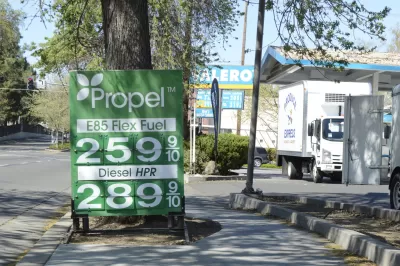
“Maybe in the first time in recorded history, California and the auto industry are mostly in agreement that standards on the books actually should be on the books, and California should have a place in implementing those standards,” stated Mary Nichols, chair of the California Air Resources Board.
"Her comments come as the White House’s Office of Management and Budget is reviewing a proposal that would ease automobile efficiency standards, and people familiar with the matter have said it calls for revoking California’s unique authority to set its own limits," reports Mark Chediak for Bloomberg News on June 5.
That proposal would mean rescinding the California Greenhouse Gas Waiver last granted by the U.S. Environmental Protection Agency under the Obama administration in July 2009.
Auto industry to President Trump: Climate change is not a hoax
“Automakers remain committed to increasing fuel efficiency requirements, which yield everyday fuel savings for consumers while also reducing emissions -- because climate change is real and we have a continuing role in reducing greenhouse gases and improving fuel efficiency,” David Schwietert, executive vice president of federal government relations at the Alliance [of Automobile Manufacturers, the industry’s leading trade group], wrote in a May 3 letter, reported Ryan Beene for Bloomberg News on May 21.
California, under Attorney General Xavier Becerra, with 15 other states and the District of Columbia, filed a lawsuit on May 1 against the EPA over their rollbacks of vehicle greenhouse gas emission standards for model years 2022-2025.
Prolonged litigation is not what the auto industry wants, adds Chediak. "They’ve urged California and Trump administration officials to reach a deal that would adjust the standards in light of high light-truck sales and low fuel prices while still requiring annual mileage improvements."
Hat tip to Earth Justice Zero Emissions News.
FULL STORY: California and Carmakers ‘in Agreement’ on Emissions Standards


Rollback of Fuel Efficiency Standards Announced by EPA
EPA Administrator Scott Pruitt announced Monday that his agency is siding with auto manufacturers and relaxing greenhouse gas emission standards for new cars and light trucks.
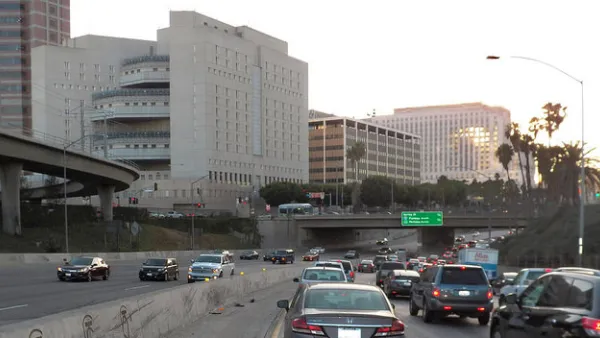
White House Ends Talks with California Over Fuel Efficiency Standards
Ending the talks means litigation will have to settle the conflict over the two standards: California and 12 other states continue to use the Obama-era standard of 36 mpg by 2025, while the administration's rule freezes standards at 2020, or 29 mpg.
California and 16 States Sue EPA Over Decision to Rollback Vehicle Emissions Rule
Environmental Protection Agency Administrator Scott Pruitt had announced the rollback of greenhouse gas emission and fuel economy standards on April 2. While the auto industry supports the move, not all auto executives agreed.

The state-sanctioned urbicide of Austin
People don’t kill cities. Freeways do.

US to reduce Colorado River water deliveries to Mexico
A new Colorado Treaty amendment reduces Mexico’s Colorado River water allocation by 250,000 acre feet.

New Jersey’s second-largest city bans standalone data centers
Jersey City will continue to allow co-location facilities, such as those meant for research institutions that store their own data.

Amtrak not solely to blame for New Jersey commuter rail's unreliability, report finds
A new study from the Garden State Initiative found that NJ Transit’s budget grew 20% across a 4 year period, but reliability declined significantly over the same period.

EPA erases limits on planet-warming pollution from power plants
Under Monday’s plan, power plants would still have some limits on how much mercury, arsenic and other contaminants they can emit.

Phoenix announces new on-demand transit service, more frequent RAPID buses
Both new services will launch in October, and are part of Phoenix's Project Effective Access Solutions for Easing Congestion.

FREE Course: Walkable City 1: Why Walkability?
After describing his path towards focusing on walkability as the essence of good planning, Jeff Speck marches through his five principal reasons for making more walkable places.
Reinventing Malls: Planning Alchemy—Turning Gray Fields Into Gold
The course focuses on the opportunities and imperatives that shape reinvention of mall sites.

Eagle County Government
Harvard University Graduate School of Design
Nashville Planning Department
The Architects Foundation
University of Cincinnati Online
The Pocatello Development Authority
The Urban Renewal Agency of the City of Pocatello
Journal of the American Planning Association