Because it forces infill and efficient transit, among other things, traffic is actually good per capita GDP and jobs.


Statistics about time wasted in traffic and the cost it puts on society are as old as traffic itself, but a new study suggests congestion is actually good for economies Robert Steuteville reports for CNU.
How can wasted time be good? The authors of this study based on 89 US regions over 30 years say traffic pushes builders to create infill development, motivates efficient mobility like walking, biking and transit and gets people to live closer to where they want to work and entertain themselves. Whatever the reasons, they find congestion is positively connected to increases in jobs and per capita GDP.
"For our regions, peak hour delay had a statistically significant and positive effect on both per capita GDP and jobs. This suggests that our current concerns about traffic congestion negatively impacting the economy may not be particularly well founded," the authors of the study, Wes Marshall and Eric Dumbaugh write. The authors hope their study will inspire deeper research into what kind of congestion motivates useful adaptations, and what doesn't, but they feel confident that they've proven that congested roads don't lead to big economic losses.
FULL STORY: Congestion can be good, study reports

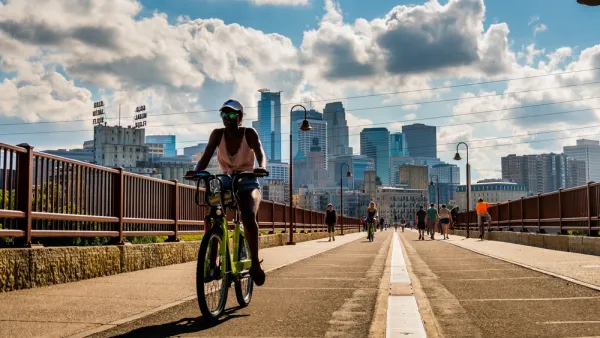
Study: Biking Brings Happiness
A Minneapolis study showed cyclists experienced the highest rates of satisfaction during their commute.
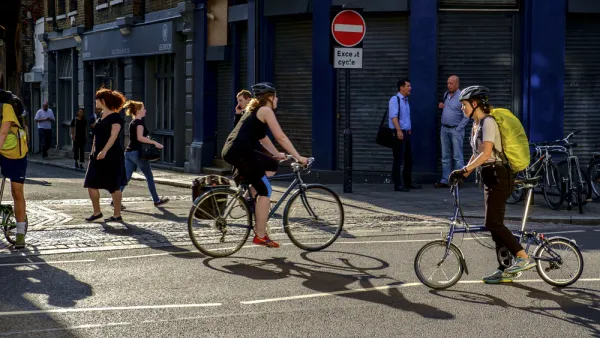
Bike Lanes Don't Cause Congestion
Research from Europe shows bike infrastructure doesn't add to urban traffic and can shift mode share from cars to bikes and reduce the need for solo car trips.
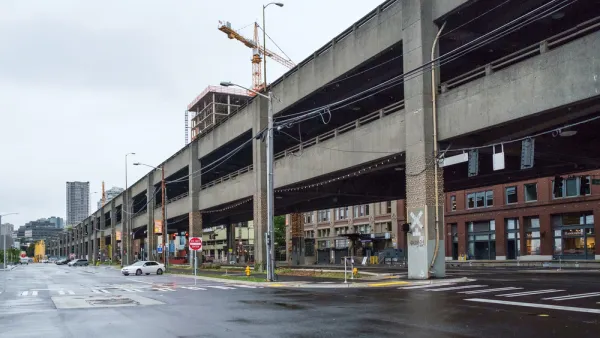
Seattle Scrambles to Handle Upcoming Traffic 'Squeeze'
Dubbed the "Seattle Squeeze," heavier traffic is expected in the new year as the Alaskan Way Viaduct closes and downtown construction projects continue. While the city prepares, activists want to use the opportunity to encourage other modes.

Planetizen Federal Action Tracker
A weekly monitor of how Trump’s orders and actions are impacting planners and planning in America.

The state-sanctioned urbicide of Austin
People don’t kill cities. Freeways do.

US to reduce Colorado River water deliveries to Mexico
A new Colorado Treaty amendment reduces Mexico’s Colorado River water allocation by 250,000 acre feet.

Mamdani overhauls NYC's Vision Zero plan with 100 new policy goals
The overhaul aims to reduce traffic deaths and make streets safer for pedestrians, cyclists and drivers through lower speed limits, new safety infrastructure and more.

Amtrak not solely to blame for New Jersey commuter rail's unreliability, report finds
A new study from the Garden State Initiative found that NJ Transit’s budget grew 20% across a 4 year period, but reliability declined significantly over the same period.

EPA erases limits on planet-warming pollution from power plants
Under Monday’s plan, power plants would still have some limits on how much mercury, arsenic and other contaminants they can emit.

FREE Course: Walkable City 1: Why Walkability?
After describing his path towards focusing on walkability as the essence of good planning, Jeff Speck marches through his five principal reasons for making more walkable places.
Reinventing Malls: Planning Alchemy—Turning Gray Fields Into Gold
The course focuses on the opportunities and imperatives that shape reinvention of mall sites.

Eagle County Government
Harvard University Graduate School of Design
Nashville Planning Department
The Architects Foundation
University of Cincinnati Online
The Pocatello Development Authority
The Urban Renewal Agency of the City of Pocatello
Journal of the American Planning Association