(Even if they don't talk about it very much.)


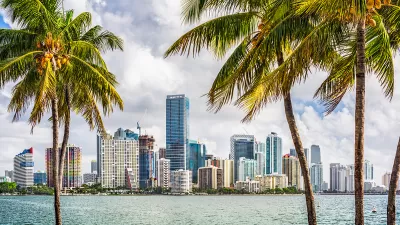
According to an article Nicolas Gunkel, "climate change summits typically feature big-city Democratic mayors rubbing shoulders. Republicans are rarer, with a few notable exceptions, such as Kevin Faulconer of San Diego and James Brainard of Carmel, Indiana."
But those exceptions are evidence of a growing trend of climate leadership from Republican mayors, according to Gunkel, who, along with a team at the Boston University Initiative on Cities, analyzed the political actions of Republic mayors of big cities, finding that they tend to "shy away from climate network memberships" and stop short of mentioning climate change specifically. "But in many cases they advocate locally for policies that help advance climate goals for other reasons, such as fiscal responsibility and public health."
The report, titled "Cities Joining the Ranks," still found a clear partisan divide between Republican and Democratic mayors: "On average, Republican-led cities with more than 75,000 residents belong to less than one climate network. In contrast, cities with Democratic mayors belonged to an average of four networks. Among the 100 largest U.S. cities, of which 29 have Republican mayors and 63 have Democrats, Democrat-led cities are more than four times more likely to belong to at least one climate network."
A lot more detail on the findings of the report, and what they reveal about climate action at the local level, can be found in the source article.
Read the full story: Many Republican mayors are advancing climate-friendly policies without saying so

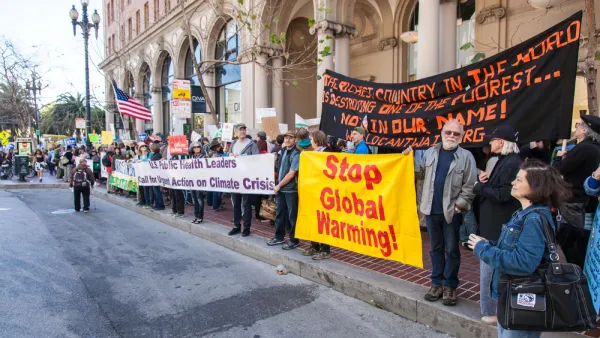
Republican Coalition Proposes a Carbon Tax to Fight Climate Change
Will a carbon tax have a better chance of success at the federal level if Republicans propose it? We're about to find out.
Republicans Back Urgent Climate Action
Four former EPA heads in Republican administrations, from Richard Nixon to George W. Bush, have penned an op-ed in The Times calling on members of all parties to support President Obama's recent climate initiatives and do more to curtail warming.
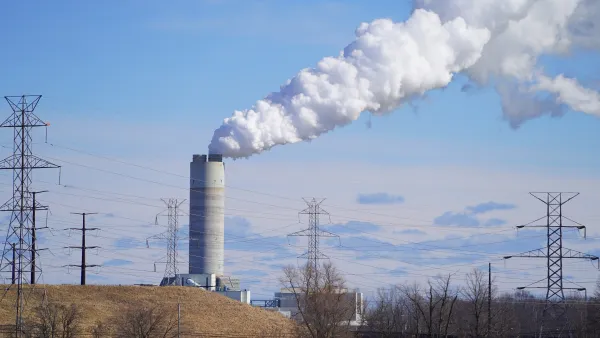
EPA erases limits on planet-warming pollution from power plants
Under Monday’s plan, power plants would still have some limits on how much mercury, arsenic and other contaminants they can emit.

Planetizen Federal Action Tracker
A weekly monitor of how Trump’s orders and actions are impacting planners and planning in America.

The state-sanctioned urbicide of Austin
People don’t kill cities. Freeways do.

US to reduce Colorado River water deliveries to Mexico
A new Colorado Treaty amendment reduces Mexico’s Colorado River water allocation by 250,000 acre feet.

Nation's most wind-powered state turns to coal as data centers increase energy demand
For the first time in decades, Iowa has increased its generation of coal power.

NYC cools commuters with city's first rain garden above a bus stop
New York City officials say the plants in the rain garden can absorb 16 gallons of rainwater during heavy storms.

Brightline West’s future may rely on $6 billion federal loan
The company has until Nov. 2 to make a $400 million equity investment into its proposed high-speed rail line.

FREE Course: Walkable City 1: Why Walkability?
After describing his path towards focusing on walkability as the essence of good planning, Jeff Speck marches through his five principal reasons for making more walkable places.
Reinventing Malls: Planning Alchemy—Turning Gray Fields Into Gold
The course focuses on the opportunities and imperatives that shape reinvention of mall sites.

Greater Baltimore Committee
Eagle County Government
Harvard University Graduate School of Design
The Architects Foundation
University of Cincinnati Online
The Pocatello Development Authority
The Urban Renewal Agency of the City of Pocatello
Journal of the American Planning Association