Brookings has put together nine rules for more cohesive and effective housing policy, despite federalism's tendency to create near-infinite local variety.



In spite of the hoopla around Ben Carson's proposed changes to HUD's mission statement, Jenny Schuetz of Brookings writes, the housing market takes its cues from a highly decentralized array of policy actors. "Only 4 percent of U.S. households (about 5 million low-income families) receive housing subsidies from the federal government. But the availability, quality, cost, and location of housing matters to all Americans."
Schuetz outlines six "do's" and three "don'ts" for housing policy across all levels. They include:
- Require clearer information about housing transactions
- Reduce barriers to housing supply at the local level
- Address discriminatory barriers preventing entry to high-opportunity areas, including carryovers from historical discrimination
- Don't favor systemic subsidies to some locations more than others
- Reduce subsidies to homeowners
- Encourage other wealth-building mechanisms besides real estate ownership
FULL STORY: Nine rules for better housing policy


Just 5% of Idaho Homes Affordable to Middle-Income Households
Idaho is in the top six least affordable states for the middle income bracket.

Report: Just 7 Percent of Homes for Sale Affordable to Black Households
The affordability crisis continues to impact American households across the board, with 16 percent of listings affordable to the average household.
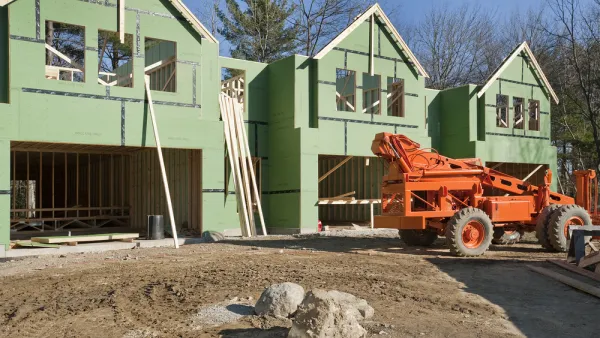
Report: Low Housing Production Stymies Entry-Level Buyers
According to this report, the trends point to a "less diverse, older, higher-income" crop of homebuyers as low production locks out the young and many people of color.

The state-sanctioned urbicide of Austin
People don’t kill cities. Freeways do.

US to reduce Colorado River water deliveries to Mexico
A new Colorado Treaty amendment reduces Mexico’s Colorado River water allocation by 250,000 acre feet.

New Jersey’s second-largest city bans standalone data centers
Jersey City will continue to allow co-location facilities, such as those meant for research institutions that store their own data.

Amtrak not solely to blame for New Jersey commuter rail's unreliability, report finds
A new study from the Garden State Initiative found that NJ Transit’s budget grew 20% across a 4 year period, but reliability declined significantly over the same period.

EPA erases limits on planet-warming pollution from power plants
Under Monday’s plan, power plants would still have some limits on how much mercury, arsenic and other contaminants they can emit.

Phoenix announces new on-demand transit service, more frequent RAPID buses
Both new services will launch in October, and are part of Phoenix's Project Effective Access Solutions for Easing Congestion.

FREE Course: Walkable City 1: Why Walkability?
After describing his path towards focusing on walkability as the essence of good planning, Jeff Speck marches through his five principal reasons for making more walkable places.
Reinventing Malls: Planning Alchemy—Turning Gray Fields Into Gold
The course focuses on the opportunities and imperatives that shape reinvention of mall sites.

Eagle County Government
Harvard University Graduate School of Design
Nashville Planning Department
The Architects Foundation
University of Cincinnati Online
The Pocatello Development Authority
The Urban Renewal Agency of the City of Pocatello
Journal of the American Planning Association