The affordability crisis continues to impact American households across the board, with 16 percent of listings affordable to the average household.


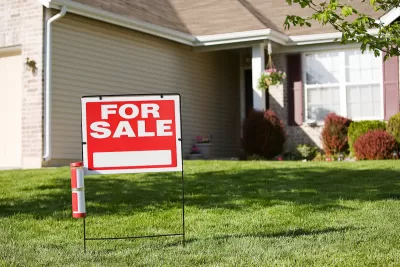
An article by Gabriella Cruz-Martinez in Yahoo Finance highlights how the housing crisis disproportionately impacts Black and Latino households. According to research from Redfin, “The average Black household could afford just 7% of listings for sale last year on a median income, while white households could afford 22% of listings. The share was nearly as bad for Latino households, which could afford just 10% of homes for sale.”
Across the country, only 16 percent of homes were affordable to the average homebuyer, ethnicity notwithstanding, a drop of 41 percent since 2022. In some of the most expensive markets like Anaheim, California, affordability rates are below 0.5 percent for Black and Latino households and 2 percent for white households. “At a national level, an average homebuyer in 2023 had to earn an annual income of at least $109,868 if they were aiming to spend under 30% of their income on a monthly mortgage payment for a median-priced home.”
The prognosis is less grim for 2024, as rent prices have started to decrease, but average rent costs remain above pre-pandemic levels. “According to Redfin, the increase in housing supply throughout 2024 and a burst of new construction could cause prices to drop by 1% on average by year-end.”
FULL STORY: Lack of affordable homes for sale hits minorities hardest, analysis shows

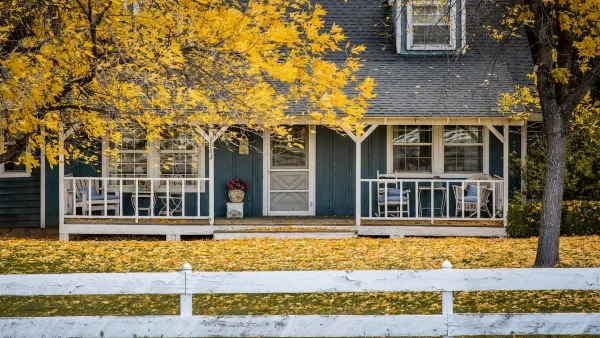
Just 5% of Idaho Homes Affordable to Middle-Income Households
Idaho is in the top six least affordable states for the middle income bracket.
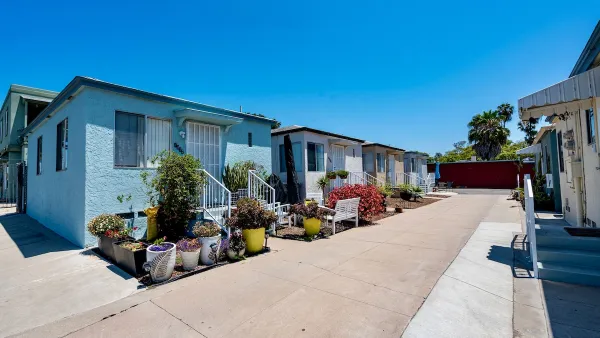
Opinion: How to Rebuild the ‘Starter Home’ Market
Large minimum lot sizes and restrictions on multi-unit housing put an artificial floor under home costs. Is it time to eliminate them?
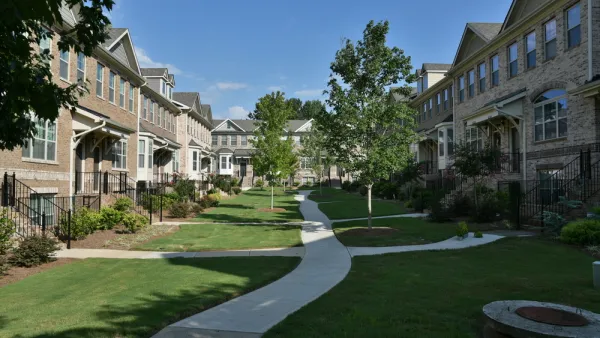
Atlanta Mayor Wants To Restrict ‘iBuyers’
The rise in investors buying up properties, sometimes before they’re even listed on the open market, is causing sharper spikes in home prices. Atlanta’s mayor wants to end that.

Planetizen Federal Action Tracker
A weekly monitor of how Trump’s orders and actions are impacting planners and planning in America.

The state-sanctioned urbicide of Austin
People don’t kill cities. Freeways do.

US to reduce Colorado River water deliveries to Mexico
A new Colorado Treaty amendment reduces Mexico’s Colorado River water allocation by 250,000 acre feet.

Baltimore to break ground on $50 million Transit Priority Project
The project will bring faster bus trips, safer streets and better bike connections to Baltimore.

Airbnb launches $250 million 'last-dollar financing' housing accelerator, makes first investment in Austin
The company will put $6.4 million towards affordable housing development in Texas’ capital.

Guerilla urbanists are building DIY bus stop benches in Chicago
A before-and-after of one of the bus stops with a new bench. The new benches are not officially sanctioned or permitted, but the residents who placed them hope they will be the start of a network of DIY benches across the city.

FREE Course: Walkable City 1: Why Walkability?
After describing his path towards focusing on walkability as the essence of good planning, Jeff Speck marches through his five principal reasons for making more walkable places.
Reinventing Malls: Planning Alchemy—Turning Gray Fields Into Gold
The course focuses on the opportunities and imperatives that shape reinvention of mall sites.

Eagle County Government
Harvard University Graduate School of Design
Nashville Planning Department
The Architects Foundation
University of Cincinnati Online
The Pocatello Development Authority
The Urban Renewal Agency of the City of Pocatello
Journal of the American Planning Association