The Twin Cities found the secret to bus service success, but it was never really a secret.


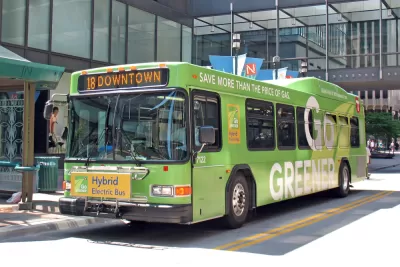
"The reviews are in for the Twin Cities’ first enhanced bus route — the A Line — and riders want more," according to an article by Angie Schmitt.
"Metro Transit calls the service arterial Bus Rapid Transit, or 'aBRT,' but the A Line has no dedicated right of way as it runs along Snelling Avenue," explains Schmitt. "Instead, the A Line has features that should be common on most bus routes."
That last point is the key to A Line's success in the Twin Cities. The kinds of service improvements Schmitt lists aren't innovations, invented by Elon Musk or someone at Sidewalk Labs. These are service improvements in place already all over the world, either in part or in total, that are proven to increase transit ridership. Whether transit is a real world priority or just a priority in press releases all depends on political leadership from politicians and planners.
The A Line has increased ridership by 30 percent since improvements were completed in 2016. That resounding success is clearing the way for more upgrades to other routes in the system. Schmitt provides more information:
Governor Mark Dayton has proposed $50 million in bonding for similar improvements to other bus routes. And the Pioneer Press gave this approach a resounding endorsement, saying the A Line is a good value that can be replicated quickly and help the region meet the needs of its growing population.
Read the full story: Minneapolis Figured Out the Formula for Increasing Bus Ridership
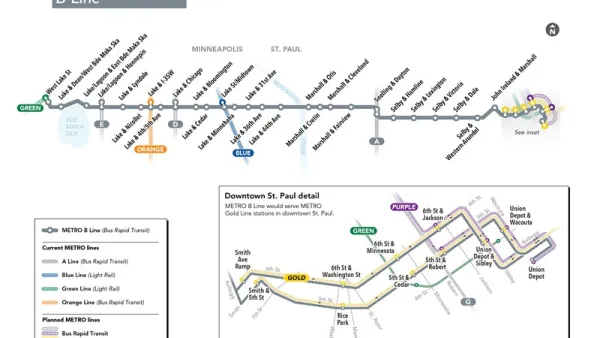
New Bus Rapid Transit Route Breaks Ground in the Twin Cities
The Twin Cities are on a mission to become the bus rapid transit capital of the United States. The latest improvement to advance that ambition broke ground earlier this week.
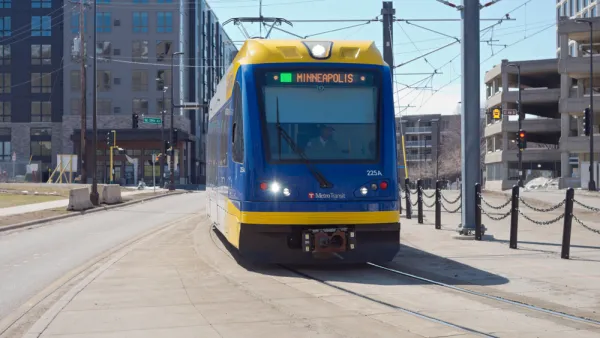
Three New Programs to Increase Transit Ridership in the Twin Cities
With peak hour commuter travel not expected to rebound to pre-pandemic levels, Metro Transit is getting creative in its efforts to attract new riders.
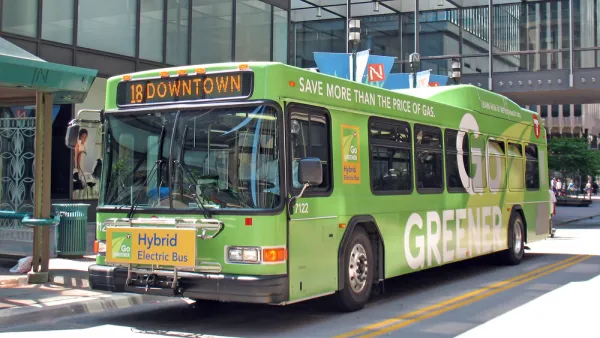
Twin Cities Set Ambitious Target for Electric Buses
The planned opening of a new bus rapid transit line is the impetus for a larger-scale shift to electric buses by Metro Transit.

Planetizen Federal Action Tracker
A weekly monitor of how Trump’s orders and actions are impacting planners and planning in America.

California plans to bury El Niño’s downpour
If the state plays its cards right, it may be able to store a billion acre-feet of El Niño’s water in aquifers.

Desperate measures: Advocates weigh draining Lake Powell to fill Colorado River
Draining the reservoir could reduce evaporation losses by a couple hundred thousand acre-feet.

Seattle passes record-breaking transit services expansion
Proposition 1 will double the city’s transit tax to add 95,000 more bus trips and preserve 180,000 bus trips annually.

Post election, Texas is no longer Musk’s 'AI oasis'
Elon Musk dolled out $446 million on the 2026 midterms, the most ever spent by a non-canidate.

Chicago voters approve permanent festival grounds, penalty for vacant property owners
Currently, major summer and fall festivals take over public parks for weeks at a time, drawing criticism from nearby residents

FREE Course: Walkable City 1: Why Walkability?
After describing his path towards focusing on walkability as the essence of good planning, Jeff Speck marches through his five principal reasons for making more walkable places.
Reinventing Malls: Planning Alchemy—Turning Gray Fields Into Gold
The course focuses on the opportunities and imperatives that shape reinvention of mall sites.

City of Rosemead
Rutgers University, Edward J. Bloustein School of Planning and Public Policy
One Hundred Miles
Hunter College, City University of New York (CUNY)
The Architects Foundation
University of Cincinnati Online
City of Cambridge
Montrose County
The Pocatello Development Authority