In response to Sen. Scott Wiener's SB 827, former Los Angeles County Supervisor and former City Councilmember Zev Yaroslavsky provides his opinions on the unintended consequences of the bill on Southern California's landscape.


California State Senator Scott Wiener, a champion of dense housing and streamlining policies, unveiled Senate Bill 827 in January 2018. Sen. Wiener has since incorporated amendments into the bill—scheduled for a committee hearing in April—but detractors have been critical of the impacts of the legislation throughout the state. Former Los Angeles County Supervisor and former City Councilmember and presently director of the Los Angeles Initiative at UCLA Luskin School of Public Affairs Zev Yaroslavsky sat down with The Planning Report to discuss how Sen. Weiner's bill would radically change Southern California by "eviscerating decades of planning." Yaroslavsky also assesses Sen. Wiener's comments at a recent community hearing in Los Angeles organized by Assemblymember Laura Friedman, which can be seen here.
Yaroslavsky, deeply critical of SB 827, provides context for how this state legislation—touted as promoting transit-oriented development—would in fact undermine the region’s existing affordable housing stock and ability to chart its own future. Talking about both the preservation of existing historic communities and the impacts of lower-income renters, Yaroslavsky noted that "this bill has accomplished one thing: It has united tenants' rights organizations with small businesses and homeowners, all of whom are rising up against this broad-brush approach."
Yaroslavsky did not mince words when assessing the potential impacts of the legislation:
SB 827 is not a housing bill; it’s a real-estate bill. It is intended to monetize real estate. This bill is not about YIMBYs vs. NIMBYs; it’s about WIMBYS: Wall Street in My Backyard. With one stroke of the pen, the State Legislature could totally transform the economics of real-estate development in Los Angeles—while totally eviscerating decades of planning.
Yaroslavsky described a pathway forward for nuanced growth along existing transit corridors that are supporting quick transit solutions that are well-located. He noted that "Hollywood, the Wilshire corridor, the Vermont corridor, Van Nuys, NoHo, and many areas along the Expo, Gold, and Crenshaw light-rail lines—among others—lend themselves to densification. However, we have to be smart about where along these corridors we densify, and where we preserve neighborhood character. There is room for both."
Read more of Yaroslavsky's response to SB 827 in The Planning Report.
FULL STORY: Zev Yaroslavsky on Scott Wiener’s SB 827: The Triumph of WIMBYs

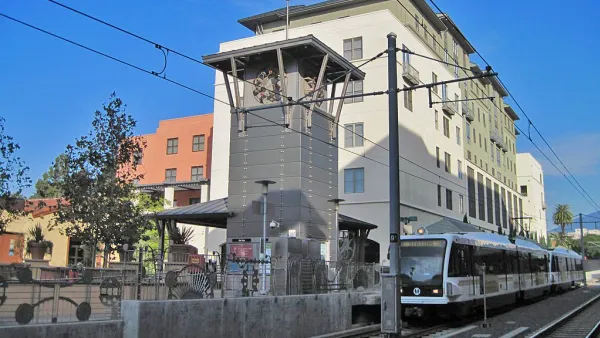
Another SB 827? Ambitious California Housing Bill Isn't Quite Dead Yet
It received a lot of press, but ultimately California's Senate Bill 827 went nowhere. Now, the state senator who introduced the bill is working with advocates who opposed it on another version that just might have better chances.
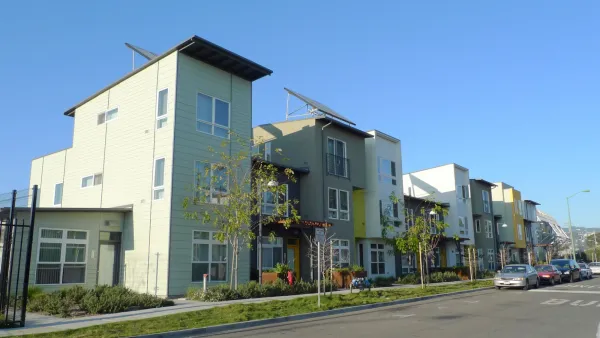
Interactive Mapping Tool Illustrates the Impact of California's Big Housing Bill
University of California, Berkeley researchers have mapped the impact of SB 50, a bill that would allow new density around train stations and bus stops in cities all over the state of California.

How SB 827 'Cleaved the California Environmental Movement'
Even before the bill was defeated, it exposed a major generational divide between anti-development environmentalists and their pro-density, pro-housing heirs.

The state-sanctioned urbicide of Austin
People don’t kill cities. Freeways do.

US to reduce Colorado River water deliveries to Mexico
A new Colorado Treaty amendment reduces Mexico’s Colorado River water allocation by 250,000 acre feet.

New Jersey’s second-largest city bans standalone data centers
Jersey City will continue to allow co-location facilities, such as those meant for research institutions that store their own data.

Amtrak not solely to blame for New Jersey commuter rail's unreliability, report finds
A new study from the Garden State Initiative found that NJ Transit’s budget grew 20% across a 4 year period, but reliability declined significantly over the same period.

EPA erases limits on planet-warming pollution from power plants
Under Monday’s plan, power plants would still have some limits on how much mercury, arsenic and other contaminants they can emit.

Phoenix announces new on-demand transit service, more frequent RAPID buses
Both new services will launch in October, and are part of Phoenix's Project Effective Access Solutions for Easing Congestion.

FREE Course: Walkable City 1: Why Walkability?
After describing his path towards focusing on walkability as the essence of good planning, Jeff Speck marches through his five principal reasons for making more walkable places.
Reinventing Malls: Planning Alchemy—Turning Gray Fields Into Gold
The course focuses on the opportunities and imperatives that shape reinvention of mall sites.

Eagle County Government
Harvard University Graduate School of Design
Nashville Planning Department
The Architects Foundation
University of Cincinnati Online
The Pocatello Development Authority
The Urban Renewal Agency of the City of Pocatello
Journal of the American Planning Association