All it takes a map, a bike, and a desire to learn the history of racial segregation in the United States.


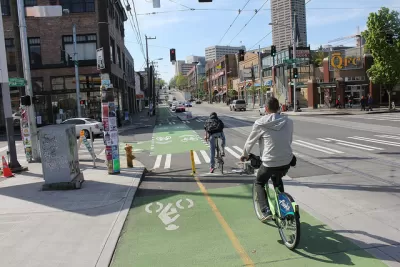
Ann Dornfield reports on a new bike tour of the redlining that enabled the segregation the city of Seattle even after it passed an open housing ordinance in 1968.
The bike tour is the creation of Merlin Rainwater, who was inspired to bring the history of redlining to the mostly white audience that typically attends her guided bike tours after encountering several of the publicly available resources about redlining practices of the 20th century.
"…I thought, you know, this is information that really ought to be in Laurelhurst. It should be in Broadmoor," Rainwater said. "Because black people in the Central District, they know this history. It's the white folks in the segregated white parts of the city that need to know that there was a struggle for open housing in Seattle."
So far the bike tour has been very popular, according to the article. "Rainwater hopes people come away from the tour with the understanding that racial segregation was no accident," adds Dornfield.
Read the full story: This bike tour shows Seattle’s racial segregation is no accident


HUD Investigating Boston for “Redlining Against White People”
The agency says the city is breaking the law by prioritizing people of color in its affordable housing strategy.
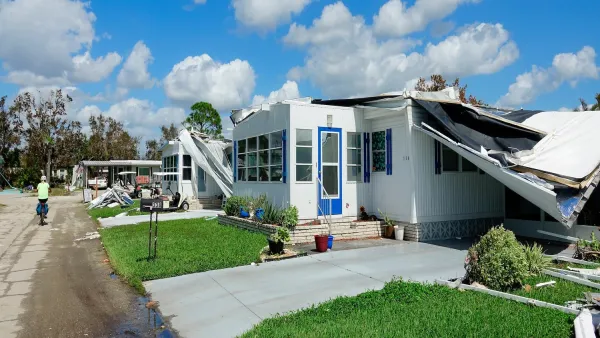
Consumer Protection Advocates Raise Alarms About Climate Insurance Discrimination That “Mimics Redlining”
As homeowners’ insurance companies and lenders increasingly factor climate risk into their business strategies, communities may see a resurgence of racial and economic exclusion that mimics redlining. But our hands aren’t tied.
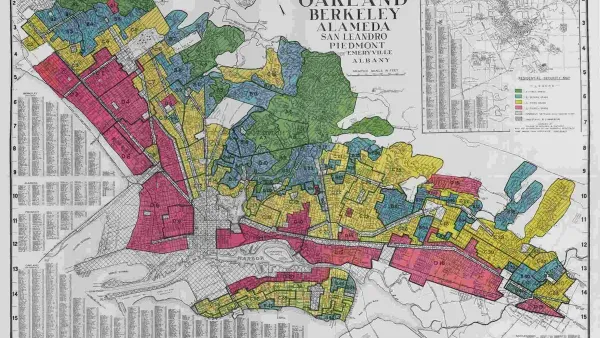
Rethinking Redlining
For decades we have blamed 100-year-old maps for the patterns of spatial racial inequity that persist in American cities today. An esteemed researcher says: we’ve got it all wrong.

Planetizen Federal Action Tracker
A weekly monitor of how Trump’s orders and actions are impacting planners and planning in America.

The state-sanctioned urbicide of Austin
People don’t kill cities. Freeways do.

Colorado’s Largest Data Center Could Rise Next to Homes — Without a Public Hearing
The proposed campus would consume 11 times the power of Denver International Airport; as it has across the country, opposition mounts.

Nation's most wind-powered state turns to coal as data centers increase energy demand
For the first time in decades, Iowa has increased its generation of coal power.

NYC cools commuters with city's first rain garden above a bus stop
New York City officials say the plants in the rain garden can absorb 16 gallons of rainwater during heavy storms.

Brightline West’s future may rely on $6 billion federal loan
The company has until Nov. 2 to make a $400 million equity investment into its proposed high-speed rail line.

FREE Course: Walkable City 1: Why Walkability?
After describing his path towards focusing on walkability as the essence of good planning, Jeff Speck marches through his five principal reasons for making more walkable places.
Reinventing Malls: Planning Alchemy—Turning Gray Fields Into Gold
The course focuses on the opportunities and imperatives that shape reinvention of mall sites.

Greater Baltimore Committee
Eagle County Government
Harvard University Graduate School of Design
The Architects Foundation
University of Cincinnati Online
The Pocatello Development Authority
The Urban Renewal Agency of the City of Pocatello
Journal of the American Planning Association