A partnership between the ride-hailing company Uber, the city of Cincinnati, the Southwest Ohio Regional Transit Authority (SORTA) and the Transit Authority of Northern Kentucky (TANK) is sign that maybe transit and Uber aren't mutually exclusive.



"The City of Cincinnati has partnered with ridesharing service Uber to study and improve public transit," reports Randy Tucker.
The Cincinnati Mobility Lab, as the partnership is called, "will share data, conduct studies, engage employers and activate designers to help create an innovative and strategic transportation plan for the Cincinnati region," according to a press release announcing the new partnership.
Southwest Ohio Regional Transit Authority (SORTA) CEO and General Manager Dwight Ferrell is quoted in the article describing the new partnership as a groundbreaking new tool for the transit agency. Cincinnati Mayor John Cranley is also paraphrased in the article as saying that the integration of ride-hailing services and other transportation technologies can "bolster" the city's transportation system.
Read the full story: 3 3 Uber, Cincinnati join forces. The goal: Fixing our transit system

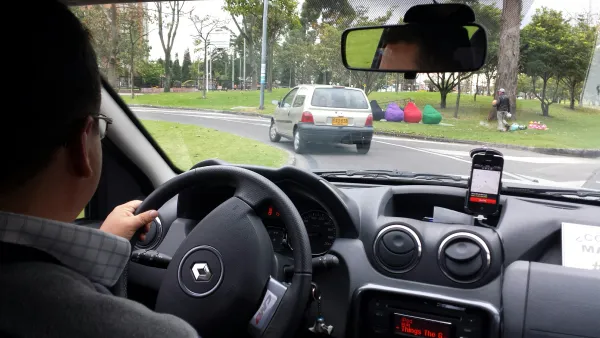
Uber Releases Trip Data in Select Cities
Uber Movement makes publicly available data for two billion trips taken on the transportation network company. Uber says the data should benefit urban planners.

Uber Going Multi-Modal and More
A public appearance by Uber CEO Dara Khosrowshahi reveals the motivations behind some of Uber's recent businesses moves.

Uber Releases Some of its Coveted Trip Data
Uber is offering a peak at its data in the hopes of contributing to a more informed transportation planning process.

Planetizen Federal Action Tracker
A weekly monitor of how Trump’s orders and actions are impacting planners and planning in America.

The state-sanctioned urbicide of Austin
People don’t kill cities. Freeways do.

Colorado’s Largest Data Center Could Rise Next to Homes — Without a Public Hearing
The proposed campus would consume 11 times the power of Denver International Airport; as it has across the country, opposition mounts.

Amtrak, CN end decades-long dispute with eight-year agreement
The new operating agreement establishes an updated framework for the companies to work together, including processes to resolve disputes.

Raised interest rates may kill financially vulnerable construction projects
The chief economist at ConstructConnect warns that if construction project owners are negatively impacted by the raised rates, it could result in delayed payments to contractors.
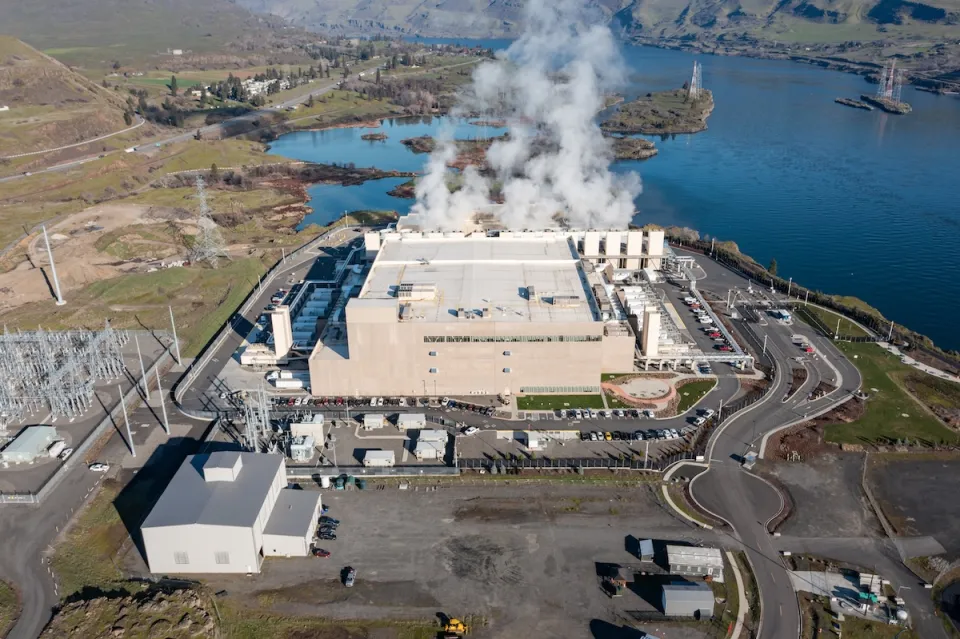
Data centers are consuming nearly 25% of Oregon’s power
The state has 111 data centers, with 32 more either planned or under construction.

FREE Course: Walkable City 1: Why Walkability?
After describing his path towards focusing on walkability as the essence of good planning, Jeff Speck marches through his five principal reasons for making more walkable places.
Reinventing Malls: Planning Alchemy—Turning Gray Fields Into Gold
The course focuses on the opportunities and imperatives that shape reinvention of mall sites.

Greater Baltimore Committee
Eagle County Government
Harvard University Graduate School of Design
The Architects Foundation
University of Cincinnati Online
The Pocatello Development Authority
The Urban Renewal Agency of the City of Pocatello
Journal of the American Planning Association