No, technology and private industry is not ending the need for public transit, according to Jarrett Walker.


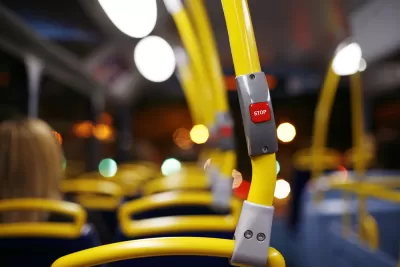
Jarrett Walker responds to the prophets of doom predicting the demise of public transit in a new era of transportation technology. According to Walker, the end of public transit is not nigh.
Walker's argument begins with a response to people complaining that transit systems don't adopt new technology fast enough, and that transit agencies are too resistant to change. In that case, Walker says you have to hear the "eternal language of marketing": "If you are trying to sell a new technology product, of courseyou imply that everyone who doesn’t use it is a dinosaur."
According to Walker, it's important to remember that technology is not a goal—it's a tool that should "serve the goals and aspirations of citizens." And public transit is not a business—it is "not monopolizing a profitable business and preventing others from entering. They are running an unprofitable service for reasons unrelated to profit: the functioning of a dense city, the liberty of its citizens, and connecting disadvantaged people to opportunity."
Read the full story: Should Transit Agencies Panic?

Ride Hailing to Replace Former Bus Route
A small public transit company serving the East Bay will be the first in California to conduct a pilot project to use transportation network companies and taxis to service low density areas of Dublin in Alameda County.

Uber Creeping Into Transit Territory
One of the great, looming questions of transportation is whether transportation network companies will complement or compete with transit. A recent promotion moves toward the compete end of the spectrum.
New App Would Enable On-Demand Public Transit
As transportation network companies like Uber and Bridj make it easier for some to opt out of the public transit system, a new app would help transit agencies offer more user-centric services.

Planetizen Federal Action Tracker
A weekly monitor of how Trump’s orders and actions are impacting planners and planning in America.

Northwest rail fans eager for Sept. 30 debut of Amtrak’s Airo fleet
Get ready for that new train smell and more seats. But they won’t go faster or run more frequently on the Cascades route in Washington and Oregon.
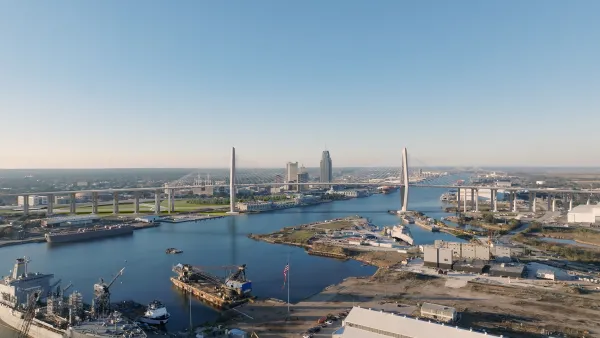
Alabama scores up to $2.5 billion federal loan for largest infrastructure project in state’s history
The Mobile River Bridge and Bayway Project aims to ease congestion at Alabama’s worst bottleneck.

Novel study finds extreme state-by-state disparity in housing construction timelines
The first comprehensive working paper on U.S. construction timelines also found that the permitting process for multi-family projects has slowed nationwide.

California may destroy its beaches trying to save homes from El Niño
Boulders and seawalls can protect homes from waves, but ultimately destroy sandy beaches.

California high-speed rail accomplishes only one legislative goal in 2026
The majority of the agency's failed pitches were never developed into written proposals.

FREE Course: Walkable City 1: Why Walkability?
After describing his path towards focusing on walkability as the essence of good planning, Jeff Speck marches through his five principal reasons for making more walkable places.
Reinventing Malls: Planning Alchemy—Turning Gray Fields Into Gold
The course focuses on the opportunities and imperatives that shape reinvention of mall sites.

City of Thousand Oaks
City of Wisconsin Rapids
Harvard University Graduate School of Design
The Architects Foundation
University of Cincinnati Online
Northern Illinois Transit Authority (NITA)
The Pocatello Development Authority
The Urban Renewal Agency of the City of Pocatello