Located primarily in the western states, some suburbs were hit hard by the 2008 recession and still haven't recovered. Many have seen an influx of low-income residents and upticks in crime.


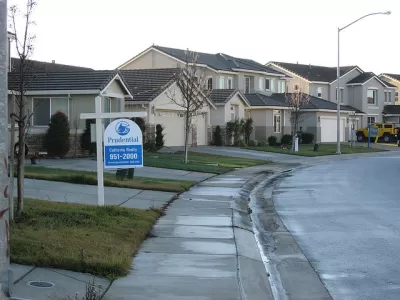
Alana Semuels covers Hemet, California, one of the places where last decade's heady housing market drove plentiful construction that ground to a halt in 2008. While many places have since recovered from the economic fallout of that era, locales like Hemet remain stuck.
While distressed "Rust Belt" communities get more press attention, poverty plagues many far-flung suburbs, even some with large, expensive-looking homes. "Such communities have high shares of poverty, many housing vacancies, a large proportion of adults without a high-school diploma, high joblessness, and a lower median income than the rest of the state in which they are located. They also lost jobs and businesses between 2011 and 2015."
Of Hemet, Semuels writes, "employment fell 15.5 percent between 2011 and 2015, while it grew 9.4 percent nationwide. The number of businesses in Hemet dropped 4.8 percent over that time period. The median home price, at $237,000, is still 30 percent lower than it was in 2006."
She goes on, "Hemet’s problems are also the result of structural changes in the economy—changes that have been underway for decades but were masked by the heady days of the housing boom." A rough transition from homeowners to renters, as well as rising crime rates, can be attributed to a range of related problems including negligent absentee landlords, plentiful but low-paying and unstable jobs, and high housing costs in more central locations.
Read the full story: The Places That May Never Recover From the Recession
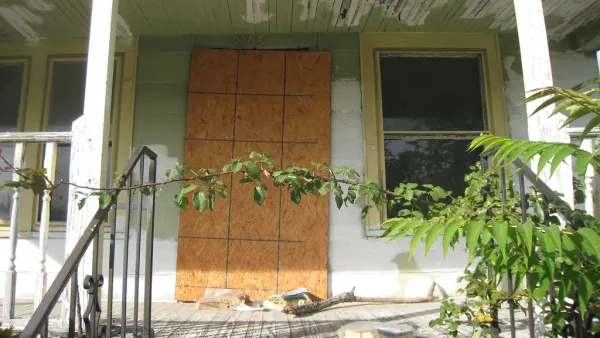
Cleveland Still Experiencing Fallout From Great Recession
National economic indicators may look good, but some areas are still clawing their way back from the 2008 recession. Cleveland's Slavic Village, an "epicenter" of the foreclosure crisis, is one of them.
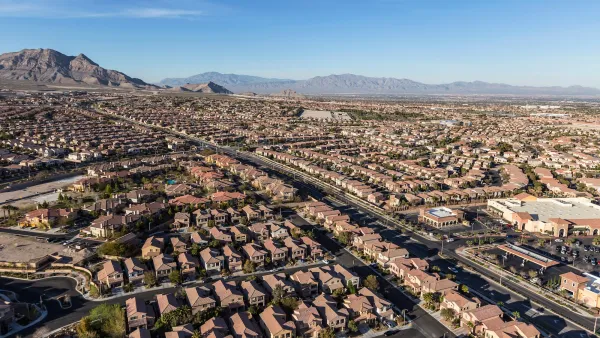
Nevada is no Longer a Haven of Housing Affordability
Large investors own 11 percent of single-family rentals in Las Vegas — far above the national average of 3 percent.

California’s Brightline West High-Speed Rail Announces 2029 Completion Date
The Las Vegas-to-Southern California rail line was originally slated to open for service in time for the 2028 Olympics.

Planetizen Federal Action Tracker
A weekly monitor of how Trump’s orders and actions are impacting planners and planning in America.

California plans to bury El Niño’s downpour
If the state plays its cards right, it may be able to store a billion acre-feet of El Niño’s water in aquifers.

Desperate measures: Advocates weigh draining Lake Powell to fill Colorado River
Draining the reservoir could reduce evaporation losses by a couple hundred thousand acre-feet.

In Texas, data centers are swallowing promised parkland
Residents who moved to Taylor, Texas for a rural community now have to contend with three data centers in their backyard.

How a Chicago-sized wind farm beat the odds and powered on
The project spanned five presidential administrations and a standoff with a U.S. military base.

MTA gives itself 30 days to transform pit into basketball court
The site has been under construction since 2022; the city originally estimated it would finish the court in 2024.

FREE Course: Walkable City 1: Why Walkability?
After describing his path towards focusing on walkability as the essence of good planning, Jeff Speck marches through his five principal reasons for making more walkable places.
Reinventing Malls: Planning Alchemy—Turning Gray Fields Into Gold
The course focuses on the opportunities and imperatives that shape reinvention of mall sites.

City of Rosemead
Rutgers University, Edward J. Bloustein School of Planning and Public Policy
One Hundred Miles
Hunter College, City University of New York (CUNY)
The Architects Foundation
University of Cincinnati Online
City of Cambridge
Montrose County
The Pocatello Development Authority