In a landmark, unanimous vote, the Texas Transportation Commission eliminated all 15 express lane projects from their 10-year capital plan despite pleas from Austin area officials to retain the $8 billion, I-35 project that includes four toll lanes.


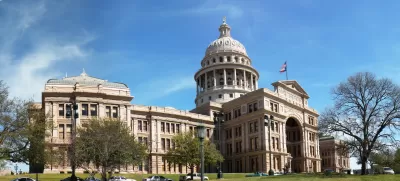
The Texas Transportation Commissioner was reacting to pressure from Gov. Greg Abbott and Lt. Gov. Dan Patrick to not spend funds from statewide propositions passed by voters in 2014 and 2015 on express lanes. Both ballot measure prohibited spending the funds on toll lanes.
"That 5-0 vote came despite the pleas of nearly a dozen Central Texas political, civic and business leaders — including Austin Mayor Steve Adler, Sen. Kirk Watson [D-Austin], Travis County Commissioner Gerald Daugherty and Capital Metro board chairman Wade Cooper — to keep the I-35 express lanes in the plan," reports Ben Wear on Dec. 14, the same day as the vote, for the Austin American-Statesman.
“A vote today to exclude I-35 from the (10-year plan) is a mistake that will take Texas into a future of worsening gridlock,” Watson wrote in a letter read to the Texas Transportation Commission.
A bus rapid transit project would operate on the I-35 express lanes according to a proposal by the Capital Metropolitan Transportation Authority last July.
The elected officials and leaders in the Austin area wanted "to use every tool in the toolbox to mitigate traffic congestion," reported Amy Denney for Community Impact Newspaper.
“I’m disappointed that politics trumped congestion relief today,” state Rep. Celia Israel, D-Austin, said in a statement. “From Williamson to Hays [counties], the gridlock we face is unsustainable, and the decision to leave the status quo in place does not help.”
While the I-35 express lane project and a $2 billion expansion of the LBJ TEXpress Lanes on I-635 in Dallas received the most attention, Adler writes that the commission had been expected to have a total of 15 toll lane projects in the long-term plan.
But the commission was under great pressure from Abbott and Patrick, who in turn were reacting to conservative, anti-toll activists who had argued that Texas voters assumed new toll projects would cease when they approved two constitutional amendments directing more tax dollars to TxDOT. Those amendments specified that influx of money could not be used to build toll lanes.
It should be noted that neither Proposition 1 in 2014 nor Proposition 7 in 2015 raised new revenue. Both are prime examples of tax diversion from existing sources to the State Highway Fund to be used exclusively for untolled roads and transportation debt reduction. The former diverted funds from the state Rainy Day Fund while Prop 7 diverted sales and use tax revenue and motor vehicle sales, use, and rental tax.
"Travis County Commissioner Gerald Daugherty said it concerns him that many residents still believe voter-approved propositions 1 and 7 money are enough to fully fund all transportation needs in the state," adds Denney.
“Managed lanes I think are a wonderful tool to have to help us deal with [congestion],” he said.
However, there remains a strong sense of entitlement among motorists that roads should be "free", particularly after they voted to spend additional money on them, even if the ballot measures only diverted funds rather than increased taxes. The state's 20-cent per gallon gas tax was last raised in 1991, almost 27 years ago. It's 40 percent lower than the average state gas tax of 33.33 cents per gallon.
Hat tip to AASHTO Daily Transportation Update.
Read the full story: I-35 toll lanes in Austin cut from long-range transportation plan

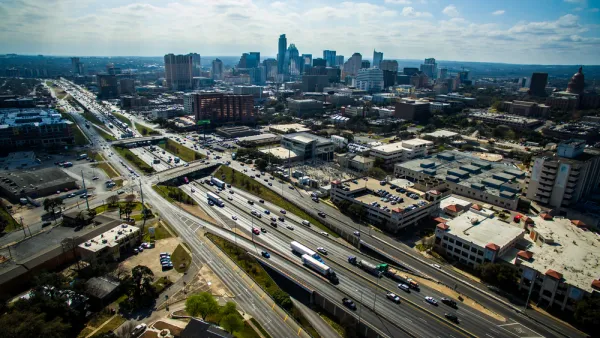
$8 Billion Transportation Vision for Austin: Three-Level Freeway, Tollway
Interstate 35 through Central Austin would be transformed into a three-level roadway wIth toll lanes in the middle, according to an 8.1 billion vision proposed by TxDOT.
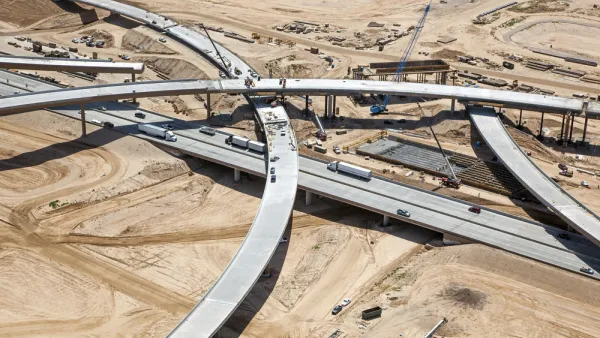
Toll and Tax, or Just Tax, to Pay for Highway Expansion?
A political decision by the Texas Transportation Commission last December to drop projects which included toll lanes was thought to doom 15 road expansions from their 10-year capital plan, but some will go forward with HOV as opposed to HOT lanes.
Four TEXpress Lanes Open on I-35 West in Fort Worth Ahead of Schedule
Four miles of the 10-mile North Tarrant Express project opened to motorists on April 5. The $1.6 billion project, built by a public-private partnership working with TxDOT, includes rebuilding general purpose and frontage road lanes.

Planetizen Federal Action Tracker
A weekly monitor of how Trump’s orders and actions are impacting planners and planning in America.

California plans to bury El Niño’s downpour
If the state plays its cards right, it may be able to store a billion acre-feet of El Niño’s water in aquifers.

Chicago breaks ground on $3 billion megadevelopment
The new neighborhood, titled Foundry Park, will one day host 3,700 residences.

California High-Speed Rail Authority CEO resigns after $600,000 scandal
Under Ian Choudri, the authority used taxpayer dollars to fund first class flights and trips to nightclubs.

Want to study the Missouri River? Soon, you may need unanimous approval from 10 states
Legislation would require 10 governors’ permission to study or build projects moving water outside the basin.

Desperate measures: Advocates weigh draining Lake Powell to fill Colorado River
Draining the reservoir could reduce evaporation losses by a couple hundred thousand acre-feet.

FREE Course: Walkable City 1: Why Walkability?
After describing his path towards focusing on walkability as the essence of good planning, Jeff Speck marches through his five principal reasons for making more walkable places.
Reinventing Malls: Planning Alchemy—Turning Gray Fields Into Gold
The course focuses on the opportunities and imperatives that shape reinvention of mall sites.

City of Rosemead
Rutgers University, Edward J. Bloustein School of Planning and Public Policy
One Hundred Miles
Hunter College, City University of New York (CUNY)
The Architects Foundation
University of Cincinnati Online
City of Cambridge
Montrose County
The Pocatello Development Authority