Transit can be a vital resource for the homeless. In Los Angeles, where that population is growing, this is doubly true.



"For many homeless individuals living in cities, a robust public transit network is an invaluable resource, providing shelter when the shelters are full, inaccessible, or indifferent," Amelia Taylor-Hochberg writes for Curbed Los Angeles in a long-read article that details the policy response of the region's transit agency to a growing homeless population.
"The populations of chronically homeless people in both the city and county have consistently risen in the past few years," according to Taylor-Hochberg. Homeless advocates hope that, "[w]ith the constructive timing and a focus on coordinated efforts, transit agencies can deal a significant blow against homelessness," adds Taylor-Hochberg reports.
As the challenges of homelessness evolves, the Los Angeles County Metropolitan Transportation Authority (Metro) is looking for new ways to respond to the region's growing homeless population, including with the creation of a Homeless Task Force in Spring 2016. That task force is already hard at work on a new Transit Homeless Action Plan:
In October 2016, the task force received $1.2 million to create special outreach teams to respond exclusively to homelessness on Metro. These so-called C3 teams (County, City, Community), are contracted by the Department of Health Services and its subcontractor, People Assisting the Homeless (PATH), and are somewhat similar to previous efforts implemented in Skid Row. They’ll ride the system’s Red, Gold, and Green lines for a year, then report back to Metro to inform the Transit Homeless Action Plan.
FULL STORY: How Metro is responding to LA’s homelessness crisis

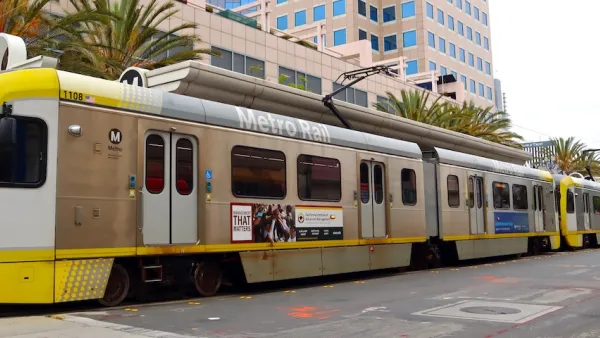
The World’s Longest Light Rail Line is in… Los Angeles?
In a city not known for its public transit, the 48.5-mile A Line is the longest of its kind on the planet.
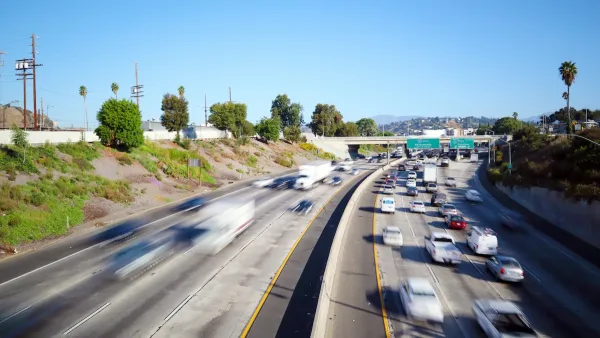
Opinion: LA Should Reject ‘Misguided’ Car-Centric Policies
Even as the city highlights clean energy and transportation for the 2028 Olympics, Metro and Caltrans move forward with plans to expand highways.
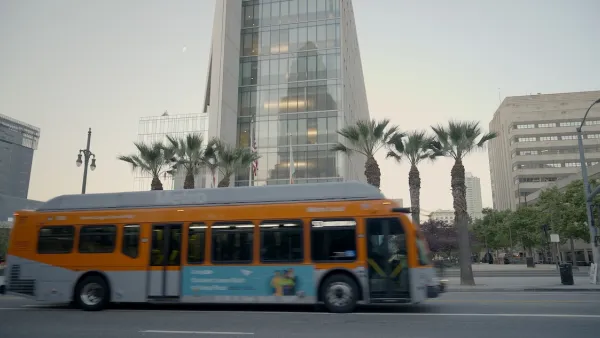
LA to Launch Bus Lane Enforcement Cameras
Bus-mounted cameras will identify vehicles that block designated bus lanes to help prevent delays and maintain reliable transit operations.

The state-sanctioned urbicide of Austin
People don’t kill cities. Freeways do.

US to reduce Colorado River water deliveries to Mexico
A new Colorado Treaty amendment reduces Mexico’s Colorado River water allocation by 250,000 acre feet.

New Jersey’s second-largest city bans standalone data centers
Jersey City will continue to allow co-location facilities, such as those meant for research institutions that store their own data.

Amtrak not solely to blame for New Jersey commuter rail's unreliability, report finds
A new study from the Garden State Initiative found that NJ Transit’s budget grew 20% across a 4 year period, but reliability declined significantly over the same period.

EPA erases limits on planet-warming pollution from power plants
Under Monday’s plan, power plants would still have some limits on how much mercury, arsenic and other contaminants they can emit.

Phoenix announces new on-demand transit service, more frequent RAPID buses
Both new services will launch in October, and are part of Phoenix's Project Effective Access Solutions for Easing Congestion.

FREE Course: Walkable City 1: Why Walkability?
After describing his path towards focusing on walkability as the essence of good planning, Jeff Speck marches through his five principal reasons for making more walkable places.
Reinventing Malls: Planning Alchemy—Turning Gray Fields Into Gold
The course focuses on the opportunities and imperatives that shape reinvention of mall sites.

Eagle County Government
Harvard University Graduate School of Design
Nashville Planning Department
The Architects Foundation
University of Cincinnati Online
The Pocatello Development Authority
The Urban Renewal Agency of the City of Pocatello
Journal of the American Planning Association