If this solution from a regional planning agency gains traction, New York City may have some competition to become the first American city to implement congestion pricing.


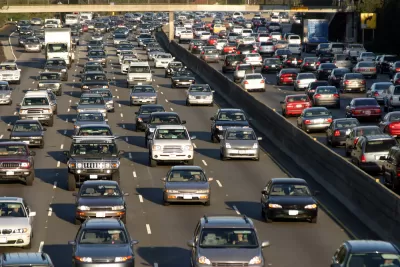
The controversial proposal is one congestion-reducing solution proposed in the Southern California Association of Governments' 100 Hours campaign. Other strategies are more conventional, such as biking, transit, and rideshare.
The campaign calls it a "decongestion fee system," defined as "a mobility management tool that aims to combat the negative impacts of traffic and provide congestion relief. Drivers would have the option to pay for less congested arterial roadways during peak times when congestion is at its worst."
By charging a fee to enter and use the streets within a highly-congested area at peak periods [italics added], drivers would be incentivized to make more informed travel choices and explore mobility alternatives.
"Matthew Turner, a professor [of economics] at Brown University who has studied the effectiveness of various attempts to reduce traffic, and many other transportation researchers agree that charging a market rate to use the road is the most effective way to reduce congestion," reports Meghan McCarty Carino for KPCC (Southern California Public Radio, audio available) on the new campaign. "They argue that charging drivers more to go to a crowded destination downtown at rush hour would encourage some to avoid the trip or take it at a different time."
Non-residents would be charged a variable toll to drive through, say, West L.A. or Downtown L.A., said Association Executive Director Hasan Ikhrata. The revenues could be used to invest in more transit or in creating more space for walking and biking, he said.
The proposal bears some similarity to the Move NY plan, which would toll motorists who drive south of 60th Street in Manhattan. An introduction to the plan in the campaign's webpage (which has links to many interesting congestion pricing articles) compares the proposal to successful European cordon area congestion pricing programs:
In some of the most congested cities in the world, including London, Stockholm, and Milan, adding a decongestion fee system during peak hours has dramatically increased mobility, as well as improved public health and reduced traffic collisions.
But the idea proved too controversial for New York when then-Mayor Michael Bloomberg proposed it. And a similar proposal for San Francisco appears to have stalled. "It would require a big leap for the proposal to become reality," adds Carino for KPCC. "The Association of Governments can't make policy, and many politicians shy away from the idea of tolling, due to low public acceptance of the idea."
Hat tip to Jeff Wood of The Overhead Wire.
Read the full story: Would London-style toll zones reduce LA traffic?

Report: Modest Congestion Charge Would Produce Dramatic Results in Los Angeles
Applying a cordon toll as low as $4 in Los Angeles would result in a 20% reduction in traffic congestion and modest increases in transit ridership, walking, and biking, according to a new study from the Southern California Association of Governments.

Op-Ed: Given the Chance, Congestion Pricing Would Ease America's Traffic Woes
Amanda Eaken offers up a defense of "Go Zones," otherwise known as congestion pricing. In Los Angeles and elsewhere, she argues, they could thin out traffic.
Toll Lane Rebellion Fails to Materialize in Southern California
The 405 Express Lanes will open in Orange County later this year despite the warnings from a former Huntington Beach mayor of a resident-led rebellion in response to road pricing. But will the toll lanes mitigate congestion? Academics weigh in.

Planetizen Federal Action Tracker
A weekly monitor of how Trump’s orders and actions are impacting planners and planning in America.

Amtrak, CN end decades-long dispute with eight-year agreement
The new operating agreement establishes an updated framework for the companies to work together, including processes to resolve disputes.

Judges permit Denver to divert 77,000 acre feet from the Colorado River for reservoir expansion
Overuse and climate change have caused the Colorado River’s water levels to plummet.

Boston has spent millions making the Green Line more accessible — and there’s no end in sight
While the city has invested millions into expanding and adding platforms to the Green Line to make it more accessible, new train cars set to arrive next year will be too tall for disabled passengers to board without raising the current platforms.

Idaho may see an 18% drop in federal surface transit funding — the largest estimated cut in the US
Transit systems in rural communities are much more reliant on federal funding to provide their services.

How ‘post-disaster gentrification’ alters neighborhoods after natural calamities
After hurricanes, fires or other calamities, the original residents of a community are often replaced by younger, wealthier residents.

FREE Course: Walkable City 1: Why Walkability?
After describing his path towards focusing on walkability as the essence of good planning, Jeff Speck marches through his five principal reasons for making more walkable places.
Reinventing Malls: Planning Alchemy—Turning Gray Fields Into Gold
The course focuses on the opportunities and imperatives that shape reinvention of mall sites.

City of Wisconsin Rapids
Harvard University Graduate School of Design
KFH Group Inc.
The Architects Foundation
University of Cincinnati Online
The Pocatello Development Authority
The Urban Renewal Agency of the City of Pocatello