In an opinion piece, architecture critic Mark Lamster discusses the merits and deficiencies of recent Dallas developments. He praises a rising sense of "progressivism" in the city's design choices.


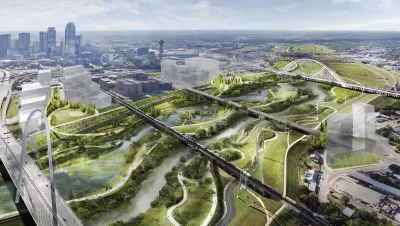
In a wide-ranging piece, Mark Lamster describes a transitional mood in Dallas. Highlighted by large-scale projects like the Trinity River park project, slated to be an order of magnitude larger than Central Park, a more "progressive" set of urban design choices includes new mid-rise and high-rise construction.
Lamster sees much of the new development, housing in particular, as architecturally lacking. Think "banal, pro-forma junk, five-story beige blocks." But en masse, mid-rise neighborhoods can redeem themselves. "From an urban design standpoint, one bad building alone is actually worse than two together. A single building sticks out like a sore thumb, and does nothing for the street. But several together can at least define a place, creating a streetscape that subsumes individual deficiencies."
Lamster points to several examples of new buildings done wrong, and right. Of the city's Arts District, he writes, "For more than a year, a revised master plan for the area has sat on a shelf as its architects wait for the city to take it up. Only in Dallas do you build the buildings and then release the master plan."
Read the full story: What's wrong and right with Dallas architecture
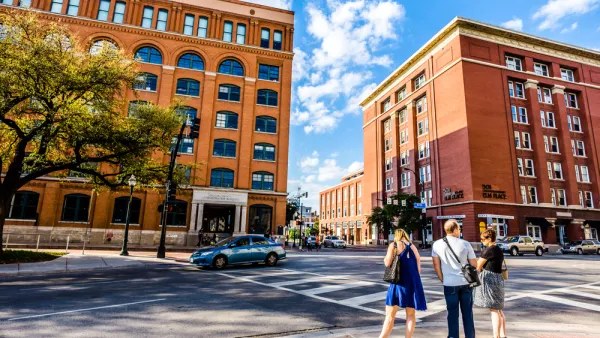
A New Vision for Dallas’ Dealey Plaza
After decades of neglect, a team of designers reimagines the infamous plaza as a safe, vibrant, multimodal public space.
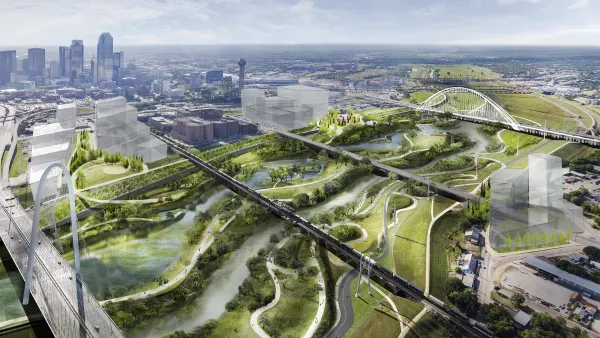
Checking in With the Trinity River Park Project in Dallas
With a plan to build a Trinity Toll Road a thing of the past, there are now two plans for parks along the Trinity River. One would "rewild" the watershed.

Critic Blasts the Design and Planning Effects of CVS
CVS is about as American as apple pie, but at what cost to American communities?

Planetizen Federal Action Tracker
A weekly monitor of how Trump’s orders and actions are impacting planners and planning in America.

California plans to bury El Niño’s downpour
If the state plays its cards right, it may be able to store a billion acre-feet of El Niño’s water in aquifers.

Desperate measures: Advocates weigh draining Lake Powell to fill Colorado River
Draining the reservoir could reduce evaporation losses by a couple hundred thousand acre-feet.

Housing is the top priority of Seattle’s sole new councilmember
Jenks campaigned on building 1,000 new units of affordable housing.

New tax cuts may slash $1.5 billion in funding for Miami transit, public parks
Amendment 3 will save Miami-Dade homeowners $2,700 in 2028.

Arizona, Wisconsin, Pennsylvania hope to finally advance climate goals post-midterms
The three states have spent years under Republican or divided control.

FREE Course: Walkable City 1: Why Walkability?
After describing his path towards focusing on walkability as the essence of good planning, Jeff Speck marches through his five principal reasons for making more walkable places.
Reinventing Malls: Planning Alchemy—Turning Gray Fields Into Gold
The course focuses on the opportunities and imperatives that shape reinvention of mall sites.

City of Rosemead
Rutgers University, Edward J. Bloustein School of Planning and Public Policy
One Hundred Miles
University of Michigan School for Environment and Sustainability (SEAS)
Hunter College, City University of New York (CUNY)
The Architects Foundation
City of Cambridge
Montrose County
The Pocatello Development Authority