There's an economic cost for making pedestrians wait at stoplights, according to a new study.


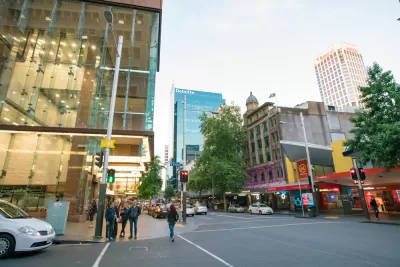
"Pedestrian congestion" is costing Auckland $186 million every year, reports James Pasley.
Pasley is sharing the results of a new study called "Investigating the Economic Value of Walking in the Auckland City Centre," which was presented to the Auckland Council recently. The study put a monetary value on the time pedestrians spend waiting at stoplights.
Commuters in Auckland have been choosing non-automobile modes of transportation at levels not seen since the 1950s, according to the article. In many parts of the city center, pedestrians far outnumber cars. Planners in the city have already responded: "Six out of eight of the key objectives in Auckland's 20-year "city centre masterplan" were around improving pedestrian connections in the city," reports Pasley.
Hat tip to Angie Schmitt.
Read the full story: Auckland's poor pedestrian flows cost $186m every year


Study: Midblock pedestrian crossings are more common than we think
One in six crossings in the study took place outside of a marked crosswalk.
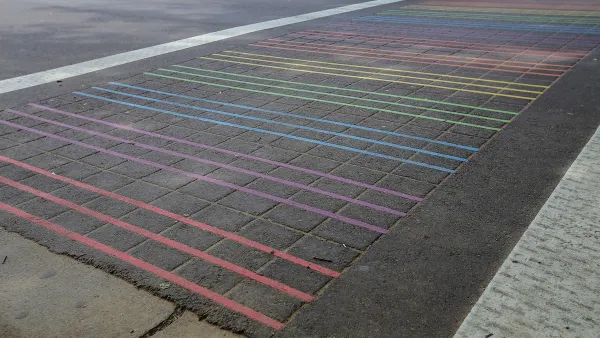
Sacramento Isn’t Giving up on Rainbow Crosswalks
A city program will fund artist-created crosswalks near two elementary schools as part of its effort to eliminate traffic deaths.
NYC Congestion Pricing Under Threat — Again
President Trump is attempting to make good on a campaign promise to kill New York City’s congestion pricing program, but the mechanism for ending it remains unclear.

Planetizen Federal Action Tracker
A weekly monitor of how Trump’s orders and actions are impacting planners and planning in America.

‘Going backwards:’ Baltimore mayor, students rally against state's transit funding plan
Maryland's proposed six-year plan provides no funding for Baltimore’s BMORE bus program and reduces its road maintenance funding.

Detroit to transform waterfront with $2.2 billion investment
Developers will convert about 18 acres of unused parking lot space into civic spaces.

Planned $2 billion courthouse in MA sparks tension with local government
Springfield owns an essential piece of the land developers intend to build on, and some city officials do not want to see the project come to fruition.

Californians can now transform balconies into power generators
Gov. Gavin Newsom has legalized plug-in solar technology, which allows residents to plug solar panels directly into their outlets

This 85-year-old ranch is Texas’ newest state park
The 650 acre ranch is one of the largest parcels of land along Lake Palestine.

FREE Course: Walkable City 1: Why Walkability?
After describing his path towards focusing on walkability as the essence of good planning, Jeff Speck marches through his five principal reasons for making more walkable places.
Reinventing Malls: Planning Alchemy—Turning Gray Fields Into Gold
The course focuses on the opportunities and imperatives that shape reinvention of mall sites.

City of Thousand Oaks
City of Wisconsin Rapids
Harvard University Graduate School of Design
The Architects Foundation
University of Cincinnati Online
Northern Illinois Transit Authority (NITA)
The Pocatello Development Authority
The Urban Renewal Agency of the City of Pocatello