The infrastructure to support a future of connected cars and automated vehicles is one step closer to reality.



Ben Miller reports: "After years of planning, the next several months are when Tim Sylvester will get the chance to start testing out what he’s been telling people for years: roads can pay for themselves."
"Sylvester’s company, Integrated Roadways, wants to put sensors, phone and Internet connectivity and other hardware inside the surfaces society drives on," adds Miller. The company will deploy its first pilot project in Kansas City, Missouri. A second pilot project is on the way in another location that has yet to be announced.
"Sometime this month, Sylvester expects to formally enter into contracts with both state agencies involved to lay down a combined 1.5 miles of pavement," explains Miller of the Kansas City pilot project. "He expects construction to begin in the spring, and to finish around August 2018."
An article by Mary Tyler March followed up on the news of the pilot project, providing additional insight into the potential of "smart roads" technology.
Read the full story: Roads that Pay for Themselves: Startup Nears Two Smart Pavement Pilot Project Contracts
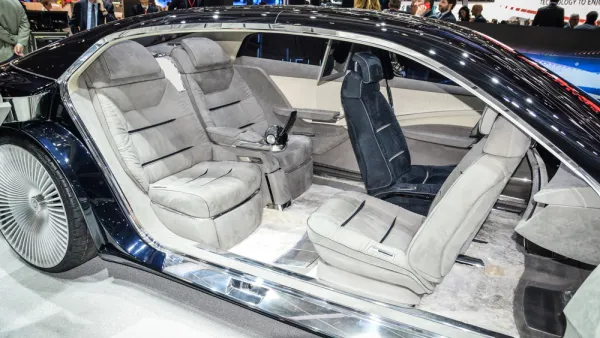
The Key to Self-Driving Safety: Priority Over Expediency
Human drivers are fallible. Can automated systems do a better job to reduce the likelihood of car collisions?

'Cars Are Death Machines'
Not one, not two, but three articles in the past week paint dire portraits of the world that cars have created.

Self-Driving Car or Hotel Room on Wheels?
With self-driving cars already well lodged in the public imagination as a sure thing in the relative near future, many people are already thinking about the potential business opportunities for the new technology.

Desperate measures: Advocates weigh draining Lake Powell to fill Colorado River
Draining the reservoir could reduce evaporation losses by a couple hundred thousand acre-feet.

Eastern Nebraska is running out of electricity
Data centers and electrification are straining eastern Nebraska’s grid, throttling economic development.

Move over, LA: St. Louis gears up for Olympics, invests millions in downtown redevelopment
The Missouri city will host the 2028 Olympic soccer group stage and knockout matches.

Mass. votes against statewide minimum lot size for single-family homes
Over 2 million residents voted on Question 7; it was decided by just over 30,000 votes.

Maryland’s $15 billion bridge project gains key approval
The Maryland Transit Authority said the project will create over 60,000 jobs and add $23 billion to the local economy.

‘No clear next steps’ for Chicago's permanent festival grounds
Eleventh Ward Ald. Nicole Lee has suggested Soldier Field as a possible location for the permanent event space.

FREE Course: Walkable City 1: Why Walkability?
After describing his path towards focusing on walkability as the essence of good planning, Jeff Speck marches through his five principal reasons for making more walkable places.
Reinventing Malls: Planning Alchemy—Turning Gray Fields Into Gold
The course focuses on the opportunities and imperatives that shape reinvention of mall sites.

City of Rosemead
Rutgers University, Edward J. Bloustein School of Planning and Public Policy
One Hundred Miles
University of Michigan School for Environment and Sustainability (SEAS)
Hunter College, City University of New York (CUNY)
The Architects Foundation
City of Cambridge
The Pocatello Development Authority
The Urban Renewal Agency of the City of Pocatello