Changing the color of L.A. streets and growing out the urban canopy are part of a campaign to fight the heat island in and around Los Angeles.



Los Angeles is undergoing a proactive campaign to fight the effects of a warming planet but trying to mitigate or reverse the effects of its urban heat island. Among the city’s strategies for doing so is the use of white street sealant so that the street will hold less heat. "This is what the city of Los Angeles is calling 'cool pavement'—whitening blocks in each of LA’s 15 council districts to see how changing the color of streets can bring down the overall temperature," Nate Berg reports in Gizmodo.
The city also encourages property owners to plant more trees on their land to create shade, "They hold more than 100 tree adoption events a year, and gave away nearly 18,000 trees in 2016 alone. Though street trees can play a part in cooling the city, Skrzat says there’s much more potential in the front and back yards of L.A.'s low density residential areas," Berg writes. Changing the colors of streets, roofs and maintaining more trees are all part of "Sustainable City pLAn," which includes a goal drop the city's heat differential by 3 degrees.
Read the full story: The Radical Plan to Cool Down LA as the World Heats Up
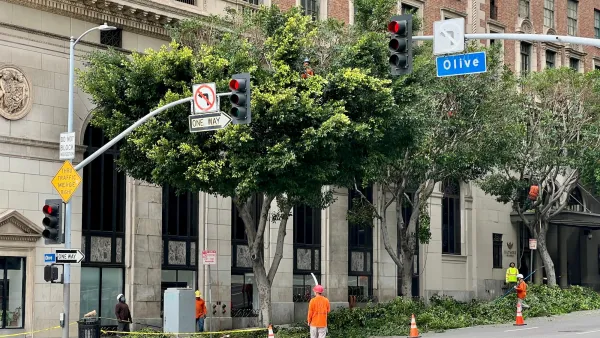
LA’s Tree Canopy is Nearing a ‘Point of Failure’
Calls to 311 for “tree emergencies” are rising, endangering a resource that helps bring down urban temperatures and reduce air pollution.
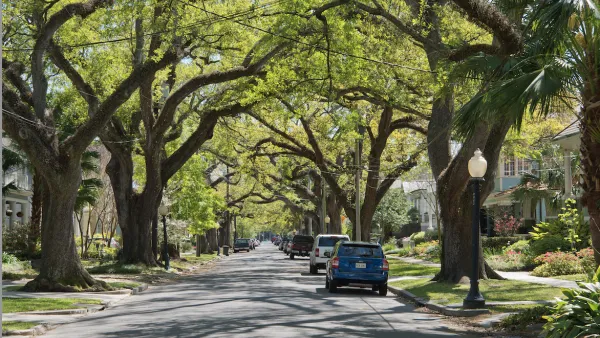
Art in the Shade: Confronting Climate and Equity Through Creativity
Through powerful, multisensory installations, Roots of Cool uses art to illuminate Los Angeles’ climate and shade inequities, inviting visitors to imagine a more just, tree-filled future.
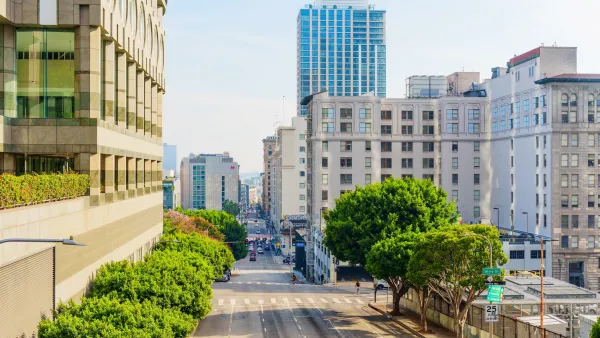
LA’s Tree Emergency Goes Beyond Vandalism
After a vandal destroyed dozens of downtown LA trees, Mayor Karen Bass vowed to replace them. Days later, she slashed the city’s tree budget.

Planetizen Federal Action Tracker
A weekly monitor of how Trump’s orders and actions are impacting planners and planning in America.

California plans to bury El Niño’s downpour
If the state plays its cards right, it may be able to store a billion acre-feet of El Niño’s water in aquifers.

Desperate measures: Advocates weigh draining Lake Powell to fill Colorado River
Draining the reservoir could reduce evaporation losses by a couple hundred thousand acre-feet.

Los Angeles just elected an urban planner as its mayor
Transportation analysts are optimistic that Raman will be more aggressive in addressing transit issues than Bass.

Mamdani’s pied-à-terre tax survives legal challenge
A panel of judges found that the plaintiffs failed to demonstrate injury as a result of New York City's implementation of the tax.

Eastern Nebraska is running out of electricity
Data centers and electrification are straining eastern Nebraska’s grid, throttling economic development.

FREE Course: Walkable City 1: Why Walkability?
After describing his path towards focusing on walkability as the essence of good planning, Jeff Speck marches through his five principal reasons for making more walkable places.
Reinventing Malls: Planning Alchemy—Turning Gray Fields Into Gold
The course focuses on the opportunities and imperatives that shape reinvention of mall sites.

City of Rosemead
Rutgers University, Edward J. Bloustein School of Planning and Public Policy
One Hundred Miles
University of Michigan School for Environment and Sustainability (SEAS)
Hunter College, City University of New York (CUNY)
The Architects Foundation
City of Cambridge
Montrose County
The Pocatello Development Authority