An apparent suicide stopped trains Tuesday morning at the Fullerton stop, which serves as a hub for Chicago's North Side transit. Prices for a ride from the area to downtown via Lyft reached triple digits.


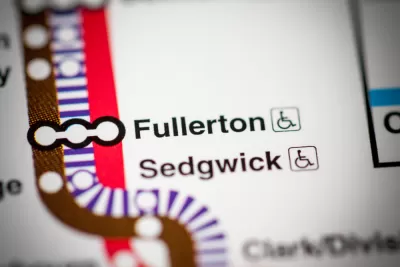
The city of Chicago is unhappy with Lyft and Uber who, it feels, took advantage of chaos created by the death of a man at the Fullerton Avenue Train stop. The death, which police believe was suicide, happened around 6:30 am and stopped trains headed downtown from the busy station until 9:30 am.
Kelly Bauer and Tanveer Ali report in DNA Info that Lilia Chacon of Chicago's Business Affairs and Consumer Protection department expressed her disappointment that companies "took advantage" of the situation, "But she said the companies were not necessarily doing anything illegal by raising rates." Bauer and Ali report. A Lyft spokesperson said the event was particularly challenging, because it took place during peak transit hours and was completely unexpected. The results were fares that would normally be $13 costing as much as $110 according to Bauer and Ali.
FULL STORY: City Says Ride-Share Companies 'Took Advantage' Of CTA Meltdown With Hikes

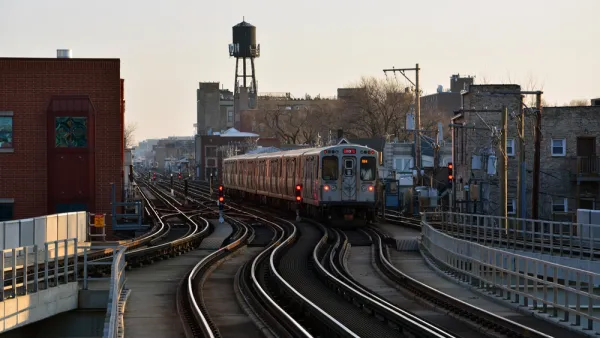
Demolition Starts for CTA's Controversial Flyover Project
The Chicago Transit Authority's Red-Purple Bypass Project will add an additional track to speed up trains passing through the Belmont Station. The project requires the demolition of several neighborhood buildings.
Apartments Zoned Out of Near North Side Chicago Train Stations
Zoning around Chicago's public transit in relatively affluent areas won't allow for density or any kind of housing other than single family homes.
Minnesota Lawmakers Reach Ride Share Compromise
A law awaiting the governor’s signature establishes wage rates for drivers. Ride share companies say if the law passes, they plan to continue service in the state.

Planetizen Federal Action Tracker
A weekly monitor of how Trump’s orders and actions are impacting planners and planning in America.

The state-sanctioned urbicide of Austin
People don’t kill cities. Freeways do.

US to reduce Colorado River water deliveries to Mexico
A new Colorado Treaty amendment reduces Mexico’s Colorado River water allocation by 250,000 acre feet.

Mamdani overhauls NYC's Vision Zero plan with 100 new policy goals
The overhaul aims to reduce traffic deaths and make streets safer for pedestrians, cyclists and drivers through lower speed limits, new safety infrastructure and more.

Amtrak not solely to blame for New Jersey commuter rail's unreliability, report finds
A new study from the Garden State Initiative found that NJ Transit’s budget grew 20% across a 4 year period, but reliability declined significantly over the same period.

EPA erases limits on planet-warming pollution from power plants
Under Monday’s plan, power plants would still have some limits on how much mercury, arsenic and other contaminants they can emit.

FREE Course: Walkable City 1: Why Walkability?
After describing his path towards focusing on walkability as the essence of good planning, Jeff Speck marches through his five principal reasons for making more walkable places.
Reinventing Malls: Planning Alchemy—Turning Gray Fields Into Gold
The course focuses on the opportunities and imperatives that shape reinvention of mall sites.

Eagle County Government
Harvard University Graduate School of Design
Nashville Planning Department
The Architects Foundation
University of Cincinnati Online
The Pocatello Development Authority
The Urban Renewal Agency of the City of Pocatello
Journal of the American Planning Association