Zoning around Chicago's public transit in relatively affluent areas won't allow for density or any kind of housing other than single family homes.


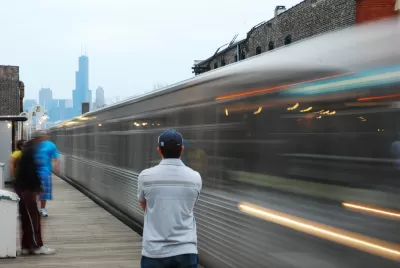
Chicago's Brown and Blue lines pass through a variety of neighborhoods, many of which are gentrifying and very attractive to young Chicagoans. So how much of the housing is zoned for apartments? Less than half. "City zoning code allows only single-family houses on 50.6 percent of the land within two blocks of Brown Line stations between Kimball and Southport," writes Steven Vance for Chicago Cityscape.
The strict zoning around these transit stops is not consistent with zoning around other stops on the city's North Side. "Areas in the North Side around the Blue and Brown Lines don’t have the same medium and high-density zoning districts as the areas around the Red Line. This situation leads to lower housing production of the 'missing middle' — housing that has more units than a single-family house, but wouldn’t be classified as a high-rise," Vance writes. This zoning is counterproductive for a city that is struggling to maintain its population.
Read the full story: Too much land around CTA stations doesn’t allow more than single-family housing

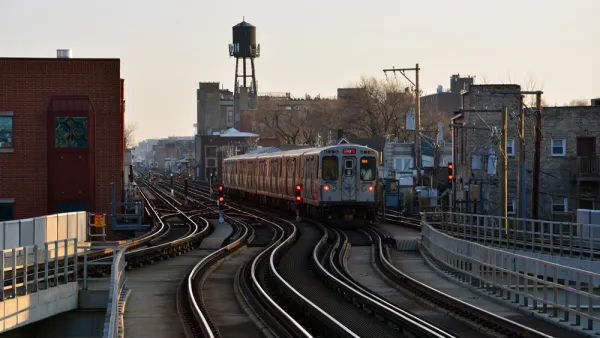
Demolition Starts for CTA's Controversial Flyover Project
The Chicago Transit Authority's Red-Purple Bypass Project will add an additional track to speed up trains passing through the Belmont Station. The project requires the demolition of several neighborhood buildings.
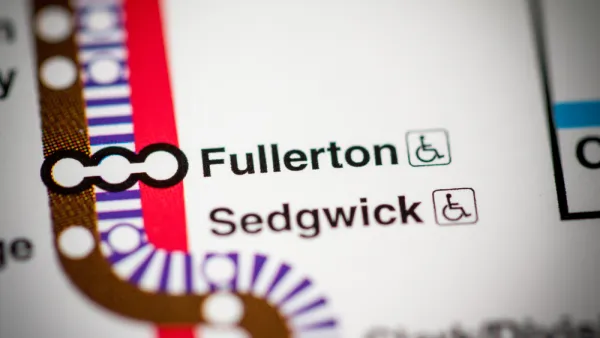
Major Ride Share Companies Accused of Taking Advantage of CTA Fatality
An apparent suicide stopped trains Tuesday morning at the Fullerton stop, which serves as a hub for Chicago's North Side transit. Prices for a ride from the area to downtown via Lyft reached triple digits.

New Guide Helps Citizens and Communities Understand Zoning
"Chicago Land Use: A Guide for Communities" is a new online resource whose release has been accompanied by community events to share info and empower Chicagoans to understand the zoning where they live.

Planetizen Federal Action Tracker
A weekly monitor of how Trump’s orders and actions are impacting planners and planning in America.

California plans to bury El Niño’s downpour
If the state plays its cards right, it may be able to store a billion acre-feet of El Niño’s water in aquifers.

Chicago breaks ground on $3 billion megadevelopment
The new neighborhood, titled Foundry Park, will one day host 3,700 residences.

California High-Speed Rail Authority CEO resigns after $600,000 scandal
Under Ian Choudri, the authority used taxpayer dollars to fund first class flights and trips to nightclubs.

Want to study the Missouri River? Soon, you may need unanimous approval from 10 states
Legislation would require 10 governors’ permission to study or build projects moving water outside the basin.

Desperate measures: Advocates weigh draining Lake Powell to fill Colorado River
Draining the reservoir could reduce evaporation losses by a couple hundred thousand acre-feet.

FREE Course: Walkable City 1: Why Walkability?
After describing his path towards focusing on walkability as the essence of good planning, Jeff Speck marches through his five principal reasons for making more walkable places.
Reinventing Malls: Planning Alchemy—Turning Gray Fields Into Gold
The course focuses on the opportunities and imperatives that shape reinvention of mall sites.

City of Rosemead
Rutgers University, Edward J. Bloustein School of Planning and Public Policy
One Hundred Miles
Hunter College, City University of New York (CUNY)
The Architects Foundation
University of Cincinnati Online
City of Cambridge
Montrose County
The Pocatello Development Authority