Not all property data maps are created equal.


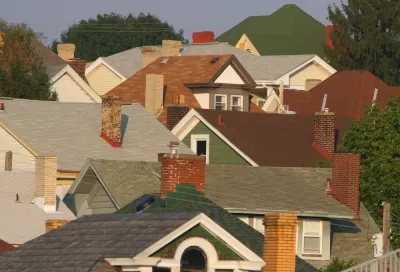
"To aid its neighborhood-level transformation and make its property data truly accessible to practitioners and residents alike, today the City of Pittsburgh unveiled Burgh’s Eye View: Parcels — the latest in its popular series of 'one stop shop' maps for viewing and interacting with the city’s data," according to an article by Robert Burack.
"The Parcels map allows public users to view, by neighborhood, delinquent properties, city-owned properties, and properties in a tax abatement program," adds Burack. "Users can also view information about any specific parcel, including type of owner, property class, sale information, county land value, and liens and tax delinquencies."
Though some of the data was previously included on the city's open data platform, Burgh's Eye View: Parcels includes a couple of new data sets and Burack reports that the new map represents a major upgrade in user experience. The idea that open data platforms are currently limited by difficulties in accessibility and user experience also drove Esri's recent launch of the ArcGIS Hub. For another example of cities moving their open data to a more user-friendly platform, see also Cincinnati's CincyInsights dashboard.
Read the full story: Visualizing Pittsburgh’s Property Data
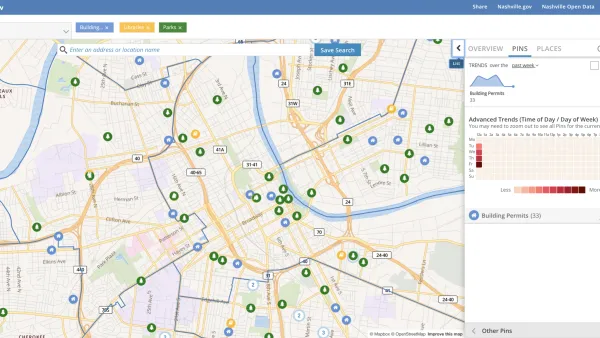
Presenting Municipal Data in an Interactive Map, Nashville Style
The city of Nashville launched the NashView interactive data map earlier this month.

New Interactive Mapping Tool Tracks all of NYC's Infrastructure Projects, Housing Permits, and City Facilities
The New York Department of City Planning has taken its open data practices to a new level with the launch of the Capital Planning Explorer.

Using Artificial Intelligence to Map Telecommuting Prevalence
In the Philadelphia region, residents of wealthier neighborhoods will be more likely to work from home in the future, thus altering travel patterns and transit usage, according to a new mapping project powered by artificial intelligence (AI).

Desperate measures: Advocates weigh draining Lake Powell to fill Colorado River
Draining the reservoir could reduce evaporation losses by a couple hundred thousand acre-feet.

Eastern Nebraska is running out of electricity
Data centers and electrification are straining eastern Nebraska’s grid, throttling economic development.
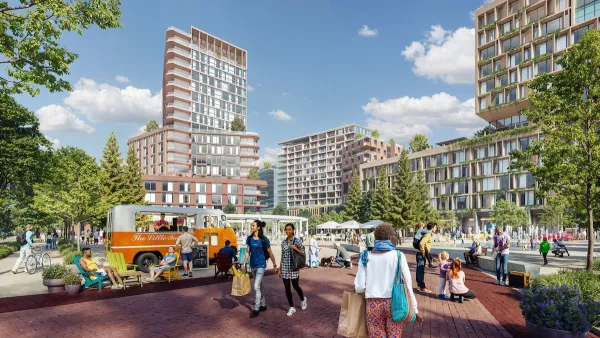
Malls are becoming the midtowns of the future
Mall and office park redevelopments are a generational opportunity to create new nodes of urbanity.

NYC breaks ground on anti-flooding infrastructure project
New York City's new system will reduce stormwater flows to local sewers by 90%.

One Kentucky town’s secret to affordable housing
The Smoketown Community Land Trust has already built seven affordable homes for community members.

Houston gains petal-shaped cooling infrastructure to make streets more ‘delightful’
The city has installed the pavilions along 15 blocks in Houston.

FREE Course: Walkable City 1: Why Walkability?
After describing his path towards focusing on walkability as the essence of good planning, Jeff Speck marches through his five principal reasons for making more walkable places.
Reinventing Malls: Planning Alchemy—Turning Gray Fields Into Gold
The course focuses on the opportunities and imperatives that shape reinvention of mall sites.

City of Rosemead
Rutgers University, Edward J. Bloustein School of Planning and Public Policy
One Hundred Miles
University of Michigan School for Environment and Sustainability (SEAS)
Hunter College, City University of New York (CUNY)
The Architects Foundation
City of Cambridge
Montrose County
The Pocatello Development Authority