The New York Department of City Planning has taken its open data practices to a new level with the launch of the Capital Planning Explorer.



The New Your City Department of City Planning (DCP) last week launched the Capital Planning Explorer, a new, map-based website aimed at increasing transparency around capital planning, according to a DCP press release. The Capital Planning Explorer website describes the new tool as "a place for the public and planners to access the maps and data that they need to better plan for investments in neighborhoods and collaborate with one another."
The map offers three layers: Capital Projects, Facilities, and New Housing Developments. The Housing Development maps, for example, include all housing permits in all five boroughs, color-coded by new construction, building alterations, or demolitions. "This supplemental information on the number and types of housing units found on any city block is key to the city’s planning processes for capital projects," according to the website.
According to the Capital Planning Explorer website, the tool uses derived from the Capital Commitment Plan published by the city's Office of Management and Budget (OMB), in addition to supporting data from Checkbook NYC, a resource provided by the comptroller, and spatial data from but not limited to data created and published by DDC, DPR,ORR, and DCP. All datasets are available for download.
The press release included soundbites from DCP Director Anita Laremont, who touts the new tool as emblematic of work by the DCP to build more trust and transparency.
Read the full story: A NEW DIGITAL TOOL FOR THE PUBLIC: DCP Launches Capital Planning Explorer

NYC’s ‘Rare and Comprehensive’ Public Data Reveals Congestion Pricing's Success
The Metropolitan Transportation Authority’s analytics and data team maintains over 180 regularly updated datasets about the city’s transportation system.
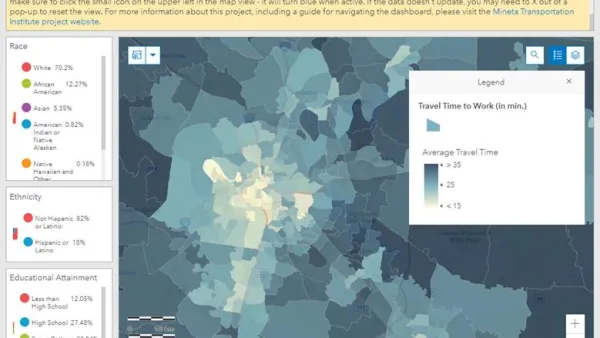
Smart Growth Loves Heatmaps
Smart growth can provide many important benefits that are easy to see using informative and beautiful heatmaps—our complex world as viewed by all-knowing gods.
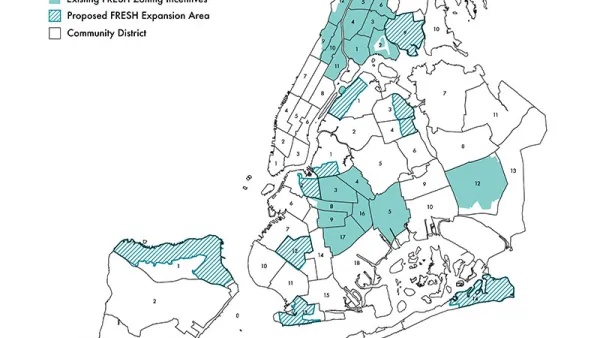
Zoning Incentives for Supermarkets: New York Expands its FRESH Program
The FRESH program, previously offering zoning incentives for grocery store development in 19 districts around New York City, will expand to 11 new locations.

Desperate measures: Advocates weigh draining Lake Powell to fill Colorado River
Draining the reservoir could reduce evaporation losses by a couple hundred thousand acre-feet.

Eastern Nebraska is running out of electricity
Data centers and electrification are straining eastern Nebraska’s grid, throttling economic development.

Move over, LA: St. Louis gears up for Olympics, invests millions in downtown redevelopment
The Missouri city will host the 2028 Olympic soccer group stage and knockout matches.

Mass. votes against statewide minimum lot size for single-family homes
Over 2 million residents voted on Question 7; it was decided by just over 30,000 votes.

Maryland’s $15 billion bridge project gains key approval
The Maryland Transit Authority said the project will create over 60,000 jobs and add $23 billion to the local economy.

‘No clear next steps’ for Chicago's permanent festival grounds
Eleventh Ward Ald. Nicole Lee has suggested Soldier Field as a possible location for the permanent event space.

FREE Course: Walkable City 1: Why Walkability?
After describing his path towards focusing on walkability as the essence of good planning, Jeff Speck marches through his five principal reasons for making more walkable places.
Reinventing Malls: Planning Alchemy—Turning Gray Fields Into Gold
The course focuses on the opportunities and imperatives that shape reinvention of mall sites.

City of Rosemead
Rutgers University, Edward J. Bloustein School of Planning and Public Policy
One Hundred Miles
University of Michigan School for Environment and Sustainability (SEAS)
Hunter College, City University of New York (CUNY)
The Architects Foundation
City of Cambridge
Montrose County
The Pocatello Development Authority