Philadelphia is one of many American cities suddenly beset with declining bus ridership numbers, likely in part as a result of the popularity of transportation network companies.


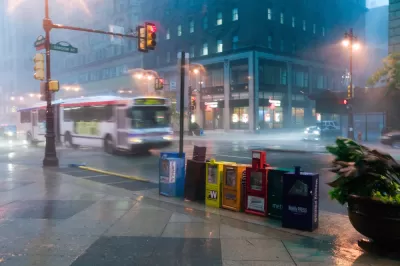
Jason Laughlin reports on shifting transportation mode choice in Philadelphia, where the arrival of transportation network companies in 2014 preceded a sudden drop in bus ridership.
SEPTA’s 123 bus and trolley routes lost about 4.4 million ride trips from fiscal years 2014 to 2016, the agency reported, which mirrors shrinking bus ridership nationwide, according to the American Public Transportation Association. The region’s bus ridership by linked trips in fiscal year 2016 was 114 million, the lowest it had been since 2003.
Moreover,
Compared with 2013, the last full year SEPTA operated without ride sharing in the city, the 2016 ridership loss is even more significant. Last year’s more than 161 million ride trips on both buses and trolleys was about 14 million shy of the ridership three years earlier.
In the face of such a sudden drop in ridership, SEPTA has hired Jarret Walker's firm to evaluate the region's bus system, including the creation of a two-year plan to redesign the bus system.
Read the full story: As Uber grows, SEPTA to rethink bus service
The Bus Revolution Has Been Revised in Philadelphia
The Southeastern Pennsylvania Transportation Authority went back to the drawing board with its Bus Revolution system redesign after an initial round of feedback completed earlier this year.
‘Bus Revolution’ Revised in Philadelphia
The bus system redesign underway in Philadelphia changed direction after riders and local politicians complained about an initial draft plan.

Suburban Detroit Achieves Long-Awaited Bus Service Expansion
Novi and Bloomfield Hills in Southeast Michigan will have transit service for the first time in 28 years.

Planetizen Federal Action Tracker
A weekly monitor of how Trump’s orders and actions are impacting planners and planning in America.

California plans to bury El Niño’s downpour
If the state plays its cards right, it may be able to store a billion acre-feet of El Niño’s water in aquifers.

Desperate measures: Advocates weigh draining Lake Powell to fill Colorado River
Draining the reservoir could reduce evaporation losses by a couple hundred thousand acre-feet.

US buildings threatened, destroyed by fires set to triple by 2060
Researchers found a high fire risk for socioeconomically vulnerable neighborhoods in the American West.

LA residents may be allowed to paint their own crosswalks
Councilwoman Katy Yaroslavsky put out a motion instructing the Los Angeles Department of Public Transportation to study the feasibility of allowing volunteers to paint crosswalks.

Dallas moves to overhaul its zoning code
The city's zoning reform will allow more multi-family and mixed-use developments.

FREE Course: Walkable City 1: Why Walkability?
After describing his path towards focusing on walkability as the essence of good planning, Jeff Speck marches through his five principal reasons for making more walkable places.
Reinventing Malls: Planning Alchemy—Turning Gray Fields Into Gold
The course focuses on the opportunities and imperatives that shape reinvention of mall sites.

City of Rosemead
Rutgers University, Edward J. Bloustein School of Planning and Public Policy
One Hundred Miles
Hunter College, City University of New York (CUNY)
The Architects Foundation
University of Cincinnati Online
City of Cambridge
Montrose County
The Pocatello Development Authority