The well-documented problems facing the D.C. Circulator bus system came to head earlier in July.


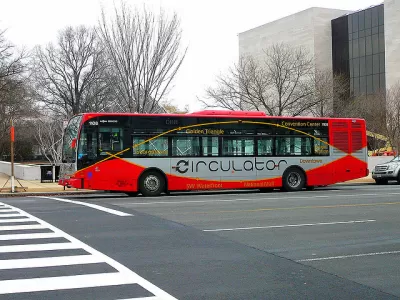
"The District will take over direct management of its troubled D.C. Circulator bus system, clearing the way for Metro to remove itself from responsibilities it assumed in 2005 when the bright red buses first appeared on city streets," reports Martin Di Caro.
The decision appears to be the final chapter of Metro's role with the beleaguered bus line. Here, Di Caro explains the current arrangement, which will no longer include Metro by July 1, 2018:
Metro’s pending exit promises to simplify a complicated management structure. Since the Circulator’s inception, DDOT has owned the fleet and set routes, schedules, and fares. Metro has been in charge of on-the-ground oversight of its contract with First Transit, frequently docking the company payments for failing to meet the daily quota of operational buses. First Transit operates the system, responsible for hiring and training drivers and mechanics.
Dan Malouf documented the shortcomings of the arrangement in a separate article published earlier in July, as did Di Caro in another article in May.
Despite the new arrangement, DDOT is not promising service improvements on the line just yet, reports Di Caro.
FULL STORY: District To Replace Metro In Direct Control Of Troubled D.C. Circulator

Opinion: Post-Pandemic Recovery Cannot Privilege Car Owners
Robust investment in the region's public transportation network can ensure a more equitable and sustainable path forward.
D.C. Metro Blue Line to Close for 3+ Plus Months, Starting Saturday
Platform improvements will close down another rail transit route in the D.C. region for three whole months.
Key Virginia Rail Bridge Project Completes Environmental Review
A $1.9 billion project to add a second set of rail tracks to the Long Bridge that connects Virginia to D.C. is ready to move forward with a recently completed Environmental Impact Statement.

Planetizen Federal Action Tracker
A weekly monitor of how Trump’s orders and actions are impacting planners and planning in America.

The state-sanctioned urbicide of Austin
People don’t kill cities. Freeways do.

US to reduce Colorado River water deliveries to Mexico
A new Colorado Treaty amendment reduces Mexico’s Colorado River water allocation by 250,000 acre feet.

Mamdani overhauls NYC's Vision Zero plan with 100 new policy goals
The overhaul aims to reduce traffic deaths and make streets safer for pedestrians, cyclists and drivers through lower speed limits, new safety infrastructure and more.

Amtrak not solely to blame for New Jersey commuter rail's unreliability, report finds
A new study from the Garden State Initiative found that NJ Transit’s budget grew 20% across a 4 year period, but reliability declined significantly over the same period.

EPA erases limits on planet-warming pollution from power plants
Under Monday’s plan, power plants would still have some limits on how much mercury, arsenic and other contaminants they can emit.

FREE Course: Walkable City 1: Why Walkability?
After describing his path towards focusing on walkability as the essence of good planning, Jeff Speck marches through his five principal reasons for making more walkable places.
Reinventing Malls: Planning Alchemy—Turning Gray Fields Into Gold
The course focuses on the opportunities and imperatives that shape reinvention of mall sites.

Eagle County Government
Harvard University Graduate School of Design
Nashville Planning Department
The Architects Foundation
University of Cincinnati Online
The Pocatello Development Authority
The Urban Renewal Agency of the City of Pocatello
Journal of the American Planning Association