A Next City article argues that investing in job programs and other public goods would do more to make those communities safe than investing in police departments.


It's often said that budgets reveal what people, governments or companies really care about. Kumar Rao argues that the budgets for cities often reveal garbled priorities. "Most of the cities we profiled devote 25 percent to 40 percent of their general fund expenditures towards policing and criminalization, while shortchanging community investments," Rao writes in Next City.
He pulls numerous examples of cities with well-funded police departments that have histories of bad behavior or cities that need investment elsewhere. "New York City spends nearly $5 billion on a police force that still prioritizes discriminatory and ineffective broken windows policing, even as its decaying public transit system calls out for investment," Rao writes.
FULL STORY: Why Rising Police Budgets Aren’t Making Cities Safer

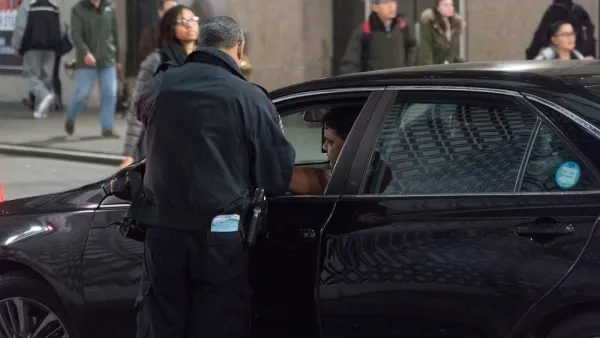
Investment in Public Transit Could Reduce the Need for Police Traffic Enforcement
In Nick Demarsh and Rick Banks' opinion, defunding the police requires cities to reconsider car culture.
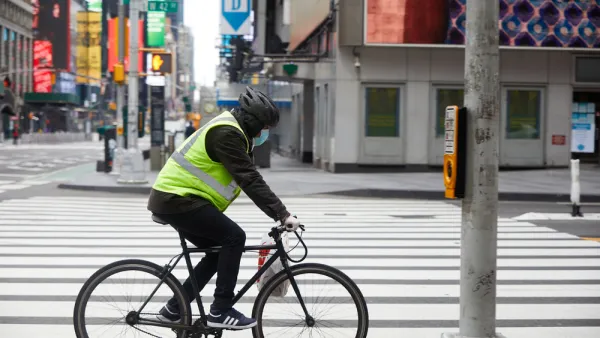
Making Space for the 'Invisible Cyclists' in Post-Pandemic Transportation Planning
As biking gains popularity as a transportation mode during the pandemic, planners are called on to elevate the role of "invisible cyclists"—people of color on bikes—in the process of redesigning and re-engineering streets.
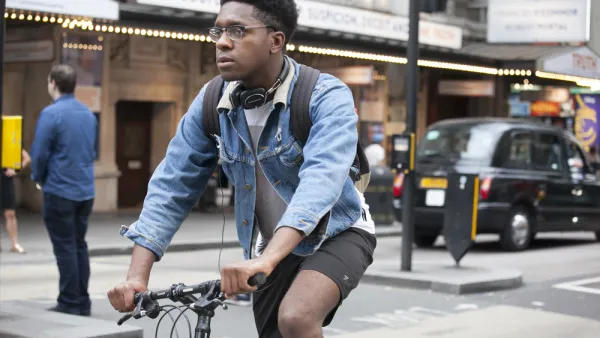
'Biking While Black?' You're More Likely to Get a Ticket in Chicago
Majority-white neighborhoods like West Town and Lincoln Park are among the most popular for biking in Chicago, but they’re not in the top ten neighborhoods for bike tickets.

Planetizen Federal Action Tracker
A weekly monitor of how Trump’s orders and actions are impacting planners and planning in America.

The state-sanctioned urbicide of Austin
People don’t kill cities. Freeways do.

US to reduce Colorado River water deliveries to Mexico
A new Colorado Treaty amendment reduces Mexico’s Colorado River water allocation by 250,000 acre feet.

5 New England states march closer to 800 megawatt wind energy project
Securing federal approval for the project may be complicated under the Trump administration, which has historically been hostile towards domestic wind power.

Baltimore to break ground on $50 million Transit Priority Project
The project will bring faster bus trips, safer streets and better bike connections to Baltimore.

Airbnb launches $250 million 'last-dollar financing' housing accelerator, makes first investment in Austin
The company will put $6.4 million towards affordable housing development in Texas’ capital.

FREE Course: Walkable City 1: Why Walkability?
After describing his path towards focusing on walkability as the essence of good planning, Jeff Speck marches through his five principal reasons for making more walkable places.
Reinventing Malls: Planning Alchemy—Turning Gray Fields Into Gold
The course focuses on the opportunities and imperatives that shape reinvention of mall sites.

Eagle County Government
Harvard University Graduate School of Design
Nashville Planning Department
The Architects Foundation
University of Cincinnati Online
The Pocatello Development Authority
The Urban Renewal Agency of the City of Pocatello
Journal of the American Planning Association