Call it a reverse Chinatown.


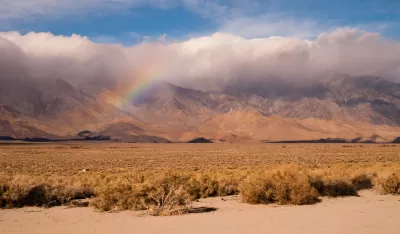
Owens Valley officials "have launched eminent domain proceedings in an effort to take property acquired by Los Angeles in the early 1900s," reports Louis Sahagun.
Yes, we are talking about that Owens Valley. What Sahaguan calls "An essential piece of California history and the subject of the classic 1974 film 'Chinatown.'" The moment Los Angeles bought the water rights in the Owens Valley "is still known as the original sin that sparked decades of hatred for Los Angeles as the valley dried up and ranchers and farmers struggled to make a living."
This will be the first time "Inyo County has used eminent domain rules against the Los Angeles Department of Water and Power, which owns 25% of the Owens Valley floor," according to Sahagun. "Unlike previous battles with the DWP that focused on the environmental and economic damage caused by L.A.'s pumping of local water supplies, the county seeks to pay fair market value for property and water rights needed for landfills, parks, commerce and ranchlands along a 112-mile stretch of Highway 395 east of the Sierra Nevada."
Read the full story: L.A. took their water and land a century ago. Now the Owens Valley is fighting back

L.A.’s Water Diversions Threaten Critical Habitat Far to the North
Water levels at Mono Lake, nestled in a stunningly beautiful location on the eastern slope of the Sierra Nevadas that provides the eastern gateway to Yosemite, have fallen to a critical level of a local population of nesting gulls.
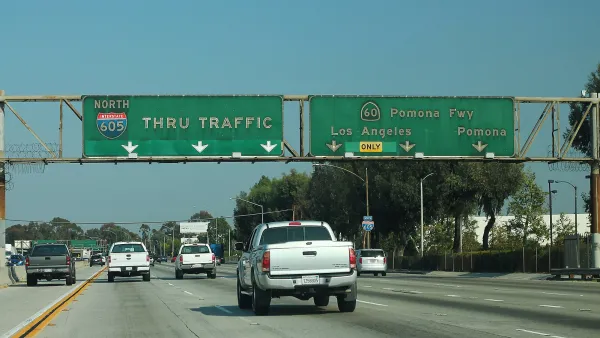
L.A. Freeway Expansion to Move Ahead, Sans Displacement
The 605 freeway expansion project was expected to demolish hundreds of homes and multifamily buildings.
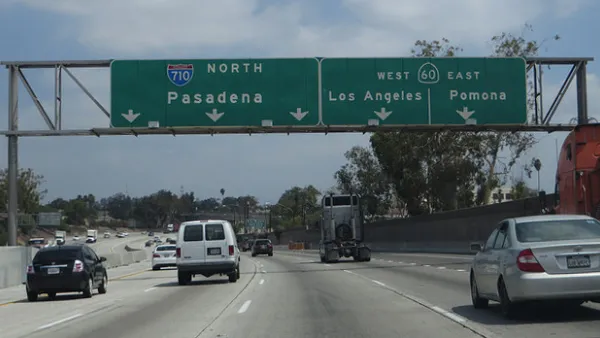
L.A. Metro Denounces—but Doesn't Scrap—710 Freeway Expansion Plan
The agency's board members spoke out forcefully against air pollution and displacement, but stopped short of completely rejecting the project, looking instead to cleaner vehicles and regulations that mitigate community concerns.

Desperate measures: Advocates weigh draining Lake Powell to fill Colorado River
Draining the reservoir could reduce evaporation losses by a couple hundred thousand acre-feet.

Eastern Nebraska is running out of electricity
Data centers and electrification are straining eastern Nebraska’s grid, throttling economic development.

Move over, LA: St. Louis gears up for Olympics, invests millions in downtown redevelopment
The Missouri city will host the 2028 Olympic soccer group stage and knockout matches.

Mass. votes against statewide minimum lot size for single-family homes
Over 2 million residents voted on Question 7; it was decided by just over 30,000 votes.

Maryland’s $15 billion bridge project gains key approval
The Maryland Transit Authority said the project will create over 60,000 jobs and add $23 billion to the local economy.

‘No clear next steps’ for Chicago's permanent festival grounds
Eleventh Ward Ald. Nicole Lee has suggested Soldier Field as a possible location for the permanent event space.

FREE Course: Walkable City 1: Why Walkability?
After describing his path towards focusing on walkability as the essence of good planning, Jeff Speck marches through his five principal reasons for making more walkable places.
Reinventing Malls: Planning Alchemy—Turning Gray Fields Into Gold
The course focuses on the opportunities and imperatives that shape reinvention of mall sites.

City of Rosemead
Rutgers University, Edward J. Bloustein School of Planning and Public Policy
One Hundred Miles
University of Michigan School for Environment and Sustainability (SEAS)
Hunter College, City University of New York (CUNY)
The Architects Foundation
City of Cambridge
The Pocatello Development Authority
The Urban Renewal Agency of the City of Pocatello