Clean and safe from rats.



Cole Rosengren explains a new initiative announced by Mayor Bill de Blasio recently that will spend $32 million to "reduce the rat population in three of the city's 'most infested areas' and make other policy changes that could have citywide effects."
The effort will be spearheaded by the city's Department of Sanitation, focusing mostly on trash collection infrastructure. While the initiative will replace bins in neighborhoods in Manhattan, Brooklyn, and the Bronx, citywide changes could also be in store if the New York City Council approves several laws proposed by the de Blasio Administration. "One law would increase illegal dumping fines for businesses from $1,500 to $5,000 for first offenses and eventually up to $20,000 for subsequent violations," reports Rosengren. "Other laws could also prevent buildings with 10 or more units from placing their waste out before 4 a.m. on collection days — essentially giving them a two-hour window to do so — and require problematic buildings or businesses in specific areas to divert their organic waste for separate collection."
FULL STORY: NYC announces $32M rat crackdown with a host of new trash policies

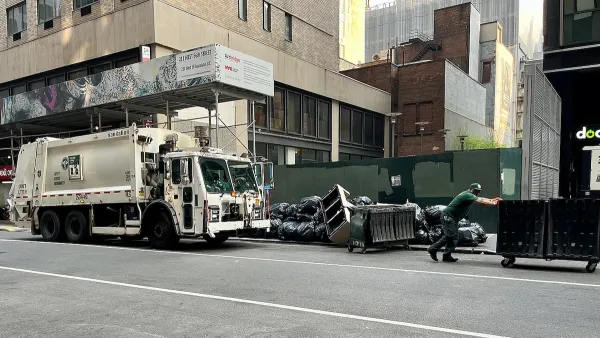
Parked Cars Hamper NYC Trash Containerization Effort
Sanitation workers must manually collect bags from containers blocked by parked cars, slowing a process that is meant to be safer and more efficient.
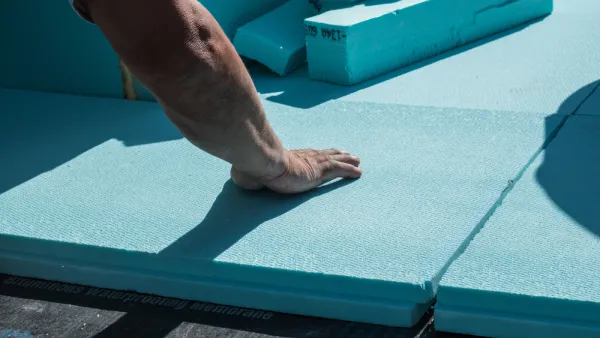
New York City Polystyrene Ban Took Effect New Year's Day
Thanks to two recent New York State court rulings, disposable food and beverage containers will no longer be made from polystyrene in the nation's largest city. The ban was originally proposed by Mayor Michael Bloomberg in February 2013.
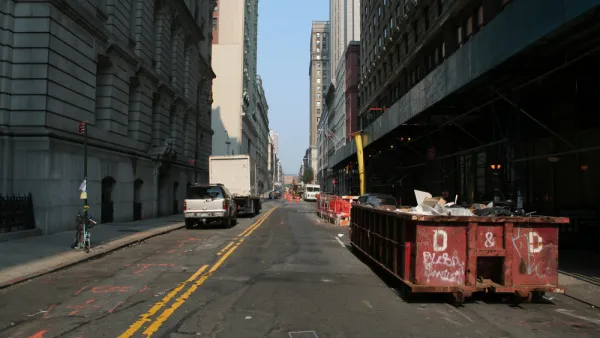
Change Coming to the Way New York City Collects its Trash
The de Blasio Administration has recommended that the city of New York is ready to collect its trash in a new way, with a system known as franchising.

Planetizen Federal Action Tracker
A weekly monitor of how Trump’s orders and actions are impacting planners and planning in America.

The state-sanctioned urbicide of Austin
People don’t kill cities. Freeways do.

US to reduce Colorado River water deliveries to Mexico
A new Colorado Treaty amendment reduces Mexico’s Colorado River water allocation by 250,000 acre feet.

Brightline West’s future may rely on $6 billion federal loan
The company has until Nov. 2 to make a $400 million equity investment into its proposed high-speed rail line.

LA Metro’s ultimatum: no extra buses for LA28 if federal funding isn’t imminently secured
If Metro does not provide additional buses, LA28 organizers will have to find a new way to manage Olympic traffic. LA28’s budget does not include a line item for transit.

Colorado’s Largest Data Center Could Rise Next to Homes — Without a Public Hearing
The proposed campus would consume 11 times the power of Denver International Airport; as it has across the country, opposition mounts.

FREE Course: Walkable City 1: Why Walkability?
After describing his path towards focusing on walkability as the essence of good planning, Jeff Speck marches through his five principal reasons for making more walkable places.
Reinventing Malls: Planning Alchemy—Turning Gray Fields Into Gold
The course focuses on the opportunities and imperatives that shape reinvention of mall sites.

Eagle County Government
Harvard University Graduate School of Design
Nashville Planning Department
The Architects Foundation
University of Cincinnati Online
The Pocatello Development Authority
The Urban Renewal Agency of the City of Pocatello
Journal of the American Planning Association