The first report from independent think tank RethinkXL predicts that by 2031, 95 percent of U.S. passenger miles traveled will be served by on-demand, autonomous electric vehicles owned by companies providing transport as a service.


Tony Seba and James Arbib introduce some of the ideas that will be required thinking as planners and engineers begin to consider the next generation of transportation technology:
A historic photo taken on Easter Sunday, 1900, shows a street filled with horse-drawn carriages. If you look very carefully, you can pick out a solitary automobile. A photo of Easter 1913 shows the same New York Fifth Avenue scene packed with cars. If you look very carefully, you can pick out a solitary horse.
That’s disruption: New technologies create a new market and transform existing industries in the blink of an eye.
We face a rapid disruption of transportation today that could end more than a century of individual ownership of the gas-powered vehicle that disrupted the horse. This disruption will reshape the urban landscape and the world’s energy economy and bring huge benefits — economically, socially and environmentally — if policy decisions are well-informed.
Seba and Arbib are writing as co-founders of RethinkX, which recently released a report that comes down on one side of an ongoing debate in the transportation planning world: will self-driving cars render car ownership by individuals obsolete?
Read the full story: Are we ready for the end of individual car ownership?
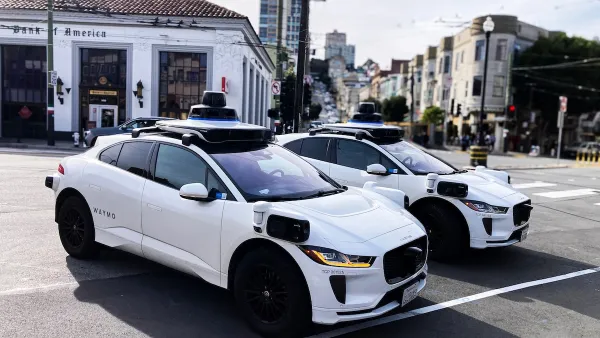
How Autonomous Cars Can Induce Sprawl and Sabotage Climate Goals
Robotaxis can lead to longer, more frequent trips and are projected to increase VMT by as much as 83 percent.
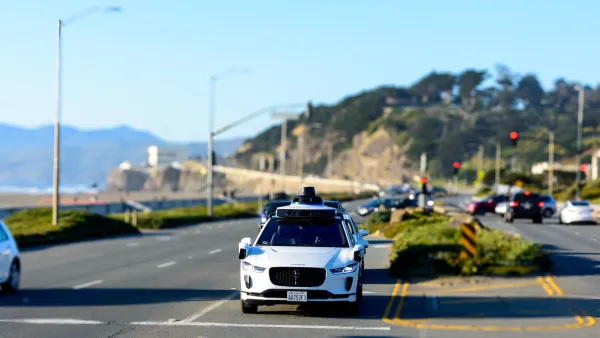
Study: Self-driving Cars Could Raise VMT by 6%, Increasing Congestion
The study contradicts early predictions that AVs would reduce driving miles.
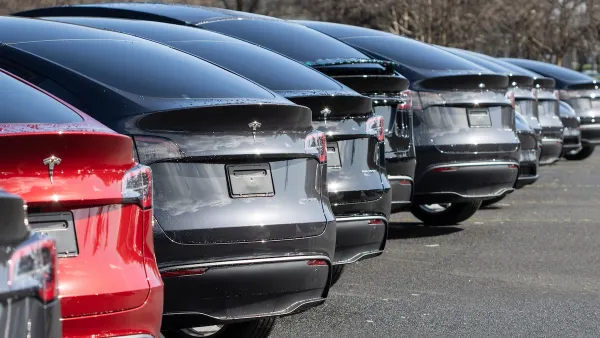
Texas Safety Advocates Raise Alarm in Advance of Tesla Robotaxi Launch
The company plans to deploy self-driving taxis in Austin with no oversight from state or local transportation agencies.

Planetizen Federal Action Tracker
A weekly monitor of how Trump’s orders and actions are impacting planners and planning in America.

Eastern Nebraska is running out of electricity
Data centers and electrification are straining eastern Nebraska’s grid, throttling economic development.

Move over, LA: St. Louis gears up for Olympics, invests millions in downtown redevelopment
The Missouri city will host the 2028 Olympic soccer group stage and knockout matches.

Dallas releases zoning code overhaul to officials
The drafted overhaul is over 400 pages long.

NYC renovations for dangerous, ‘mercilessly crammed’ street delayed until 2027
Construction was supposed to begin this fall.

San Diego’s Midway Rising project gets greenlight from city council
The project looks to become the largest affordable housing development in California's history.

FREE Course: Walkable City 1: Why Walkability?
After describing his path towards focusing on walkability as the essence of good planning, Jeff Speck marches through his five principal reasons for making more walkable places.
Reinventing Malls: Planning Alchemy—Turning Gray Fields Into Gold
The course focuses on the opportunities and imperatives that shape reinvention of mall sites.

City of Rosemead
Rutgers University, Edward J. Bloustein School of Planning and Public Policy
One Hundred Miles
University of Michigan School for Environment and Sustainability (SEAS)
Hunter College, City University of New York (CUNY)
The Architects Foundation
City of Cambridge
The Pocatello Development Authority
The Urban Renewal Agency of the City of Pocatello