The already congested Brent Spence Bridge between Cincinnati and Northern Kentucky will be partially closed this summer for repairs. The project still won't fix larger problems with the bridge.


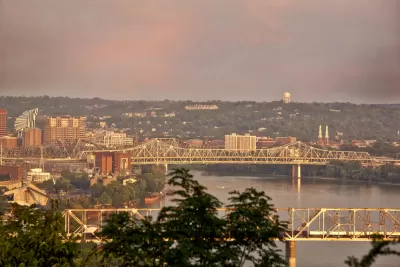
Cameron McWhirtle and Shane Shifflett report:
The Brent Spence Bridge that connects Cincinnati to northern Kentucky is often notoriously jammed with miles-long backups. Now, for two months this summer the eight-lane bridge that carries Interstates 71 and 75 across the Ohio River will be down to half that many lanes as it undergoes repairs.
But that's not the worst part of the story, according to the article.
This summer’s repairs on the Brent Spence cost $38 million for repaving, updating lighting and other improvements. But it won’t solve the problem that has had Kentucky and Ohio lawmakers at loggerheads for years: how to pay for a major overhaul of the double-decker span that carries as many as 180,000 vehicles a day, including an estimated $1 billion worth of freight daily, according to the Ohio-Kentucky-Indiana Regional Council of Governments.
In addition to providing more details about the project, the article places the challenges of the Brent Spence Bridge in context of the nationwide trend of crumbling infrastructure, as evidenced by the state of the nation's bridges.
FULL STORY: Aging Infrastructure Means More Logjams at One of U.S.’s Worst Bottlenecks

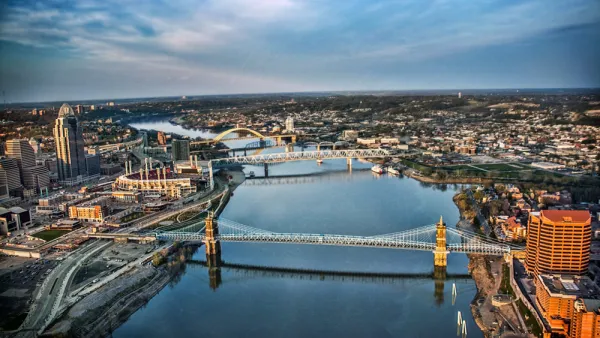
Two Bridges Across the Ohio River in Cincinnati Closed on the Same Day
Two of the transportation connections between Ohio and Kentucky in the Cincinnati metropolitan area were closed on the same day, leaving one side of the Ohio River cut off from the other.
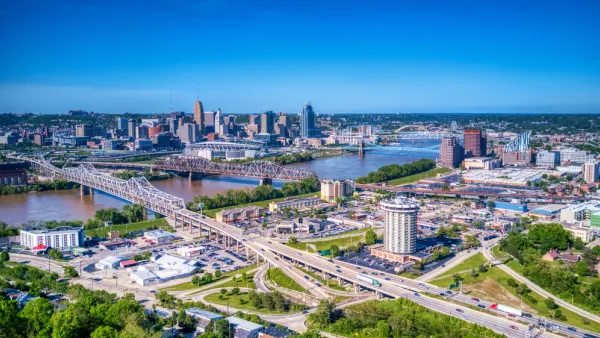
Major Waterfront Improvements Completing Construction South of Cincinnati
Developer Southbank Partners is putting the finishing touches on the second phase of the Riverfront Commons in Covington, Kentucky.
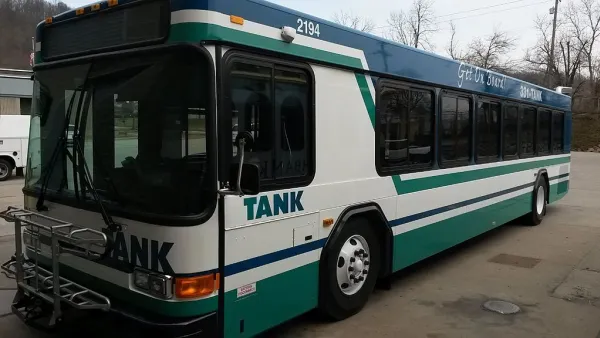
Northern Kentucky to Redesign Bus Service
Ridership on the TANK bus service has sunk in recent years. Hope for a turnaround ride on a redesign.

Planetizen Federal Action Tracker
A weekly monitor of how Trump’s orders and actions are impacting planners and planning in America.

The state-sanctioned urbicide of Austin
People don’t kill cities. Freeways do.

US to reduce Colorado River water deliveries to Mexico
A new Colorado Treaty amendment reduces Mexico’s Colorado River water allocation by 250,000 acre feet.

Mamdani overhauls NYC's Vision Zero plan with 100 new policy goals
The overhaul aims to reduce traffic deaths and make streets safer for pedestrians, cyclists and drivers through lower speed limits, new safety infrastructure and more.

Amtrak not solely to blame for New Jersey commuter rail's unreliability, report finds
A new study from the Garden State Initiative found that NJ Transit’s budget grew 20% across a 4 year period, but reliability declined significantly over the same period.

EPA erases limits on planet-warming pollution from power plants
Under Monday’s plan, power plants would still have some limits on how much mercury, arsenic and other contaminants they can emit.

FREE Course: Walkable City 1: Why Walkability?
After describing his path towards focusing on walkability as the essence of good planning, Jeff Speck marches through his five principal reasons for making more walkable places.
Reinventing Malls: Planning Alchemy—Turning Gray Fields Into Gold
The course focuses on the opportunities and imperatives that shape reinvention of mall sites.

Eagle County Government
Harvard University Graduate School of Design
Nashville Planning Department
The Architects Foundation
University of Cincinnati Online
The Pocatello Development Authority
The Urban Renewal Agency of the City of Pocatello
Journal of the American Planning Association