The Annual Meeting of the United States Conference of Mayors wrapped up in Miami Beach earlier this week, culminating with a display of climate change solidarity.



"More than 250 United States mayors have adopted a new bipartisan climate change resolution that includes a push for US cities to commit to 100% renewable energy by 2035," reports Joshua S. Hill. The resolution further widens the divide between U.S. cities and the Trump Administration, according to Hill.
"The resolution focuses on a wide variety of issues that US cities will attempt to take leadership on," adds Hill, "including energy efficiency, the electrification of the US transportation sector, driving city and energy technology innovation, and of course supporting cities in their transition to 100% renewable energy generation."
Hill provides more details on the resolution, as well as some of the other local responses to President Trump's decision rescind the country's commitment to the terms of the Paris Climate Accord. The full resolution is also online.
Read the full story: More Than 250 US Mayors Commit To 100% Renewable Energy Amidst Adoption Of New Climate Resolution
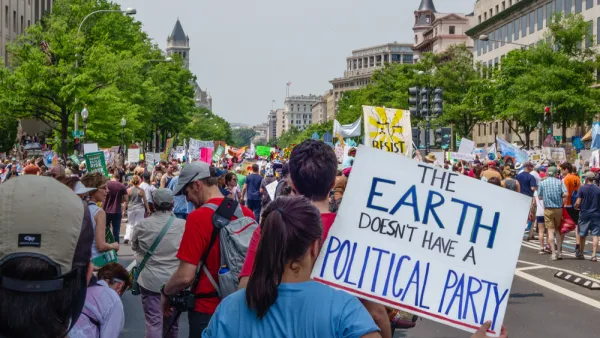
U.S. Officially Rejoins the Paris Climate Accord
Rejoining the international climate accord is the first step into a long journey back into the good faith of the international community working to curb emissions and prevent the worst effects of climate change.
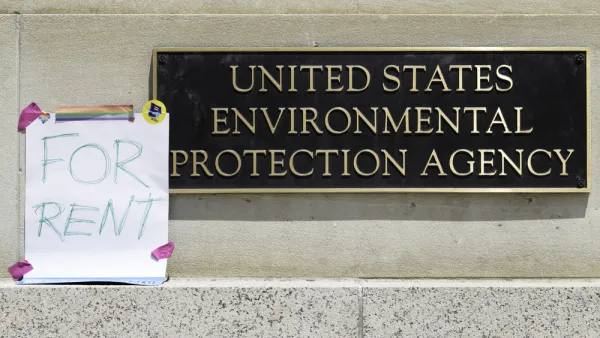
U.S. Officially Withdraws From the Paris Climate Accord
An even set in motion years ago by the Trump administration came to fruition on November 4 while most Americans were paying attention to the election.

Arizona Mayors Want to Stay in the Paris Climate Agreement
The mayors of Tucson and Phoenix want Congress to block President Donald Trump from removing the United States from the Paris Climate Agreement.

Planetizen Federal Action Tracker
A weekly monitor of how Trump’s orders and actions are impacting planners and planning in America.

California plans to bury El Niño’s downpour
If the state plays its cards right, it may be able to store a billion acre-feet of El Niño’s water in aquifers.

Desperate measures: Advocates weigh draining Lake Powell to fill Colorado River
Draining the reservoir could reduce evaporation losses by a couple hundred thousand acre-feet.

In Texas, data centers are swallowing promised parkland
Residents who moved to Taylor, Texas for a rural community now have to contend with three data centers in their backyard.

How a Chicago-sized wind farm beat the odds and powered on
The project spanned five presidential administrations and a standoff with a U.S. military base.

MTA gives itself 30 days to transform pit into basketball court
The site has been under construction since 2022; the city originally estimated it would finish the court in 2024.

FREE Course: Walkable City 1: Why Walkability?
After describing his path towards focusing on walkability as the essence of good planning, Jeff Speck marches through his five principal reasons for making more walkable places.
Reinventing Malls: Planning Alchemy—Turning Gray Fields Into Gold
The course focuses on the opportunities and imperatives that shape reinvention of mall sites.

City of Rosemead
Rutgers University, Edward J. Bloustein School of Planning and Public Policy
One Hundred Miles
Hunter College, City University of New York (CUNY)
The Architects Foundation
University of Cincinnati Online
City of Cambridge
Montrose County
The Pocatello Development Authority