The popularity of the Gold Line extension in the San Gabriel Valley to the east of Pasadena requires a new approach to parking. It's hoped that parking fees will decrease demand for parking at stations along the route without affecting ridership.


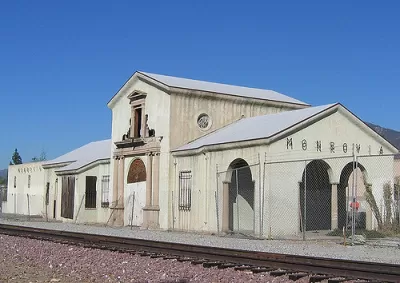
"Commuters who drive to the Monrovia, Irwindale, or Azusa Pacific/Citrus College stations before taking the train will now need to pay a daily three dollar fee," according to an article on KPCC that introduces an on-air segment of the show Take Two.
"Metro officials hope that the fee will help reduce demand at these popular locations, where parking lots frequently reach capacity as early as 6 a.m.," adds the article. The parking fee brings a new chapter in a story that dates back at least to May 2016, when residents expressed frustration with overflow parking on residential streets in Azusa.
Parking has also played a pivotal role in the discussion around another new addition to the Metro light rail system. Concerns about parking scarcity around the Expo Line extension, which also opened in 2016, turned out to be for naught.
Read the full story: Metro begins charging riders to park at three stations

L.A. Metro Gold Line Foothill Extension Opens Today
All Los Angeles County Metropolitan Transportation Authority (Metro) Gold Line riders will enjoy complimentary rides on Saturday to celebrate the opening of the $1 billion, 11.5-mile Gold Line Foothill Extension in the San Gabriel Valley.
Rail Redundancy Shouldn't Be Self-Destructive
Los Angeles Metro's new Gold Line light rail extension is attracting riders from the regional Metrolink commuter rail line that serves San Bernardino. The editorial board of the Daily Bulletin suggests that's not necessarily a problem.
Parking Crunch Hits New Light Rail Station
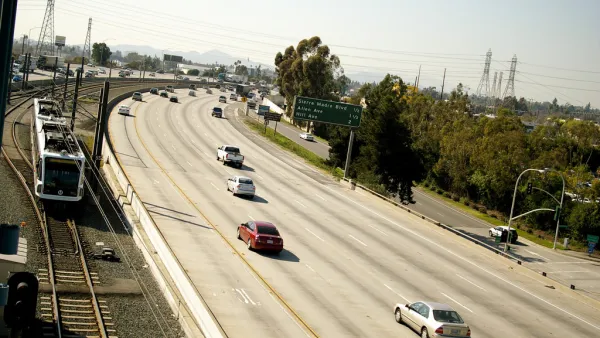
The number of people parking at the new Gold Line light rail station in Azusa, California is outstripping the available supply of parking spaces, forcing many onto surrounding residential streets, which now has neighbors up in arms.

Planetizen Federal Action Tracker
A weekly monitor of how Trump’s orders and actions are impacting planners and planning in America.

The state-sanctioned urbicide of Austin
People don’t kill cities. Freeways do.

US to reduce Colorado River water deliveries to Mexico
A new Colorado Treaty amendment reduces Mexico’s Colorado River water allocation by 250,000 acre feet.

Nation's most wind-powered state turns to coal as data centers increase energy demand
For the first time in decades, Iowa has increased its generation of coal power.

NYC cools commuters with city's first rain garden above a bus stop
New York City officials say the plants in the rain garden can absorb 16 gallons of rainwater during heavy storms.

Brightline West’s future may rely on $6 billion federal loan
The company has until Nov. 2 to make a $400 million equity investment into its proposed high-speed rail line.

FREE Course: Walkable City 1: Why Walkability?
After describing his path towards focusing on walkability as the essence of good planning, Jeff Speck marches through his five principal reasons for making more walkable places.
Reinventing Malls: Planning Alchemy—Turning Gray Fields Into Gold
The course focuses on the opportunities and imperatives that shape reinvention of mall sites.

Greater Baltimore Committee
Eagle County Government
Harvard University Graduate School of Design
The Architects Foundation
University of Cincinnati Online
The Pocatello Development Authority
The Urban Renewal Agency of the City of Pocatello
Journal of the American Planning Association