Ambitious hopes ride on a proposed bus rapid transit route connecting Downtown Milwaukee with the Milwaukee Regional Medical Center in Wauwatosa.


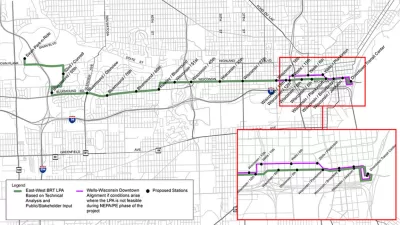
Edgar Mendez reports that Milwaukee County Transit System (MCTS) planners are seeking feedback from the public on the East-West Bus Rapid Transit project, a proposed nine-mile BRT route connecting Downtown Milwaukee to the Milwaukee Regional Medical Center with 75-person-capacity buses every 10 minutes.
Mendez focuses on the expected costs and outcomes of the project. The system is expected to operate at an annual cost of $3.7 million every year, with some funding made available by reducing duplicated service along Wisconsin Avenue. The development of the BRT route is expected to cost $42 million to $48 million, with 80 percent of funding coming from the Federal Transit Administration's Capital Investment Grant program.
The article cites an MCTS spokesperson to list the expected benefits of the project, including increased ridership, decreased driving, congestion relief, and incentives for economic development.
Planetizen checked-in with this project twice in 2016, finding little initial public resistance to the idea (compared to a failed light rail proposal for a similar route) after public outreach officially began for the panning process in March of that year.
Read the full story: Impact of Bus Rapid Transit in Milwaukee

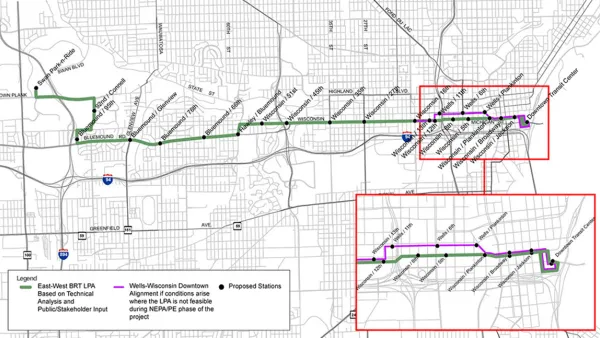
East-West BRT Proposal Finding Little Resistance in Milwaukee
The proposed East-West Bus Rapid Transit project has already built the political support that doomed a previous attempt at light rail along the corridor.
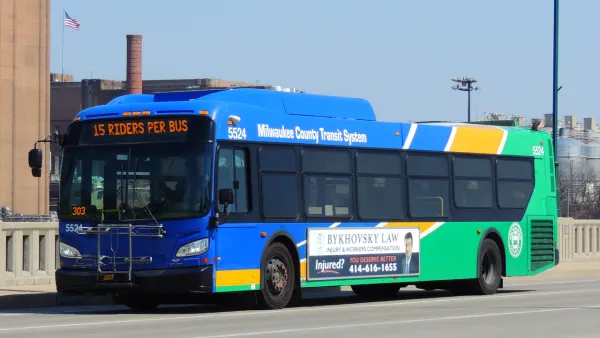
Postponed Milwaukee BRT Project at Least a Decade Away
The county’s transit system won’t pursue a second rapid bus line due to financial constraints.
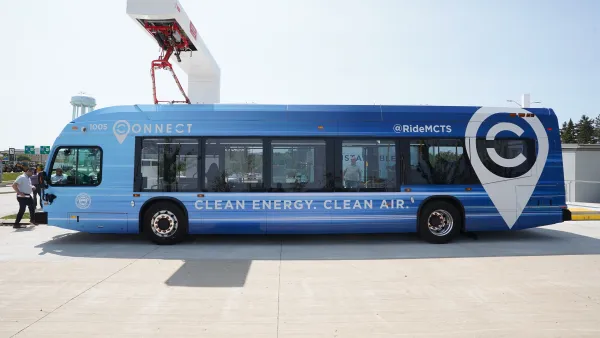
Milwaukee BRT Proves Popular With Riders
The newly opened line is already reaching pre-pandemic ridership levels.

Planetizen Federal Action Tracker
A weekly monitor of how Trump’s orders and actions are impacting planners and planning in America.
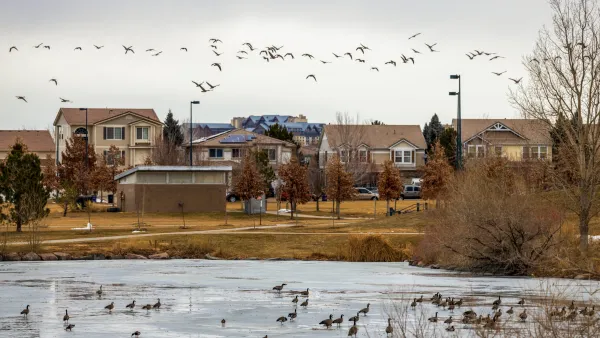
Colorado’s Largest Data Center Could Rise Next to Homes — Without a Public Hearing
The proposed campus would consume 11 times the power of Denver International Airport; as it has across the country, opposition mounts.

Amtrak, CN end decades-long dispute with eight-year agreement
The new operating agreement establishes an updated framework for the companies to work together, including processes to resolve disputes.

'This is going to be painful:’ Virginia stares down $1.7 billion funding gap for highway maintenance
The state may address the deficit by shifting $290 million from its construction budget to maintenance projects.

Judges permit Denver to divert 77,000 acre feet from the Colorado River for reservoir expansion
Overuse and climate change have caused the Colorado River’s water levels to plummet.
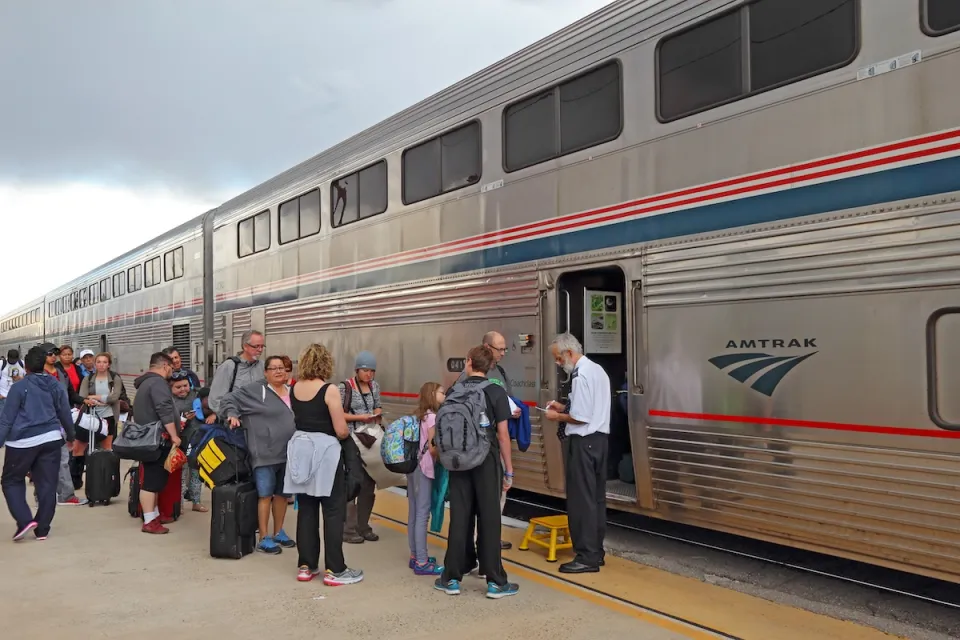
Amtrak, CN end decades-long dispute with eight-year agreement
The new operating agreement establishes an updated framework for the companies to work together, including processes to resolve disputes.

FREE Course: Walkable City 1: Why Walkability?
After describing his path towards focusing on walkability as the essence of good planning, Jeff Speck marches through his five principal reasons for making more walkable places.
Reinventing Malls: Planning Alchemy—Turning Gray Fields Into Gold
The course focuses on the opportunities and imperatives that shape reinvention of mall sites.

KFH Group Inc.
Greater Baltimore Committee
Eagle County Government
The Architects Foundation
University of Cincinnati Online
The Pocatello Development Authority
The Urban Renewal Agency of the City of Pocatello