The debate over public safety in Downtown St. Paul is once again focused on the city's skyways. There, concerns about access challenge any possible solutions.


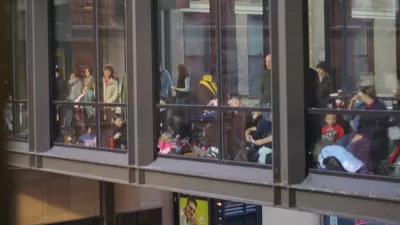
A fight over Downtown St. Paul's skyways is also a fight for the "future of downtown itself, according to an article by Peter Callaghan.
The owner of the Railroader Printing Building began locking the public out of the skyway it shares with several other buildings on E. 6th Street hours in March. The owner, Jaunae Brooks, is also petitioning the city council for permission to make the change permanent, reports Callaghan.
Her reasons? As Brooks explained in a lengthy letter to the city, she thinks people who misuse the system are putting her tenants and the public at risk. “The homeless have been literally living in my skyway for the past few years, suitcases and all,” she wrote. “They sleep naked and clothed, cook on hot plates, eat, poop and pee, smoke cigarettes and pot creating a fire hazard, drink alcohol, have sex leaving used condoms behind, use drugs intravenously and leave needles behind, litter and vandalize my property daily.”
There has been no shortage of opposition to the petition, including from the Skyway Governance Advisory Committee, disability advocates, local residents and workers, and city officials. The concern is the precedent closing the skyway early would set for the legal agreement between private building owners and the city about the use of St. Paul's skyways.
The controversy over this particular skyway is set against a context of a downtown revitalization that means the skyways around downtown are busier and more active than ever. Some even blame the rising incidences of public safety concerns in the skyways (which Planetizen last documented in May 2016) on some of the amenities that have opened up in recent years around Downtown St. Paul, like the Central Station of the Green Line.
Read the full story: Why a dispute over skyway hours is really a fight over the future of downtown St. Paul
Public Safety a Growing Concern in St. Paul Skyways
As more people come to Downtown St. Paul to live and sightsee, foot traffic in the city's famous skyways has increased at later hours of the day and night. With that new traffic comes new concerns about public safety.
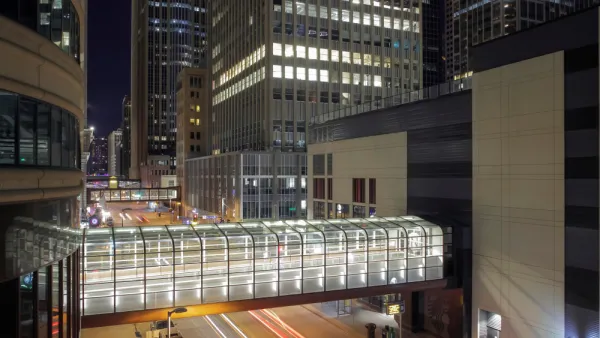
The Pandemic Has Not Been Kind to Pedestrian Skyways in the Twin Cities
Already a source of eternal controversy for their effects on street life and local business, pedestrian skyways have proven even more problematic during the pandemic.
Debate Over Minneapolis Skyways Continues
Minneapolis is working to turn the deteriorating Nicollet Mall into a vibrant public space—even hiring James Corner Field Operations (of High-Line fame) as designer. Will the revitalization of the area require the removal of the mall’s four skyways?

Planetizen Federal Action Tracker
A weekly monitor of how Trump’s orders and actions are impacting planners and planning in America.

California plans to bury El Niño’s downpour
If the state plays its cards right, it may be able to store a billion acre-feet of El Niño’s water in aquifers.

Desperate measures: Advocates weigh draining Lake Powell to fill Colorado River
Draining the reservoir could reduce evaporation losses by a couple hundred thousand acre-feet.

California appears to reject Prop. 45
The proposition would have expanded the projects that qualify for a streamlined environmental review, effectively paring down the California Environmental Quality Act.

Bay area voters pass ‘crucial lifeline’ for transit
Proposition RTM, which will fund Bay Area transit, has approval from 61% of voters as of 9:45 p.m. on Nov. 3.

Voters across the country reject data centers
Dozens of communities voted on measures to restrict the buildout of data centers.

FREE Course: Walkable City 1: Why Walkability?
After describing his path towards focusing on walkability as the essence of good planning, Jeff Speck marches through his five principal reasons for making more walkable places.
Reinventing Malls: Planning Alchemy—Turning Gray Fields Into Gold
The course focuses on the opportunities and imperatives that shape reinvention of mall sites.

City of Rosemead
Rutgers University, Edward J. Bloustein School of Planning and Public Policy
One Hundred Miles
Hunter College, City University of New York (CUNY)
The Architects Foundation
University of Cincinnati Online
City of Cambridge
Montrose County
The Pocatello Development Authority