Apple's new campus contains thousands of parking spaces, but neither transit options nor daycare.



Apple anticipates only about 10 percent of the employees that will work in its new headquarters will live in Cupertino, the city where Apple's headquarters was built. This is an old fashioned approach to building an office campus. "By moving out of downtown skyscrapers and building in the suburbs, corporations were reflecting 1950s ideas about cities—they were dirty, crowded, and unpleasantly diverse," Adam Rogers argues in Wired.
The location and purpose-built nature of the building make it unsuited to evolve. "If Apple ever goes out of business, what would happen to the building? The same thing that happened to Union Carbide’s. That’s why nobody builds these things anymore," writes Rogers. To ease the concerns of the city's mayor, Apple will contribute hundreds of thousand of dollars to Cupertino and neighboring cities in parking restitution, but urbanists had hoped they would have invested in other transit. "The company could have chipped in to double the frequency of CalTrain’s commuter rail. It could have built a transit center in Cupertino, which, unlike Mountain View and Palo Alto, has none."
Read the full story: IF YOU CARE ABOUT CITIES, APPLE'S NEW CAMPUS SUCKS

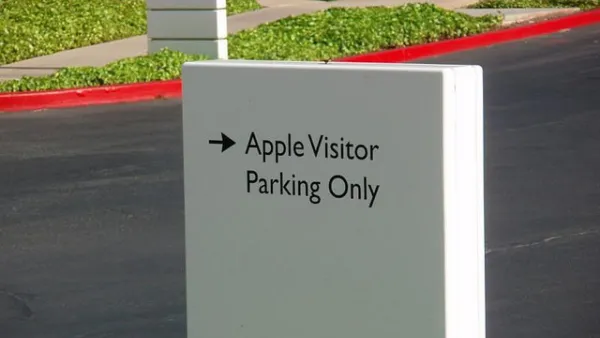
How Apple's Headquarters Got More Parking Spaces Than Employee Spaces
Parking is back in the news, with a high-profile case study: the new spaceship-shaped headquarters of Apple in Cupertino has devoted a larger footprint to parking spaces than office space.
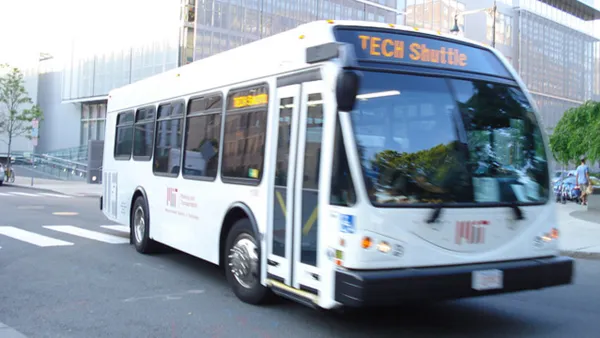
Tech Shuttles: The Bay Area's Seventh Largest Transportation Provider
A new survey has found that every day more than 800 tech buses are traveling on the region's roadways, carrying around 34,000 passengers daily
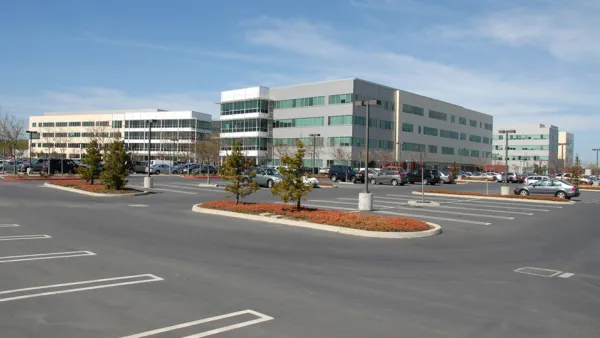
Tech Giants Bank on Growth, Acquire More Space
To provide room for long-term expansion, companies like Google, Facebook, and LinkedIn are buying up even more Bay Area real estate. Their flush cash reserves have them nudging out the traditional development and investment crowd.

‘Going backwards:’ Baltimore mayor, students rally against state's transit funding plan
Maryland's proposed six-year plan provides no funding for Baltimore’s BMORE bus program and reduces its road maintenance funding.

Detroit to transform waterfront with $2.2 billion investment
Developers will convert about 18 acres of unused parking lot space into civic spaces.

HUD modernizes 50-year-old manufactured housing framework
The Next Generation Manufactured Housing Action Plan establishes new energy-efficiency standards for manufactured homes, and new guidelines for anchoring them.

After $600,000 wasted, CA high-speed rail board limits CEO’s power
Ian Choudri will no longer be able to sign, change or manage contracts.

Lithium mines leech water from surrounding communities. Soon, they’ll run dry
Researchers concluded that most lithium mines won't have enough water to meet industry demands by 2050.

El Niño takes lives, infrastructure as U.S. storm systems prove ill-prepared
About two-thirds of America's culverts are in states with outdated design standards.

FREE Course: Walkable City 1: Why Walkability?
After describing his path towards focusing on walkability as the essence of good planning, Jeff Speck marches through his five principal reasons for making more walkable places.
Reinventing Malls: Planning Alchemy—Turning Gray Fields Into Gold
The course focuses on the opportunities and imperatives that shape reinvention of mall sites.

One Hundred Miles
County of Mendocino
planning NEXT
The Architects Foundation
University of Cincinnati Online
Montrose County
Northern Illinois Transit Authority (NITA)
The Pocatello Development Authority